A Boom and a BBQ
by Laurence B. Abrams
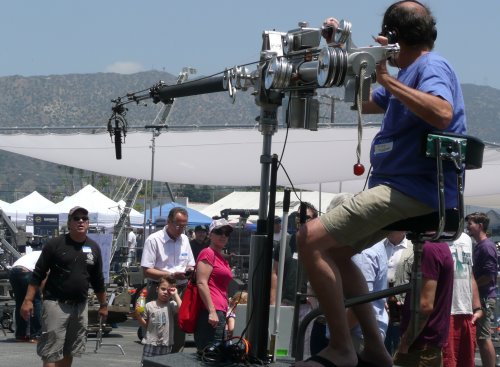
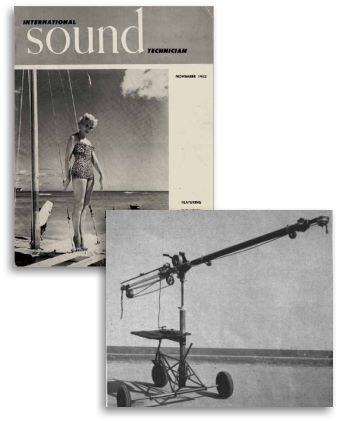
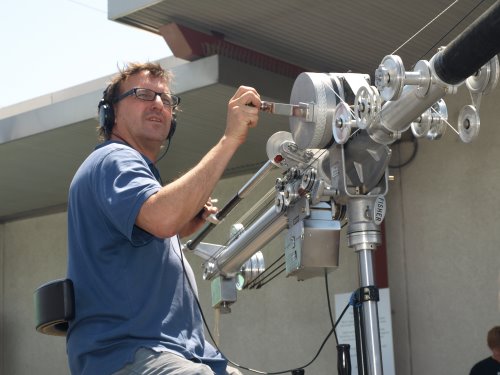
The Fisher microphone booms that we use in production today are the evolution of a design first manufactured by James L. Fisher in 1951, when he was working in the shop at Republic Studios in Studio City.
So successful was his design that it is the only one to survive that era … and after evolving somewhat since then, it is the only major studio boom in use today.The studios needed microphone booms that could hold the heavier mikes in use at that time and that would also permit the operator to swing and extend the arm and cue the mike as needed. These studio booms used a system of sliding weights to keep the boom arm balanced as it was extended or retracted to follow action. Mole- Richardson and several of the sound shops at the motion picture studios, such as Paramount and 20th Century Fox and Republic, had each developed their own proprietary studio booms. Thinking he could do better, Mr. Fisher began working on his own design in his spare time and came up with a boom that turned out to be lighter and more functional than the competition.
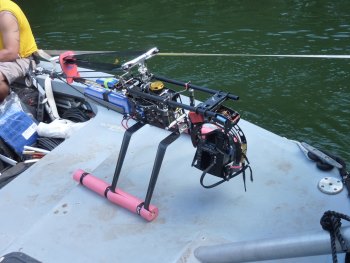
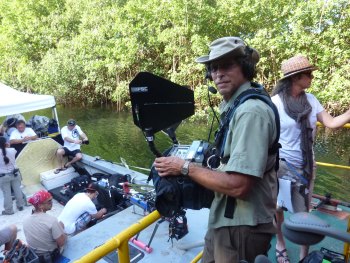
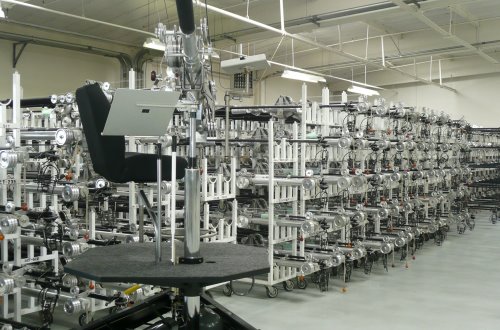
After a long career developing and manufacturing sound and camera booms, Mr. Fisher passed away in 2005. But more than 60 years after its introduction, his booms are still in use today and were on display at Fisher’s annual Open House and BBQ Lunch, held this year on May 18. Now in its eighth year, this all-day free event was conducted at the Fisher facility in Burbank and featured product displays from a variety of camera, grip and lighting equipment manufacturers along with Fisher’s complete product line, including of course, the full selection of Fisher microphone booms.
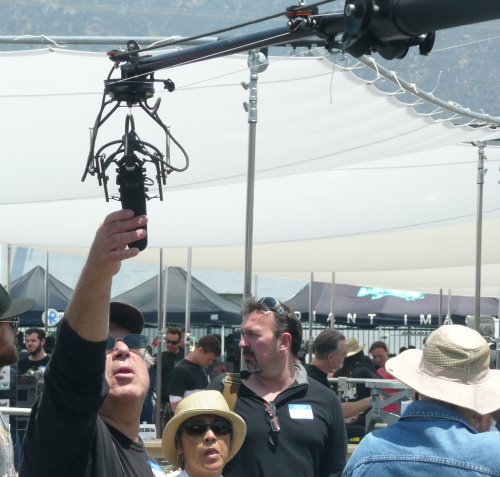
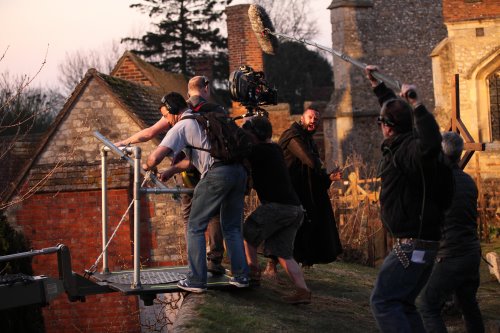
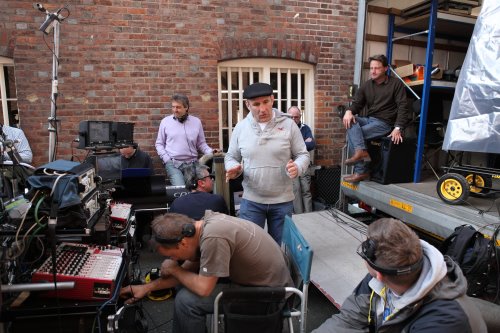
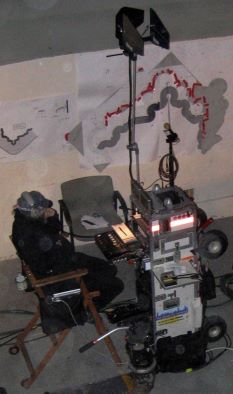
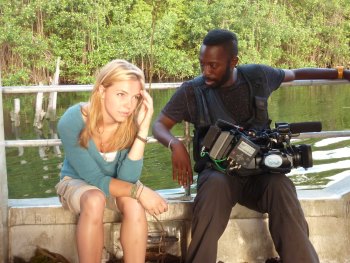
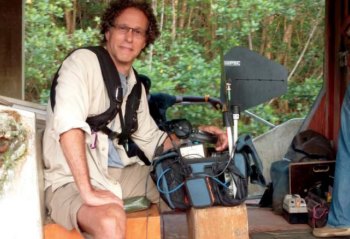
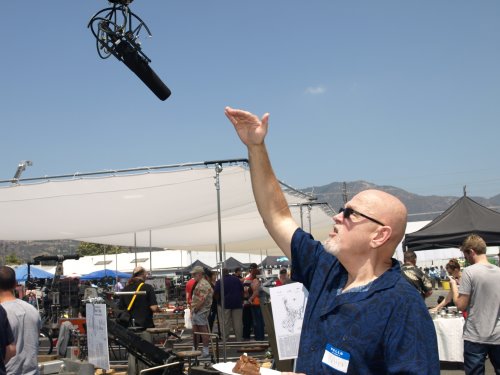
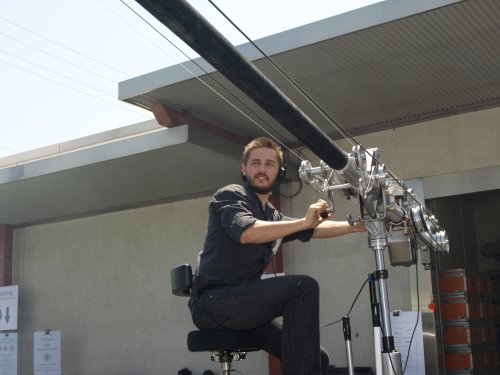
As in the past, Local 695 Microphone Boom Operators Andy Rovins and Laurence Abrams were on hand to demonstrate the 23-foot Model 7 boom arm and Model 6E base. Lots of Local 695 members came by during the day to chat, share production stories, do a little networking, and jump up on the boom to give it a quick run. Some of the folks who stopped by were experienced Fisher boom ops from way back and some were seeing it for the first time. Plenty of camera operators and grips and electricians came by, as well, and got a chance to try out the boom for themselves and gain some new insight into what we do. More often than not, they’d jump down and say something like “Hey, this isn’t as easy as it looks!”
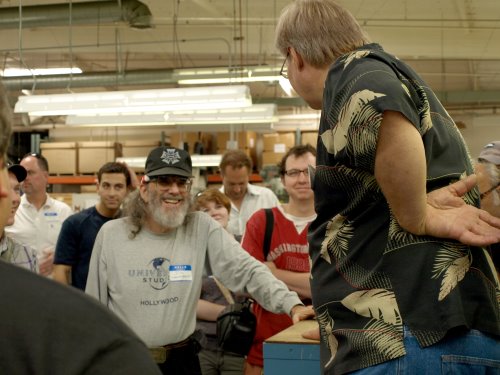
The company’s current president, Jim Fisher, son of the boom’s designer, offered guided tours of the facility and machine shop. Fisher sales reps Frank Kaye and Cary Clayton were there to answer questions … and there was plenty to eat and drink, with food trucks and BBQ grills serving burgers and dogs, chicken and steaks, and our personal favorite … BBQ pizzas.
If you missed it, watch for next year’s announcement and when you’re there, be sure to stop by to say hello. If you still need to learn how to use the Fisher boom, be sure to take advantage of Local 695’s unique Fisher Microphone Boom: Oneon- One Intensive training program. To sign up for a personal training session, see www.local695.com/mbr/edu-fbt.php for details.
 In 2010 and 2011, I spent autumn in Beijing, China, at the BIRTV (Beijing International Radio and TeleVision) trade show, courtesy of John and Nina Coffey and some of the companies they represent. I was looking forward to going back again in 2012, but alas, it was not to be. Probably because of my telling all and sundry what a great time I had before, the owner of one of the companies that defray my expenses decided to go himself instead of sending me.
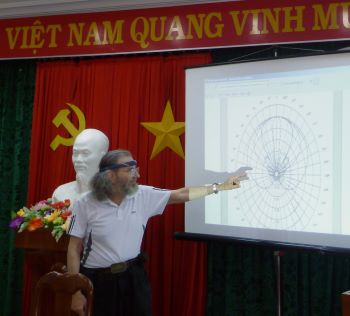
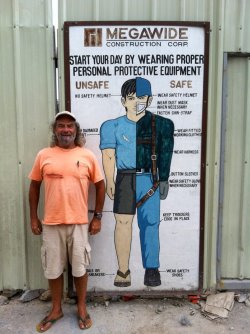
 1. The wrap party for my Da Nang class was held at a local restaurant. When I arrived, all the students were there, seated at a long table. I was greeted by a large poster with my picture, and my name spelled correctly (unlike China, where a large red banner read “James Tanen Baum” and my exhibitor’s badge had yet another misspelling).
 “Imagine you are at the beach, and the tide is coming in. If you stick a surfboard in the sand and stand behind it, will your feet get wet? Of course they will, because the water will simply wash around the narrow obstacle, just like low-frequency sound will. And when the waves crash against the board, they will knock it down even if you try to hold it upright, just as low-frequency sounds will push and pull on a flimsy wall to pass through it. (Actually, the original sound waves will be stopped by the wall, and new ones generated on the other side, but you get the idea.)
 “How much you give?” Never, never, speak a recognizable tongue to a street vendor.
 Never, never, never buy something from a street peddler. She held out the remaining caps.
 I was starting to write my experiences with the Nagra and was thinking only of the model III and then it occurred to me that my earliest experience was with the Nagra II. I had just graduated from high school and was working at the new listener-sponsored FM radio station in Los Angeles, KPFK.
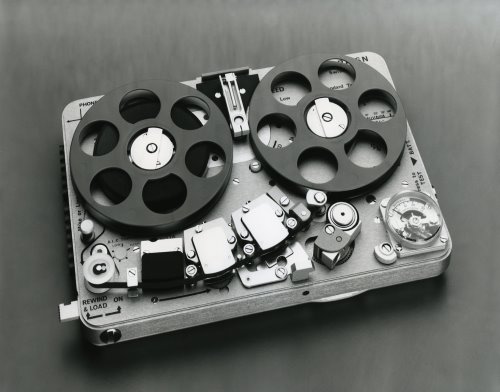
 It was late 1968 and I had been working for about nine months at a big L.A. ad agency, running their small recording studio— voiceovers, radio spots, etc., on big old Ampex 351 ¼” recorders. I had no real idea what I was doing but, compared to what those ad agency folks knew, I was a damned genius—some things never change. Anyway, I quickly grew tired of that and began looking for other gigs. I recorded a few bad rock and roll bands at various studios around Hollywood, but even at that young age, quickly burned out on the late nights and long hours spent indoors. Someone suggested that I get into movie sound—often done in the daytime and outdoors, every shot being different, and the pay wasn’t too bad either. Before I knew it, a trusting fellow from New York named Jim Datri handed me an elegant-looking metal box called a Nagra III, a converted Bolex mono-pod with a Sennheiser 404 on the small end plugged into a KAT-11 preamp, and a set of Beyer headphones which seemed to weigh about 13 pounds. To my studio-inured eyes, the whole rig looked like some sort of arcane scientific testing apparatus. Suddenly, I was in charge of recording sound for a motocross documentary, lugging the thing over hill and dale someplace in the depths of Orange County—and tethered to a 16mm Arri S by a sync cable, like the ass-end of a donkey at a costume ball—as dirt bikes roared around us menacingly. Good thing I was only 21 years old…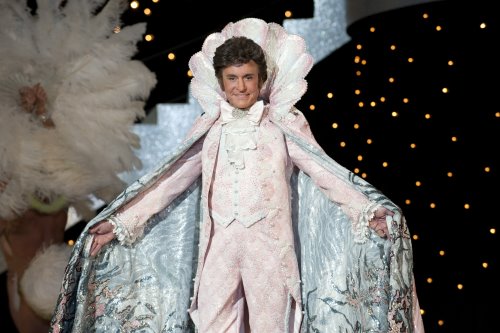
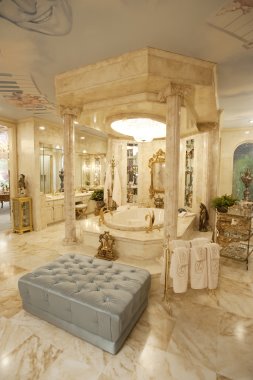 Soderbergh has his own style of filmmaking: most importantly, he likes things to be real. With this project, that meant many practical locations and sets full of mirrors. And not the “set mirrors” that you can gimbal; they would be real. And often quite large. And reflective surfaces would be the norm for almost every scene. Even Liberace’s piano and clothing were reflective. Oh, and there would be musical numbers, some involving complicated vari-speed playback and other fancy tricks.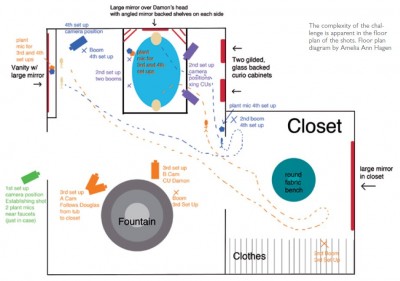
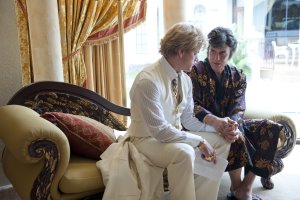 We shot many scenes at the LVH in Las Vegas. The set designers and their crew meticulously dressed Liberace’s penthouse to look as it did back in the 1970s when it was called the Hilton Hotel in Las Vegas. Did I mention Liberace’s love of mirrors yet? The very last scene we shot in the penthouse was another of those of those scenes where we would have no choice but to rely mostly on the wires.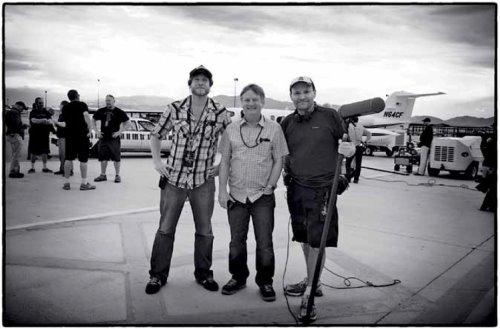
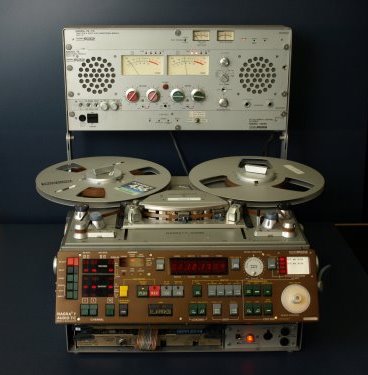
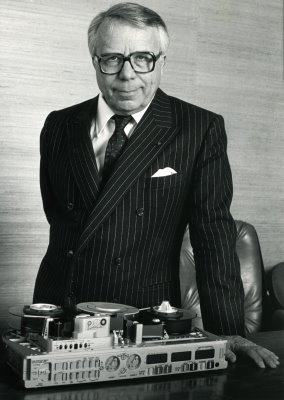 Long considered the “gold standard” for location sound, the Nagra recorders established a level of technical superiority and reliability that to this day is unmatched by almost any other audio recorder (with the possible exception of the Stellavox recorders, designed by former Nagra engineer Georges Quellet).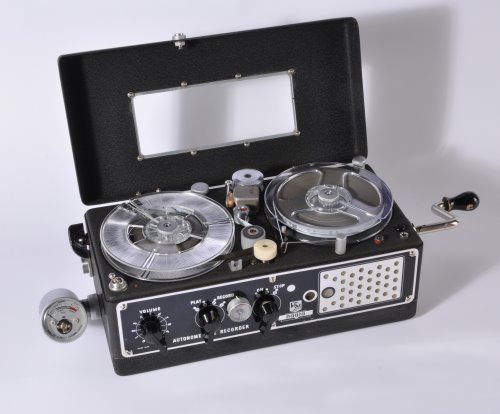
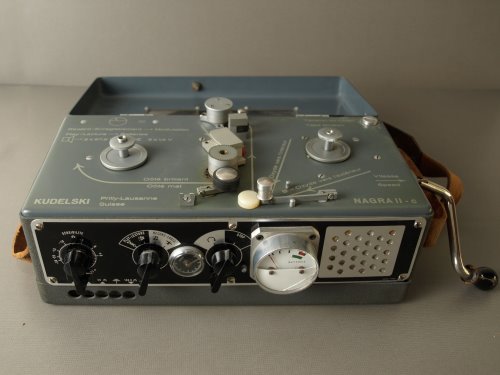
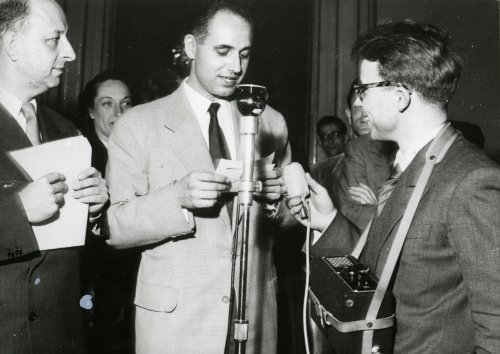
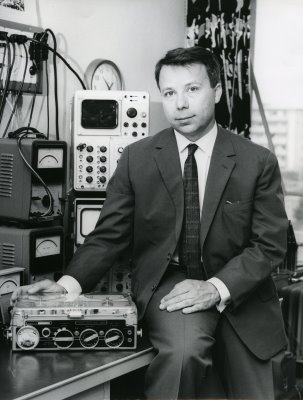 Acceptance of the Nagra III was almost instantaneous. 240 machines were built in 1958, and in 1959, the Italian radio network RAI (Radio Audizioni Italiane) ordered 100 machines to cover the Olympic Games in Rome, paying cash in advance. With this rapid expansion, larger premises are acquired in Paudex (near Lausanne). Since the Nagra III relied heavily on custom machined parts, a significant investment in machine tooling, along with skilled machinists to run them, was required to keep pace with orders that were now coming in from networks around the world, including the BBC, ABC, CBS, NBC and others. By 1960, there were more than 50 employees working in Switzerland, and a network of worldwide sales agents was established to support the sale and service of the machines.