Sometimes work in television can be more fun than fun.
Yeah, I didn’t make that up. Um, I borrowed it (and don’t start a sentence with ‘Um’). If you wrote it, let me know and I’ll credit you in the next column. As I write this, I have enjoyed a lovely week on a music awards show in Miami, working with a group of people I am grateful to call friends. Today, during the dress rehearsal, I was upstage of a video wall, the talented live band was encouraging everyone to dance. At that moment, I thought about how very fortunate I have been to do what we do instead of working. And heck yes, I danced. At a pretty early age, I figured out that I wasn’t really smart. Rocket surgery was out, and I realized that I wasn’t a great rule follower. Not that rules don’t apply, just that I sometimes see them as suggestions that can be modifiable. The idea of not having a job … at a place … every day, was kind of a career goal. Young people, when I started this adventure, picture was 4:3, sound was mono, and the networks and local Los Angeles television stations had staffs of engineers. KTLA alone had about one hundred in their engineering unit. It was educational and also comfortable; you could make a nice living, health insurance and retirement included. For a beginner, it was perfect. A comprehensive learning experience taught by true professionals. With pay.
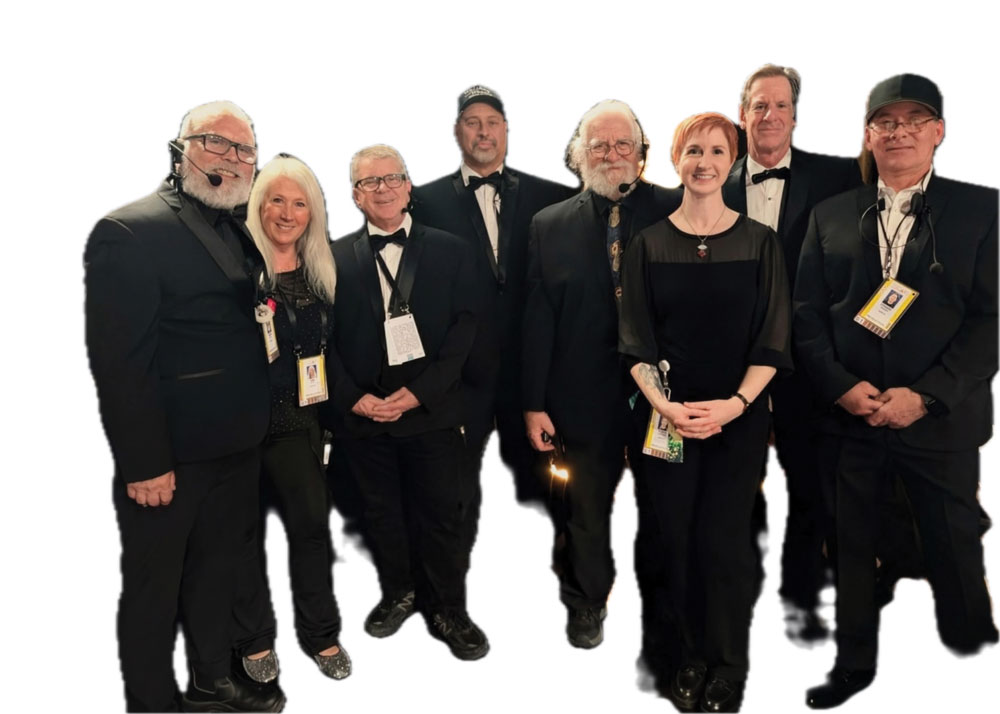
Then I met some of the freelancers. Television was not always a freelance-friendly occupation. Once upon a time, nearly everyone in television worked for a network, a studio, or a local TV station. As I have often noted in these columns, KTLA, in the late ’70s and early ’80s, was a very busy TV station and production facility. Like most of the network/studio/broadcast facilities, you had to be on staff to work there. On a rare occasion, a freelancer would appear, usually requested by a director or producer. Even then, the production hired a KTLA staffer to man-for-man that position. I would explain man-for-man, but it is an archaic term like roll tape, a rock on the AT, and of course, fiddlesticks. In 1985, the station no longer wanted to be in the facilities business. I left, along with about half the crew. I was freelancing. Soon, the three networks, Metromedia, and other facilities companies were shedding full-time employees and freelance became the norm. It seemed to happen in one fell swoop. Yes, I quoted Shakespeare. Macbeth. No, the original quote wasn’t about freelancing.
Immediately, the stages at KTLA became available for rent by productions that hired their own crews. Freelance crews. I had some experience doing shows on those stages and ended up getting work there on a couple of classic game shows. A lovely and talented woman named Kat Landsberg called me into her office and told me that she thought Russ Gary and I would get along well and should work together on Let’s Make a Deal, starring Monty Hall. Russ, prior to a long career in television, mixed records. A lot of really great records. We teamed up for about fifteen years on game shows, talk shows, and on many sitcoms, including a very nice run of film shows with Miller/Boyett Productions. Thanks to Kat and Russ, the trajectory of my career changed drastically. Within a year, Russ asked me to do a sitcom at Warner Bros. The Technical Director, Chris Donovan, was very involved with crewing Dick Clark shows. He kindly asked me to join and with that, I added specials and award shows to my calendar. As JFK might have said, “Ich bin ein freiberufler.”
With freelancing came travel. At last count, I’ve worked in twenty-six states. A few countries as well. I learned to pack efficiently and be prepared for weather. All kinds of weather, including rain and snow, and all the other possibilities recounted by Herodotus when writing about sound crews in the Greco-Persian Empire. I wonder what the rate was back then (what’s a Grecian earn?). Anyway, there I was, holding a fishpole in a heavy snowstorm, capturing dialog in Aspen, Colorado, happy to have good boots, coat, scarf, and hat, all very helpful on the job and on a snowshoe hike in the Rockies the next day. As I have mentioned in previous columns, friends and I have searched for and found a wide variety of excellent local food choices. And on occasion, sometimes by design and often by dumb luck, a special event or opportunity presents itself. I’ve tried to find ways to appreciate those fortunate circumstances. While on location, I’ve visited several baseball parks, including trips to Yankee Stadium (the original one), Veterans Stadium in Philadelphia for Sean McClintock’s birthday, an opening day visit to Wrigley Field in Chicago, a game at Nationals Park in Washington, D.C. where you can get a half-smoke with chili from Ben’s Chili Bowl (mustard and onions, please), and a very special visit to Orioles Park at Camden Yards. Music adventures include John Hobb’s all-star band at a club in Nashville, Preservation Hall in New Orleans, and trips to the Iridium in New York to see Les Paul up close. New York has also provided shows on Broadway and shows Off-Broadway and shows so far from Broadway that you would have to consult the Hagstrom New York City Five Borough Atlas to locate the theaters. LA friends, the Hagstrom Atlas is the New York version of our Thomas Guide. Young people, The Thomas Guide was like Google Maps, but on paper. I’ve been in waist-deep water up close with a dolphin named Lono, while carrying a mixer and a fishpole in Hawaii, and on the same trip, I enjoyed a long bike ride from Waikoloa to find a Malasada and coffee. On one trip, I walked the Freedom Trail in Boston. I’ve explored all over Washington, D.C. Gone sailing off Waikiki. And the most memorable, watching a Space Shuttle Discovery launch (STS 96) with friends from the causeway at Cape Canaveral. To be able to share so much fun while on location with wonderful friend workers has been one of the great pleasures of my life.
And now for something completely different.
I took a little break from writing, and now It’s Oscar time. No, not while you are reading this, it’s Oscar time while I am writing. Working on the Academy Awards has been one of the great honors of my career. I believe this was my 34th. Maybe 35th. Bob Hope hosted the first live broadcast of the Oscars in 1953; I was too young to appreciate it. We didn’t have a television until six or seven years after that. The Oscar audio crew which totals around forty mixers, techs, and A2’s all collaborate to work for a common goal: to find a decent place to have lunch near the Dolby Theatre. Lead A2, Steve Anderson, assigns tasks to each of the A2’s: Bandey, Hostey, Leader, Tuxey, Patchey, Short Straw, Schoepsey, and Edgey.
Some jobs are part of the setup, others are important for rehearsals and the live show. Steve keeps the Audio Patch Book that he creates, along with FOH Engineer Pat Baltzell, Orchestra Mixer Caleb Morris, and Denali Engineer Hugh Healy. He then assigns mics on the rundown and creates a mic grid. The rest of us organize, set up, and prepare for rehearsals and the show. The biggest challenge was wiring the eighty-input orchestra by dropping the cables through holes cut in the platform for a clean look. Eddie, Damon, and Niles did an amazing job. My little portion includes patching in the rack room.
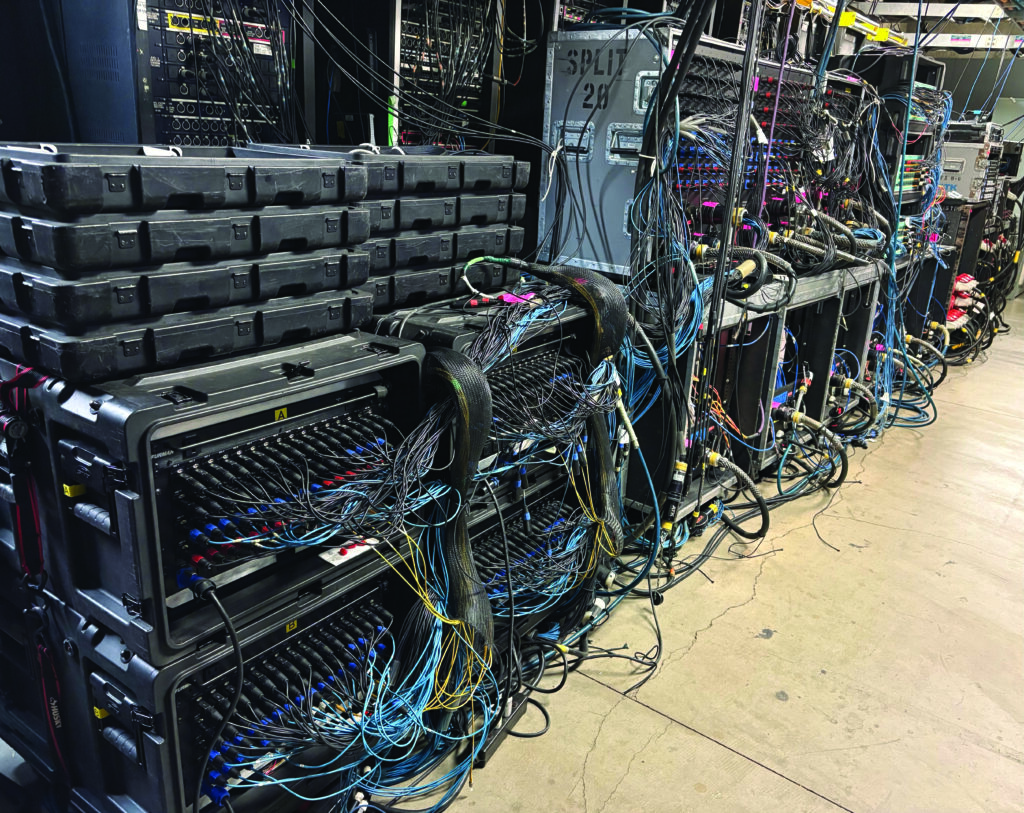
The Audio Patch Book details all the show’s patching needs. RF mics, orchestra instruments, band instruments, vocal mics, and the audience mics come as analog inputs. Others arrive via fiber, including ATPB, VTPB, Pro Tools, and other high-level feeds. All are turned into analog sources to patch into our three 56-input analog splitters. Each splitter has a direct output and three split outputs. The direct is patched to the console providing phantom power. The direct and split outputs feed proprietary devices for each type of console. FOH and monitors use DiGiCo desks and are connected to DiGiCo SD stage racks, the Denali Summit truck uses a Calrec console which is connected to Hydra stage boxes, and the two M3 music trucks feature Lawo desks and 5×8 stage boxes. In the patch room for the Oscars, we used six SD racks, three Hydras, and four Lawo boxes, two for the orchestra going to M3 Eclipse and two for bands and vocals patched to M3 Voyager. All the stage boxes connect with the consoles via fiber using proprietary language. The DiGiCo speaks Optocorean, the Hydra uses Hydrish, and the Lawo language is Lawonian.
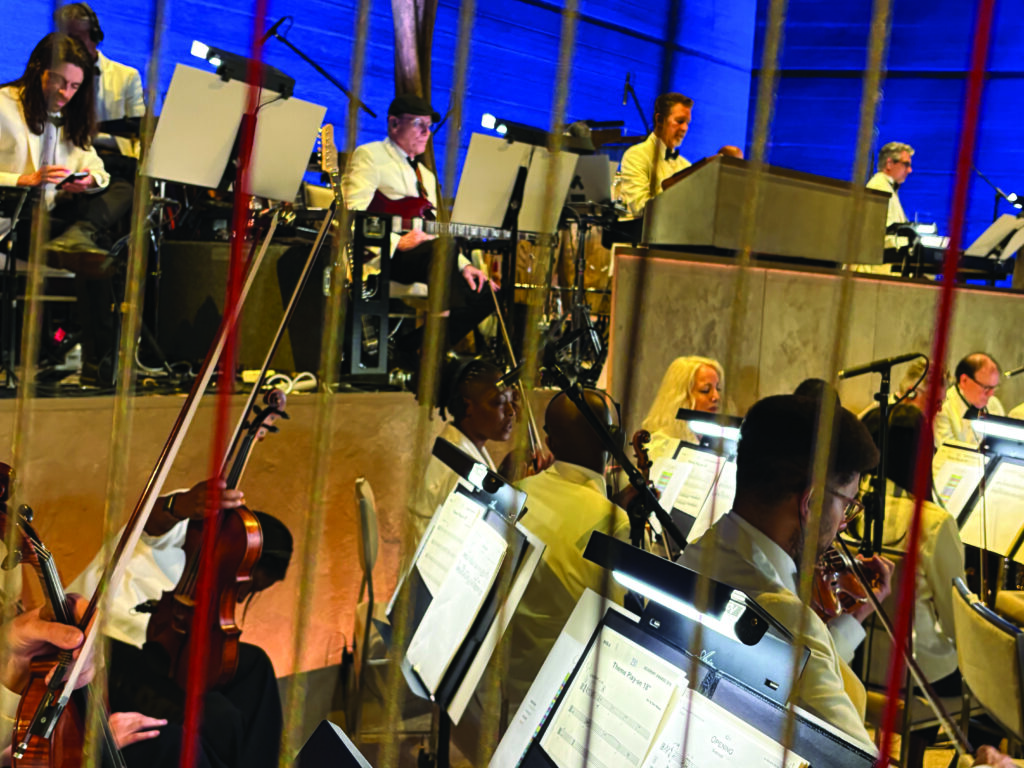
Many of my Oscar highlights involve the wonderful orchestra made up of forty of the best players anywhere.
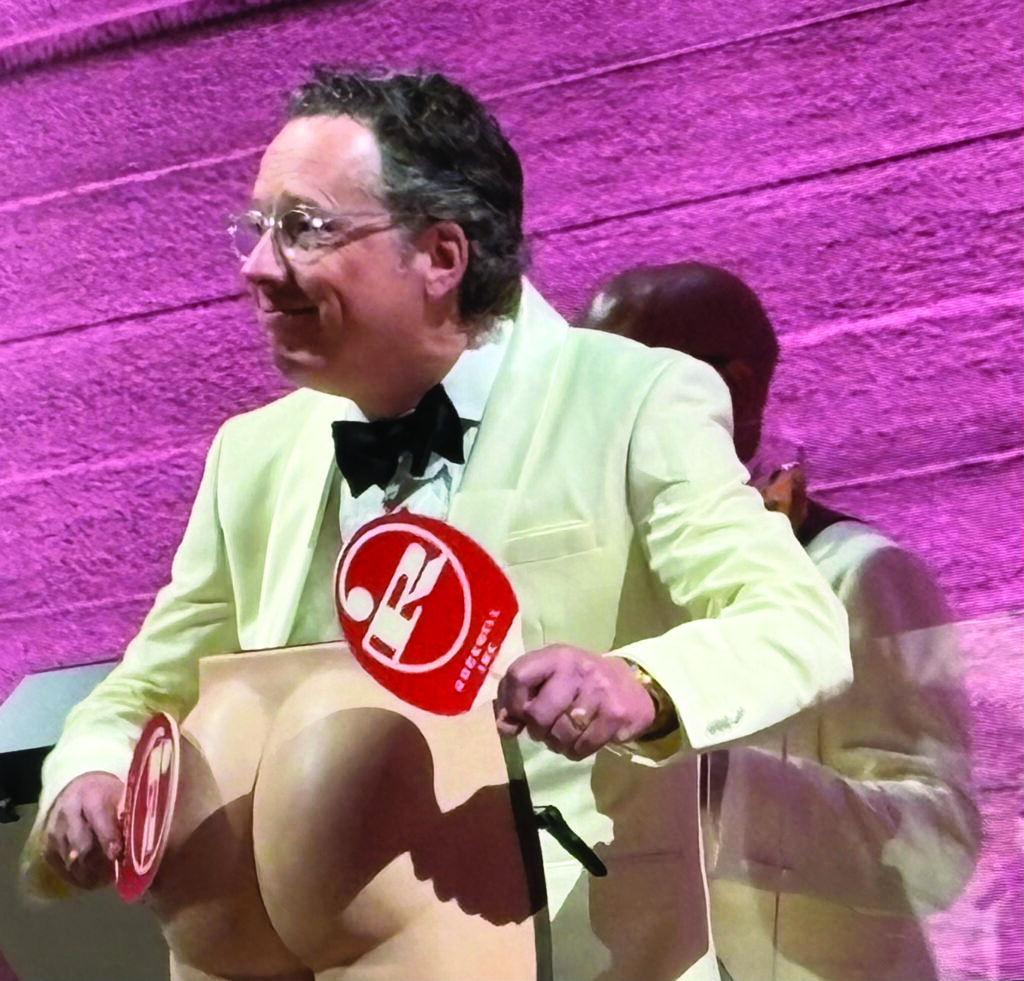
I am fortunate to have known many of these talented musicians for years. First trombone player, Andy Martin, and I met in 1979, months before I started in television. Harpist Gayle Levant has graced almost every Oscars I’ve attended. Being in the presence of this amazingly talented ensemble is a special kind of fun. One last bit of Oscar Orchestra business. For the first time in my tenure, I put a mic on a bum drum.
As Damon would say: END IT.