An Interview with Willie Burton CAS & Doug Shamburger
by Richard Lightstone CAS AMPS
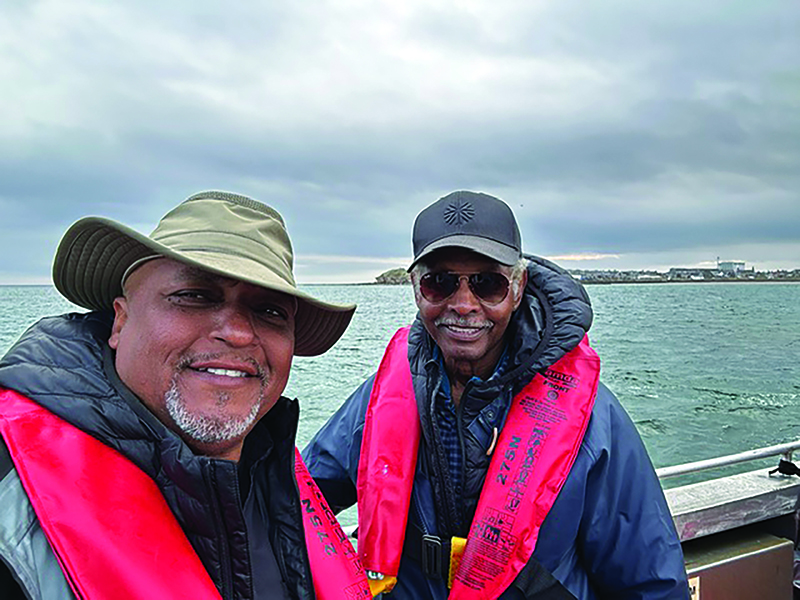
I spoke with Production Mixer Willie Burton CAS and Boom Operator Doug Shamburger on their work on Christopher Nolan’s latest film, The Odyssey. Shot entirely on an IMAX camera with a gigantic bespoke blimp in over twenty-two locations in six countries.
Willie describes the adventure, “We started in Morocco, and then to Greece, and then to two cities in Sicily, Italy, and then back to LA, filming on stage for about a month, with a couple of weeks off in between, and then we went to Iceland, and to Scotland, and back to Morocco.”
Chris is still big on hardline microphones, but on this film, he had to be a little bit more lenient in using more wireless than usual, because of the conditions and the locations.
Doug continues, “For the first time, we were using the IMAX camera in a blimp and not the Panaflex 65 millimeter, like we had in the two previous films. So, this will be the first film that is 100% IMAX aside from the VistaVision camera that they were using for visual effects.”
Christopher Nolan is exacting and tireless in what he expects from his crew.
In Morocco, Willie, explains, “You got the sand dunes, and you’re climbing over them, and Chris did not want us to have sound carts with wheels, because you’d see the wheel tracks. That meant carrying the equipment in bag rigs, probably 80% of this film is bag rigged with my Deva Fusion. Chris won’t let you carry some stuff in and then go back and get more. Once you get to the set, you have to be ready to go. Chris Nolan is ready to shoot, and he wants to go. You have no time to go a quarter of a mile back to the truck and get more equipment. No, you’ve got to be ready, so we hired a local person, a laborer, even if they aren’t familiar with sound, to help us carry equipment every day.”
“All I can say,” adds Doug, “our first day of shooting was an eye-opener. We were on a beach where the ships are all on dry land and the shot is looking down the beach. Chris had everyone walk in the water because he didn’t want footprints on the sand or cart tracks. We had to carry our gear in the surf, so the water erases your steps. With Chris, you have to go with the flow.
“When we were shooting on the ship, we were not able to go back-and-forth. It was an open water transfer, traveling four hours out into the ocean to do specific shots near rock formations where we filmed Sirens (singing enchantresses). You discover things with Chris as you go.”
Much of the film had difficult and very challenging locations.
Willie describes, “On one location in Greece, we used gators to take us as far as we could, then walked the rest of the way up to a cave, climbing with the equipment over rocks and stones and uneven footing.”
The scenes in the cave required Willie and his crew to deal with sheep that kicked up lots of dust, as well as bees that made their hives at the cave’s entrance. “They’re going to be buzzing around. So we got a wild track of them before the crew came in one morning. Just so we had it, just in case Chris would like to use it. You never know,” said Willie.
The small confines meant they had to move for every setup and at wrap, bring their equipment back down each day.
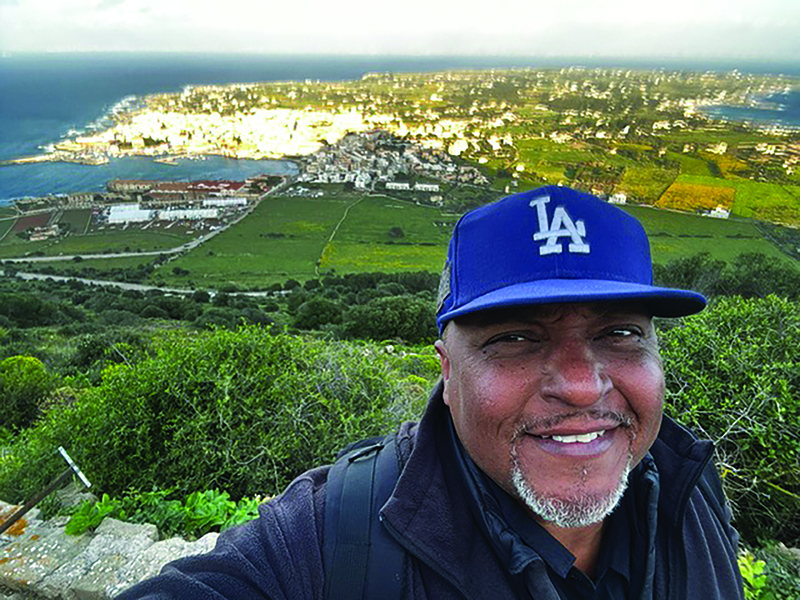
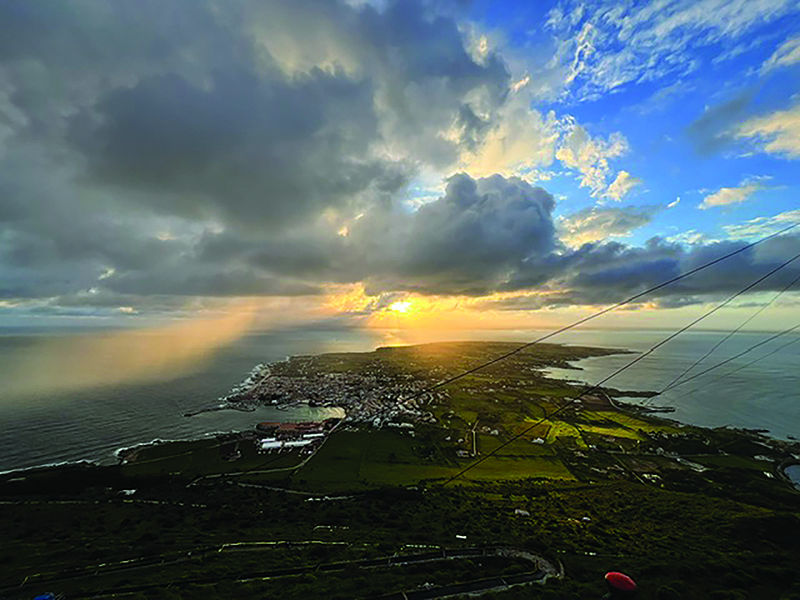
from the top of Monte Santa Cristina
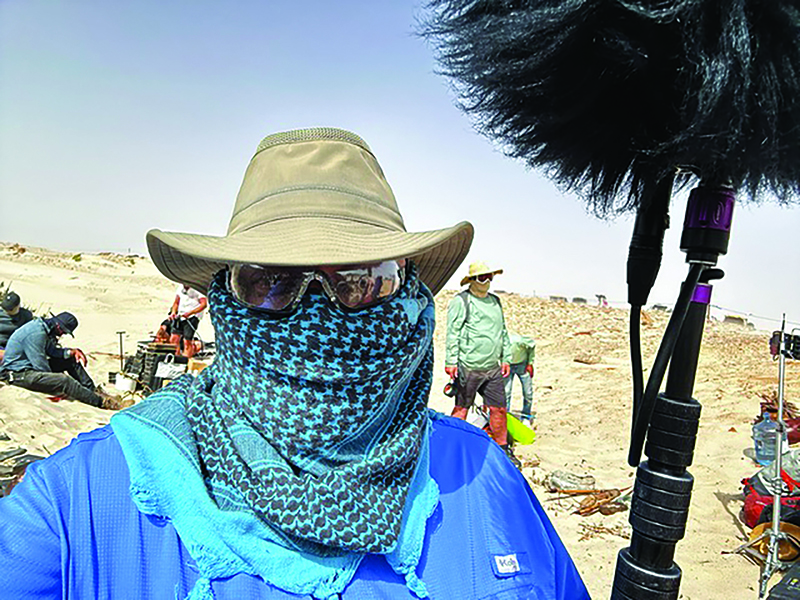
the constant wind and sand
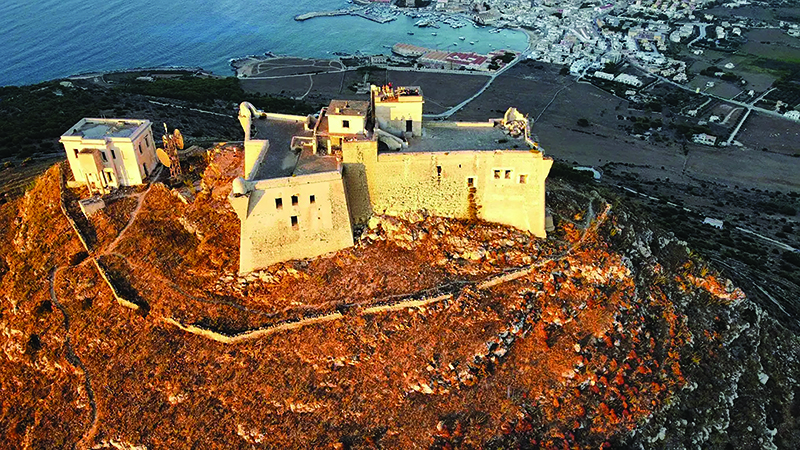
“We finished Greece, and we thought, how difficult can it be to go to Italy, and the Egadi Islands off Sicily? Well, it was a palace way up on top of a hill!”
The Castle of Santa Caterina is an imposing, abandoned 15th-century fortress atop Monte Santa Caterina in Favignana, Sicily. Originally a 9th-century watchtower, it was enlarged in the 15th and 16th centuries to defend against pirates. It is accessed via a steep, challenging foot path with winding switchbacks that takes at least forty minutes to walk.
“The plan was that everybody was going to walk up every morning to go to work,” says Willie, “We said, no, this is crazy, carrying the equipment every morning up there, back-and-forth? Eventually, we were able to get equipment up there and leave it in a little hut that they had for everybody. Then they decided that the department heads and key people will have a helicopter to take people up. But Adam Mohundro, my Second Boom Operator, was not on that list. We explained that he’s the one who puts all the radio mics on the actors and he has to get ready, so, then they decided, well, okay. But Chris Nolan and Emma Thomas, his wife, and Producer of the movie, they walked up. One thing about Chris is he doesn’t subject you to stuff that he is not willing to do himself. If we are on a boat and it is raining and storming, he is out there. He’s got a rain jacket, he doesn’t even put his hat on, his hair is drenched and wind is blowing in his face. He really does it. What can you say when the director of the film is standing there and he’s in a torrential downpour?
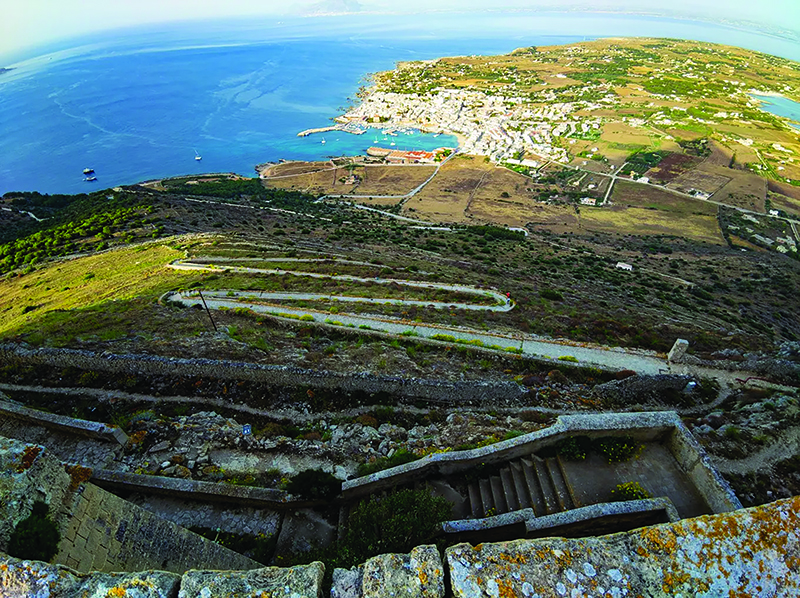
“By the way, the helicopter rides up were only in the mornings. At night, I don’t care who you were on the movie, from the star of the show to the caterers, everyone had to walk down because at night, the helicopters could not fly. The walk down was a little easier, but steep.”
They did a lot of boat work off Lipari Island in Sicily, aboard the Homeric ships, Greek wooden galleys propelled by sails and oars, that were designed with low hulls to enable easy beaching at night, as crews could not sleep onboard.
Willie explains, “In my early career, I worked for the Navy for about three or four years, so I’m very familiar with ships and boats. Chris says to me, ‘Where are you going to be? We’re going to be filming everywhere.’ One day, I tried to be in a little corner on the main deck, but I was always in the way. Finally, I decided I have to work below deck.”
Doug continues, “We had to put Willie down there, and we ran cables under the boards that would lift up where the guys rowed the boat. We discovered that this is the only way to do this and thank God, Willie is among the few people who can be below deck while a ship is tossing and turning in the ocean. He did a great job of not getting seasick because there were a lot of people who were on deck and they were getting seasick. Willie wasn’t one of them.”
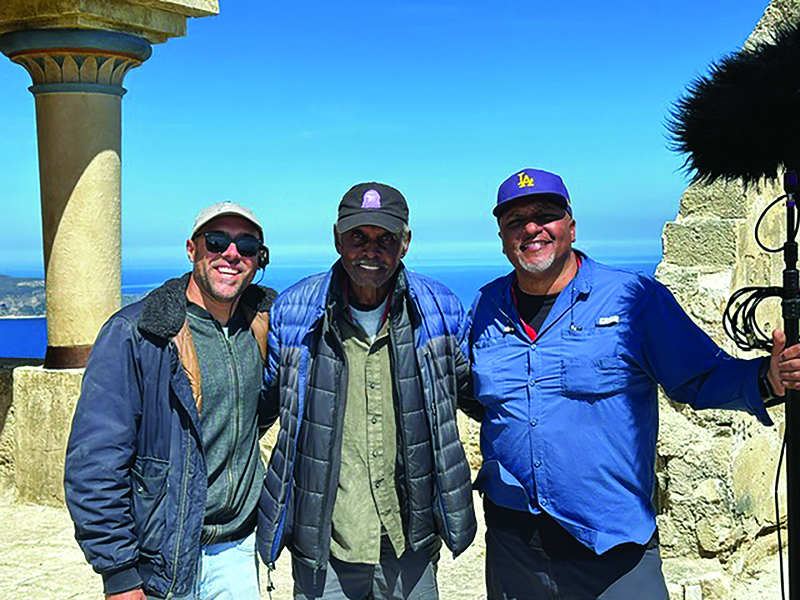
“So, I set up a little place for myself,” adds Willie. “It’s all good, right? We go out to sea, we’re rocking and rolling and everything, and I’m okay. One day, a storm is scripted and the effects guys on another boat are dumping lots of water, everybody was getting drenched. I thought, well, I’ll be pretty safe down here. However, the water poured down where I was, water was everywhere. I had to put up Visqueen to cover me and the equipment. We shot for three and a half weeks on the ship.
“There was limited video assist, except for Chris Nolan and our Script Supervisor who have 7 inch monitors. I couldn’t use one because of the distance from the camera. It’s more of a challenge because I’m working blind. Doug and I, always watched rehearsals, then I knew where the action was going, where are they going to say that dialogue. Who says this? Who says that? Are they overlapping?”
Doug continues, “I have to be Willie’s eyes and to explain to him, what is going on. If Chris makes a slight adjustment, Willie really has to rely on my description, which is kind of old school. That’s the way Willie worked in the beginning of his career, he’s able to mix by memory. Nolan is never at a monitor, there is no video village with Chris, and there are no video assist people on set. So you’re definitely reliant upon what you can gather.”
After finishing the boat and water work, the crew learns they are going to have a month off and then a week of prep before shooting at Sony Studios.
“The whole crew was just so excited,” says Doug. “Oh, God, I’m going to be home, sleeping in my own bed. That was the best gift of all. We got to knock out all the dirt of Morocco and just all the elements that we were faced with. We got to refurbish the machines and clean the cables and get the dust and dirt out of everything. It was a blessing to have those days to gather ourselves so that we could do the second leg of this movie.”
Willie continues, “Our next location was Iceland. The weather was cold and we filmed at night and on top of that, it rained almost every day. Once again, we had to carry our equipment from where the trucks were all the way to the set, and it was never close.”
Once they finished in Iceland, it was off to Scotland. Filming at a house on the cliff and the beach below. Filming in the house was made more difficult as there were pigs all around when Willie was recording dialogue.
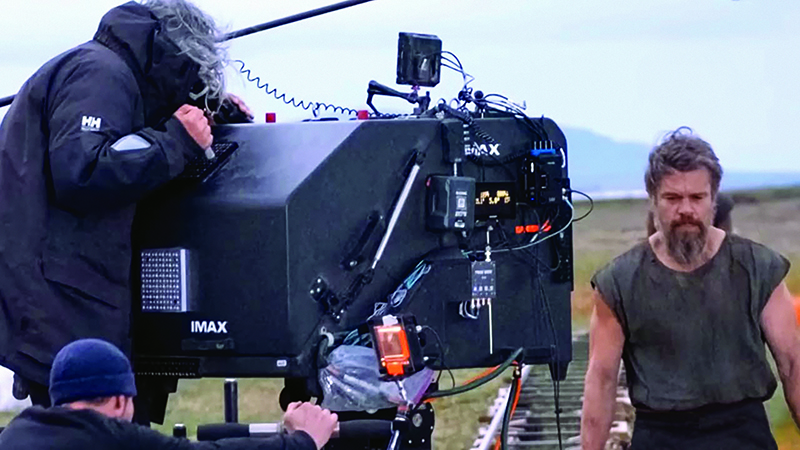
“There was a turnaround time of a couple of days before we would see the dailies,” explains Willie. “It was very reassuring for us to see that it all came out a lot better than we anticipated. There weren’t so many pig hoofs where the pigs were clamoring around off camera, and your doubt is erased by going to dailies. I love the camaraderie of going to dailies and everyone is there because we all care about our craft. On every Nolan movie, Chris is there, the DP, the Editor, the Focus Puller, Makeup, Hair, everyone’s represented.”
Doug adds, “The only thing that I wish we had more time was being able to get together with the costume department, as the actors were wearing this faux armor that’s basically 3D-printed plastic. It would have been nice to design something where we could have an emblem or something etched into the design where we could have placed a microphone, with wind cover and waterproofing, a little pocket or an indentation where the transmitter could go. But we didn’t have the time.”
Willie joins in. “One thing I want to say is that, Adam Mohundro, our Second Boom Operator, did an incredible job of putting the mics on people based on the costumes. I know Doug mentioned that the costumes were not always the best, but Adam really worked with them, and he worked with the Costumers, who were incredible. They worked with us every day, male and female costumers, and they were just incredible helping us put the mics where they needed to be to get the best quality sound. We all are a team and we all do amazing work to make it happen. My crew saved me, let’s put it that way.” [chuckles]
After they finished in Scotland, it was back to Morocco for scenes with Charlize Theron who plays Calypso.
Doug explains, “Willie still had to wear a bag rig. You know, nobody wants to have that tugging on your body for twelve hours a day. We even used a backpack, where I was carrying it just for mobility’s sake. But we kind of made a makeshift cart out of this backpack that is used for hiking. Using the metal frame, we stored the batteries inside, and then Willie would strap his bag rig on top of it and sit on an apple box. We tried to always keep the maestro comfy. Bend your knees, give him a little padding to sit on, so he is not totally roughing it. I can tell you, when you’re on a movie like this, you have to use whatever is accessible to you. I would put him inside of a truck and get him out of the wind, put him in the bed of the truck in Morocco that had a canvas top over it. So, he’s just not sitting out exposed to the wind, and the dust and the sun. You have to think on your feet. Thank the Lord, we’ve all been in situations, Willie, myself, and Adam, where we can devise solutions to these types of problems. We all did a great job doing that and we are so very proud of the work we did on The Odyssey.
Willie totally agrees.
Sound Crew
Willie D. Burton CAS
Production Sound Mixer
Douglas Shamburger
Boom Operator
Adam Mohundro
Second Boom Operator
Amalia Sif Jessen
Sound Trainee (Iceland)
Manfredi Melodia
Sound Trainee (Italy)
Vassilis Rizos
Sound Trainee (Greece)
Daniel Loots
Sound Department
Production Assistant (UK)
Locations
Messinia–Peloponnese region, Greece
Pylos–Messenia, Greece
Methoni Castle–Messenia, Greece
Favignana–Sicily, Italy
Royal Theatre–Marrakech, Morocco
Ait Ben Haddou–Morocco
Essaouira–Morocco
Acrocorinth–Corinth, Peloponnese, Greece
Aeolian Islands–Sicily, Italy
Voidokilia Beach–Messenia, Peloponnese, Greece
Nestor’s Cave–Greece
Dakhla–Morocco (White Dune)
Markarfljot River–Iceland
Culbin Forest–Moray, Scotland, UK
Findlater Castle–Moray, Scotland, UK
Sydra Skogarnes–Iceland
Falls Lake–Universal Studios, Los Angeles, California, USA
Sunnyside Beach–Moray, Scotland, UK
Stage 27–Sony Pictures Studios, Culver City, California, USA
Hjorleifshofdi Beach–Iceland
Stage 9–Sony Picture Studios, Culver City, California, USA
Stage 12–Universal Studios, Los Angeles, California, USA