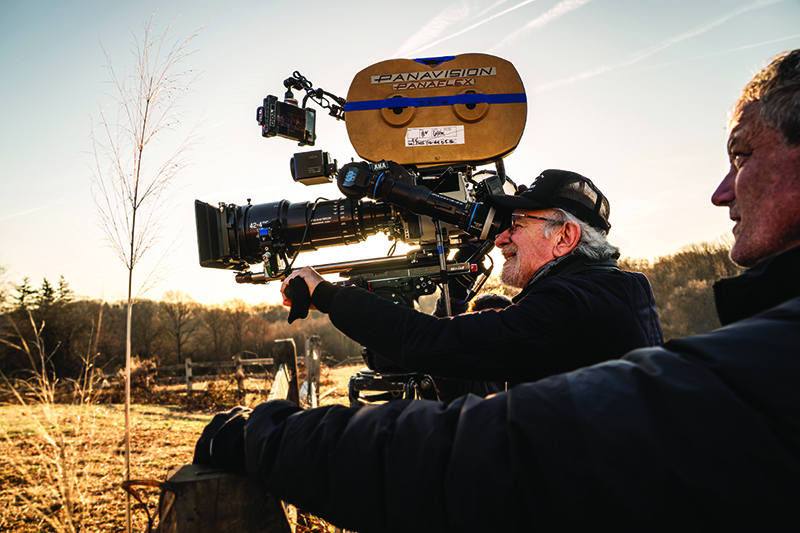
How many projects have you done with Steven Spielberg?
This was my third. I did Bridge of Spies and then The Post was the second. Disclosure Day is a much closer companion piece to Close Encounters than it is to ET. I was very happy that they asked me back. I really like working with Steven. Bridge of Spies at the beginning had an amazing multi-layered sound mix of the whole world with no dialog. But once they start talking, they never stop. It was a lot for us to do and I think they were really happy with the results. Then The Post was also similarly talky and had some huge scenes with lots of people in the newsroom.
I like working with Steven, it’s great, it’s sort of a high-pressure situation with super-high expectations, but there’s a lot of prep but everyone’s ready. Steven is such a great storyteller with the camera. It is amazing the way he can move things around.
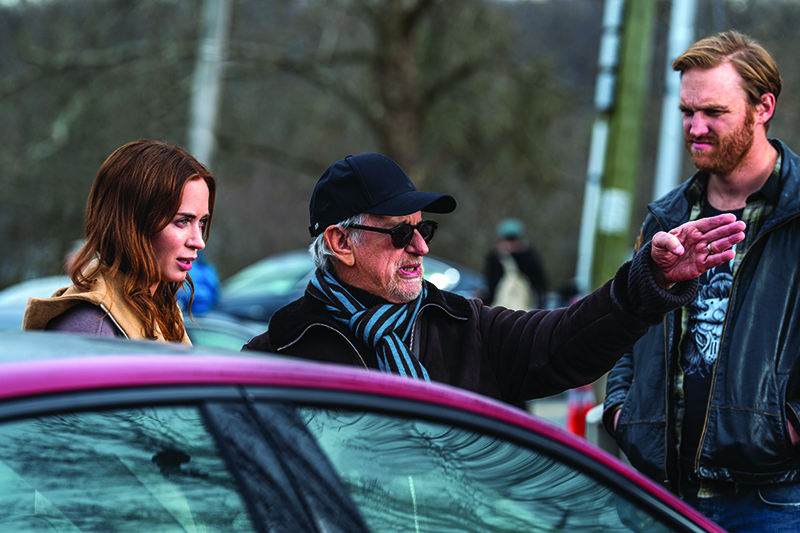
In terms of how he works, he’s there, he’s ready, he’s prepared, Steven is 100% present. Before call, he’s making chalk marks on the ground. He’s engaged. He answers questions. One of his great skills is decision-making. You can ask him a question, he’s very accessible. You can go to him and say, “Hey, there was a thing where they came through the door and Emily talked to the woman at the door. I don’t have a mic on them. Do you want to hear what they said? There was a little exchange there.” And he’ll say, “No, I don’t. It’ll be music all the way up till she hits the staircase.” Or “Yes, absolutely. That was a cute little moment. Put a mic on them.” And right then, he’ll make a decision.
Steven likes to rehearse somewhat. But he doesn’t overrehearse it. He’s worked it out beforehand and then we go through it. You do get a couple of good rehearsals in there. It’s not like, “Let’s shoot it and see what happens,” very seldom with him. I think because on some of the stuff that’s more elaborate, he wants to be there for the moment because he’s so much about the choreography of the people and the camera. The camera itself is a player…
Was there a lot of VFX and CGI?
Steven leaned into doing a lot of practical effects. Not necessarily to fight against the CG tidal wave, but I think that he felt that it was a film that had a lot of stuff going on, and by grounding it in real effects, it would help sell that there’s a certain element to it that is not of this world. There were all these car chases. It’s an action movie, it’s a thriller, and it has to be really grounded.
There’s the scene where the train and the car crash, and the car is pushed under the train and dragged along the tracks, and gets squashed and then blows out the windshield and people climb out and get onto the train to get away. It’s very beautiful, crazy choreography. I wanted to do some effects recording and I tested the Tascam 32-bit float tiny recorder, the Tascam FR-AV2. I got a couple of those just to try them out because in the past I am guessing how loud something’s going be and have to set a setting on a recorder. The 32-bit float recorder gives you a giant dynamic range. I used DPA lavs with the Ambient EMP5S Electret power adapter to power the mics into the Tascam recorder.
Steven doesn’t do much 2nd unit, but I brought in Danny Nydell, a New York Production Mixer who I like, and is very game for all sorts of craziness, to do that stuff. We used the Tascams in most of the stunt scenes. For example, when a car gets driven off of a cliff into a quarry. We put the recorder near where the car hits. It was stuff like that was fun to be able to make a bigger series of recordings.
With the car chases, some of it was car-to-car shot with a Russian arm and then we would be in either a lead or follow van. We had big antennas on the roof and we made it sort of a command van that Steven liked having that whole setup with big monitors and sound. We would be zooming around either chasing them down the road or in front of them, leading. That stuff takes choreography. I mean, personally, I’ve probably spent many years of my life riding around on insert cars and process trailers, and if I never do it again, I would not feel bad. I just think about the nights endlessly spent going back to one.
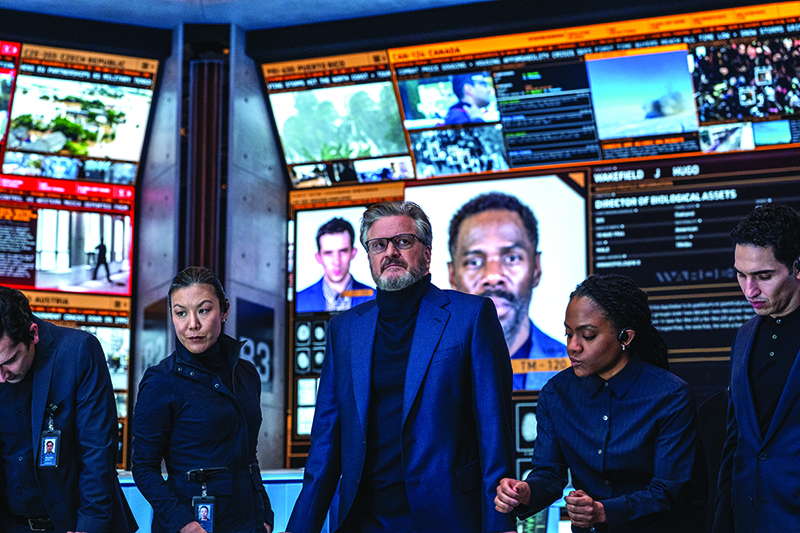
The big elements were all real. There was some green screen, but not very much. The headquarters of the evil secret corporation Wardex had a real video wall; it was a pretty elaborate rig that was astonishing. I don’t think anyone else would have made that a real video wall.
You would just assume this is just a big green screen and they are going to lay it all in. Video Supervisor Ben Relf went way above and beyond what anyone could have imagined was possible when you see it. The giant surveillance room that has a mind-blowing video wall of surveillance is all live switched monitors. There were a lot of things that I didn’t realize early in pre-production would be problems to solve or puzzles to unscramble.
All these people are wearing body cameras. We originally thought that the body camera footage will just be processed later. We did some testing of real body cameras as they will appear in the monitors in the headquarters. Then there was a question, could we mic them and get audio for all that stuff? Joel Weaver, the Property Master, who’s an old friend and a really good prop person, did some testing of different body cameras and found one model that worked where we could hear them without having to recreate it in Post. Even better, these could connect to a network via a cellphone link so they can be recorded at a central station, and that’s what we did, giving the Post Team more layers to play with.
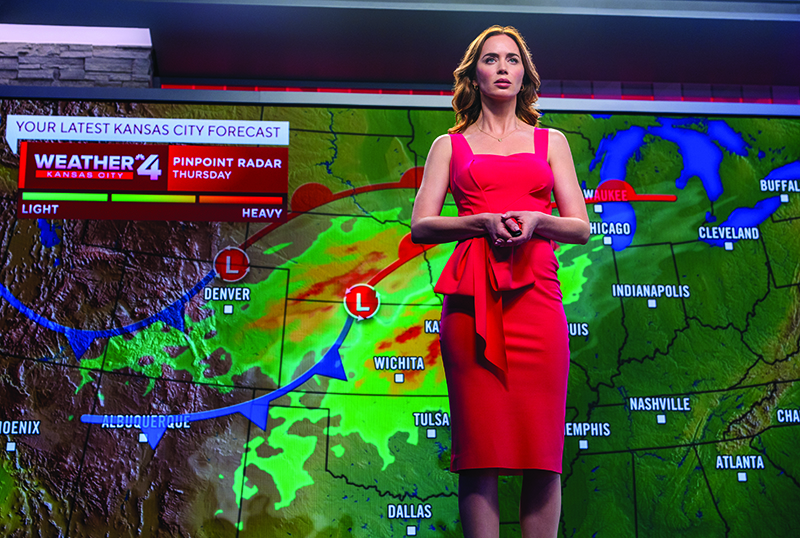
In the story, they’re going from the outskirts of DC, perhaps Maryland. You never know exactly, but it’s probably somewhere DC adjacent to Kansas City. We filmed mostly in New Jersey and the one thing that stood out in terms of complication was the final sequence in a television station in Kansas City where Emily Blunt has worked as the weather person. All the action converges on that TV station at the end.
Steven really liked the lobby of the New Jersey Institute of Technology, which is a technical college in Newark. It has a big entrance hall and a giant glassed in lobby area that looks out on the street. Steven said, “I want to have it be a real TV station, have it really function. I want to be able to have the control room actually control the cameras. If they say, zoom in on camera three, the guy on the camera will hear him and zoom in. That video will be live in the control room and that video monitor will show what is camera three. Can we do that?”
We figured it out. I got Patrick Farrell as our Comms Tech to have that available to us in the mix of what the director is telling camera three and all the orders, the switching, all that they say in a control room. That jargon, that banter.
Jeff Livesey recorded all the studio banter by tapping into the comms system and getting the comms feed recorded. With some additional microphones, I was getting that background stuff as a separate mix and archiving it so we would have it for later. We matched timecode because we were sometimes shooting two places simultaneously. We were shooting in the control room and on the floor, as Steven wanted to have it live in both places. There was all this other talk going on in the control room which would normally be happening, but it wasn’t scripted. This is where my crew got bigger and bigger. There were several days where I had the largest crew I’ve ever had on a film, I think, ten people in our sound world.
We also shot at Steiner Studio in Brooklyn, New York, which is great. It’s my favorite stage, plus I can get there on a bicycle from my house, so it’s excellent. There were a lot of locations. It was a relatively long shoot. We went from late winter into summer, finishing in late June. We went upstate for some scenes, such as the car chases, the rock quarry, and a lot of driving stuff. But most of it was in and around New York.
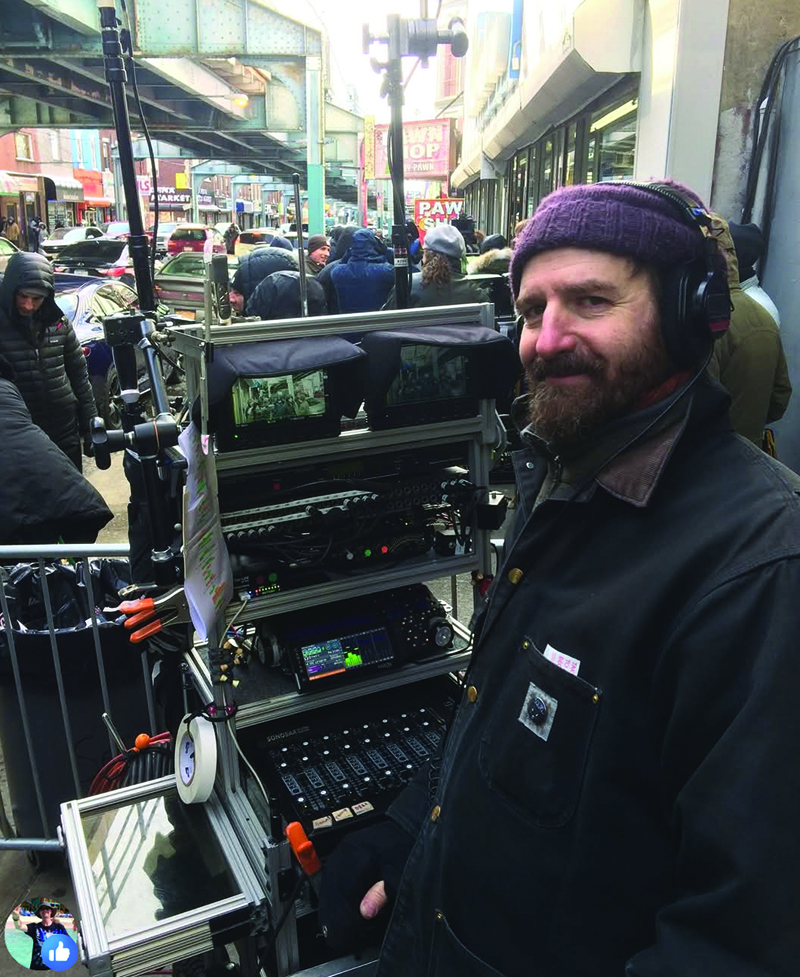
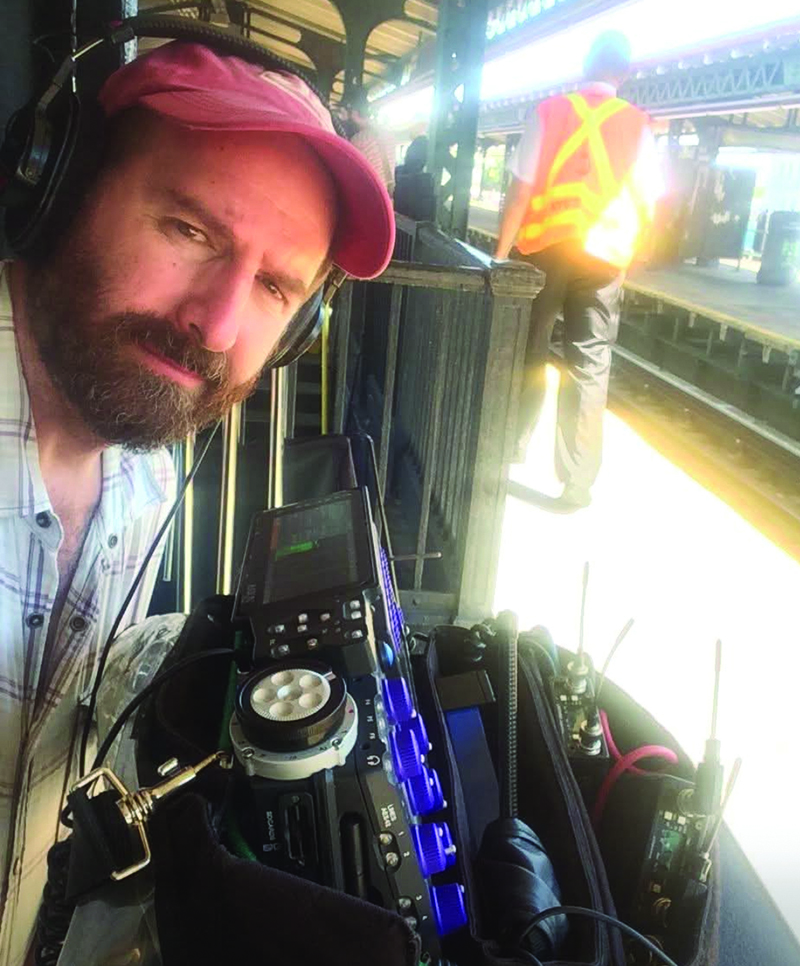
When I’m mixing, I generally stand. I’m sort of unusual in that way. I think now it’s more prevalent but I never had a chair, I always stood. I just always felt when I’m sitting down, I got more sleepy. It’s easier to concentrate when I was standing. I could see the set better. In the old days, there was no video assist. I just built my cart high and then I stand up.
I use the Cantar X3, Shure Axient for wireless. The Sennheiser MKH 50 is the first mic out of the box. That’s the default and if necessary, we change from there. Outdoors, I’ll go to a Schoeps CMIT.