by Ric Teller
Try having ’em sing into a 58
Show of hands. How many of you played in a band when you were young? No, not the school concert band or the marching band, although I am a big supporter of school music. In my younger days, I enjoyed time in the Hastings Junior High Band, under the direction of the terrific Jack Minshall, followed by the Hastings High School Marching Tigers Band. And in the fall of 1970, I passed the audition for the University of Nebraska Cornhusker Marching Band, 188 marching men under the direction of the great Jack Snider. That’s right, from its roots as an offshoot of ROTC, no girls participated in the band. That changed in 1972 with the passage of Title IX. My sister, Beth, joined the band a couple of years later, one of the pioneers. Okay, thanks for indulging my marching band reminiscence; now, back to the original question. Did you play in a band? One that had microphones and a PA. I believe many of us were introduced to sound gear while playing in someone’s garage or basement. Often those stories, including mine, begin with, “When I saw the Beatles on The Ed Sullivan Show…” A few years later, The Fabulous Flippers, a terrific band from Lawrence, Kansas, featuring an excellent horn section, played at The Hastings City Auditorium. There was the lead vocalist, Denny Loewen, singing into what was probably a Shure mic. Maybe a 565, but more likely an SM58. Who can remember that far back?
The first band I joined had high-impedance microphones. Our Sound Mixer, Don Robertson, sat right in front of the seven-piece band in order to keep the length of mic cables under twenty feet. In the high-impedance world, longer cables have higher capacitance, creating a low-pass filter, cutting the high frequencies, resulting in lower output and a duller sound. Each night, Don would jump up from his mixing position, hop onto the stage, and sing “Jumpin’ Jack Flash.” It was the best thing about having him set up so close to the band. A couple of years later, I was asked to play in the Chancellors. Not the Minneapolis Chancellors who covered Bill Medley’s “Little Latin Lupe Lu.” Personal note: The best version was recorded by Mitch Ryder & The Detroit Wheels. I played in the Chancellors from Lincoln, Nebraska.
We were a popular regional band that had a PA from Stanal Sound, and a bunch of Shure SM58’s. Our PA Tech/Mixer was Monte Krabiel, who worked for Stan Miller at Stanal for a long time.
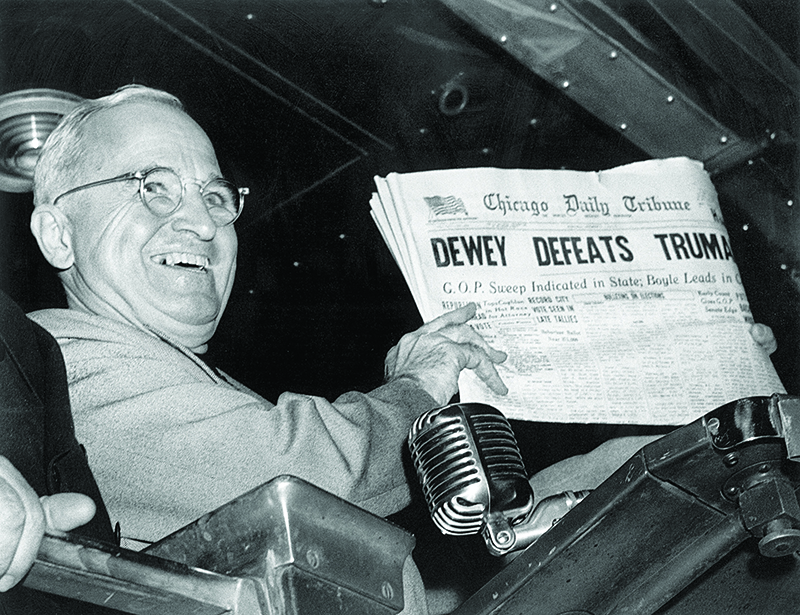
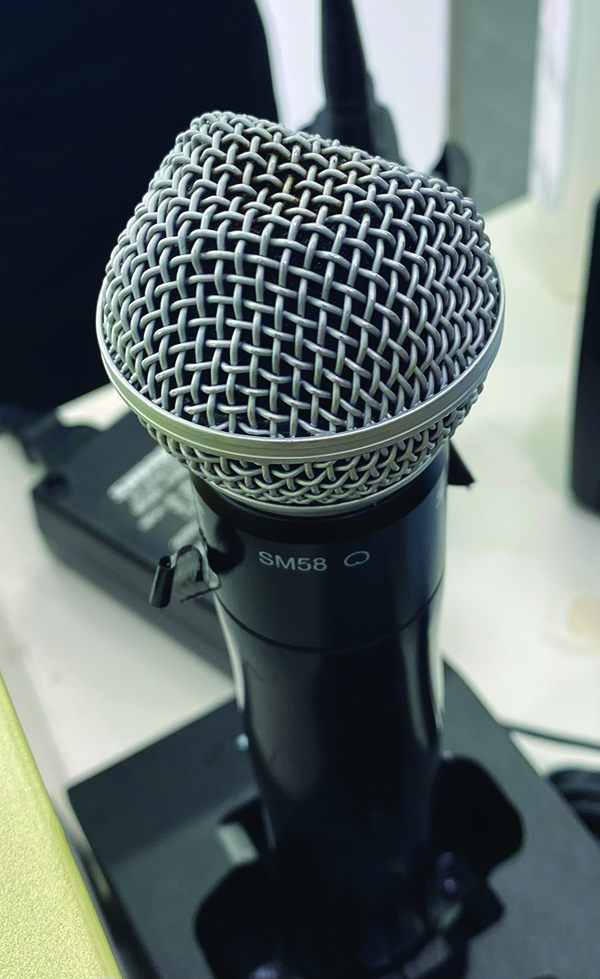
This year, the Shure SM58 turned sixty years old. Every band I played in had them or wanted to get them. The Shure corporation recently celebrated a century in business. They have had a remarkable series of products with longevity not often seen in the professional audio world. Among other things, they are known for making the most visually recognizable microphone, the Shure 55. In 1939, when it was released, the 55 offered performance superior to its competitors and an iconic design. Through various versions in its eighy-seven years, the 55 is still in use and can be found in many logos and photos, including the famous picture of Harry Truman holding the front page of the Chicago Tribune with the banner headline, DEWEY DEFEATS TRUMAN. Spoiler alert. He didn’t.
When the SM58 was released in 1966, it wasn’t a big hit. Same story is true for the SM57 that entered the market a year earlier. The SM, which stands for studio microphone, had a lot of competition. In recording studios, the Neumann U87 was released about the same year. RCA had the very popular 77DX on the market about a decade earlier, and the reliable and rugged 635A from Electro Voice became popular for TV, radio, and carpentry applications. According to Michael Petterson, Director of Corporate History at Shure: “Sales were sluggish, and plans were afoot to discontinue the SM58 and the SM57. As a last-ditch effort, the Shure national sales manager suggested introducing the mics to live sound engineers in Las Vegas. The mics were a hit in Vegas, and entertainers began to embrace these models for live performance.” Soon the SM58 became the standard for live vocal mics, whether you were Roger Daltrey on tour with The Who or in a combo playing songs at a Holiday Inn Lounge.
Today on Amazon, you can purchase a Neumann U87 Ai for $3,750, an RCA 77DX is available on Reverb for $2,850, the Electro Voice 635A, discontinued in 2024, after a sixty-year run, can be found used for around $200, and you can purchase a new Shure SM58 for $99 wherever quality microphones are sold.
In the 1960s, about the time of the birth of the SM57 and SM58, the abbreviation for microphone changed from mike to mic, making the present participle of the verb “to mic” the somewhat confusing ‘micing,” which looks like it has something to do with a small rodent. Some use “miking,” others “mic’ing.” The etymology of micification can be mystifying. Around that time, Dad had a Wollensak tape recorder for business use. It was my first personal experience with a microphone and with reel-to-reel tape. My good friend, Jim Standley, and I recorded radio commercials for high school events on that rugged machine. The same year, I successfully auditioned for the Nebraska All-State Orchestra. I had never played trombone in an orchestra (I was a percussionist in the Hastings High School ensemble my senior year). Being selected was kind of a big deal. Players from high schools all over the state traveled to Omaha, spent a couple of days rehearsing with a guest conductor, and performed a concert, including the “1812 Overture” by Tchaikovsky. We each received an LP of the live recording. Wish I could travel back to see what mics and recording equipment were used to make that record. Today, I learned that my maternal grandmother’s life overlapped with Tchaikovsky’s. Her husband, my grandfather, was born before time zones existed. In 1972, after the passage of the 26th Amendment, I was excited about voting for the first time. My grandmother told me that she had that same feeling at age 35 when she first got to vote in the 1920 election. The first election after the passage of the 19th Amendment. The first time women voted. I like time-span factoids and will share another favorite later in this ramble if space allows.
Those of us who have reached a certain age probably remember pulling cable in the plenum of the Shrine Auditorium and the Pantages Theatre, or maybe dragging a long DT12 through the wet grass and mud in Pasadena for the Rose Parade. If you never experienced that rite of passage, be grateful. When the Calrec Alpha came on the scene, we began to embrace audio signals being transported over fiber optic cables. In the beginning, we ran copper backups for the fiber, but now we are totally reliant on those lightweight, back-pain-saving cables. On a recent show, audio information between the stage and the broadcast truck ran on TAC 12 fiber to and from the Calrec Hydras (stage boxes). FOH and monitor Digico consoles were connected with Optocore fiber. We used a Ferrofish, an AD/DA device to send Pro Tools and Autotune outputs to the splits, a Yamaha Rio on fiber to the truck for emergency backups, audience mics, and lighting board timecode at FOH, and a CPT Systems Dio 0808MA-XLR for emergency backups between split world and the truck.
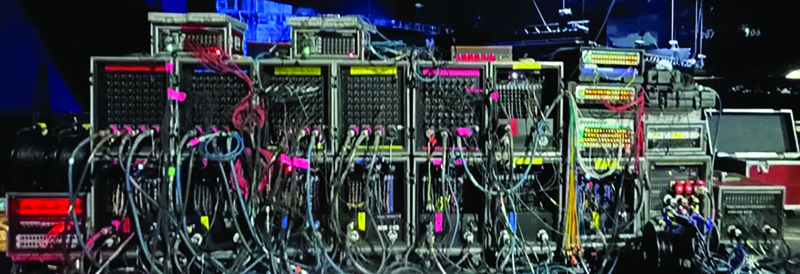
We still run some copper mults, mostly W-2 and W-4, but not nearly as much as we once did. I wonder what is next. Whatever it is, chances are good that an SM58 will still be involved. Oh, yeah, and it has been years since I’ve been in a plenum.
The voice of Vin Scully, whether coming through a Shure SM58 or any other microphone, is iconic. In 1950, when Vin started announcing for the Brooklyn Dodgers, Connie Mack was still the manager of the Philadelphia Athletics. Connie Mack was born when Lincoln was President.