An Interview with the Sound Crew
by Richard Lightstone CAS AMPS
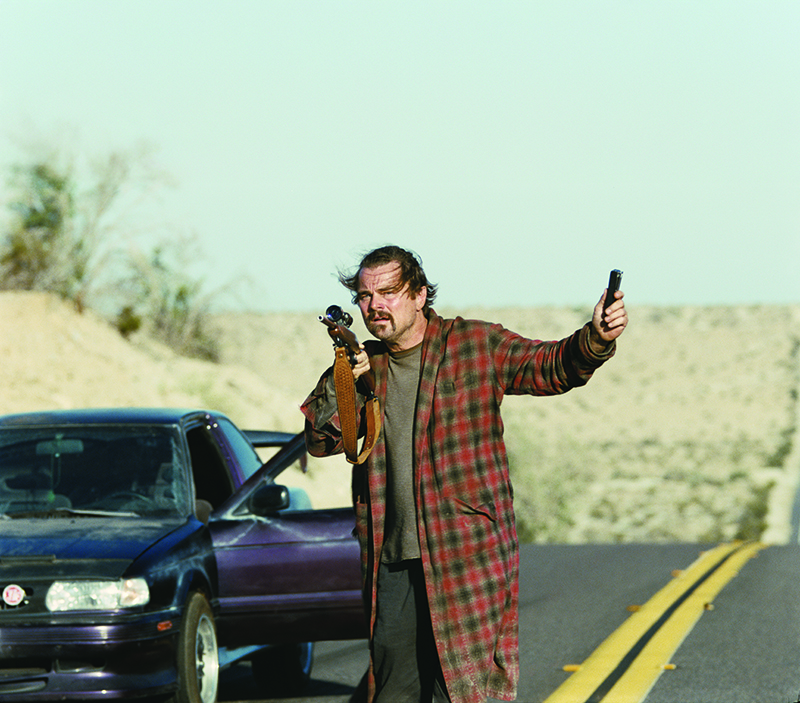
At the time of writing, One Battle After Another, directed by Paul Thomas Anderson, had a worldwide gross of $205 million. I caught up with busy Production Sound Mixer Jose Antonio Garcia on the sequel of The Hunger Games: Sunrise on the Reaping in Berlin, Germany. Later, I spoke with Boom Operator Dave M. Roberts in Asheville, North Carolina, and Utility Sound Technician Rachel Schroeder in Los Angeles, to get a full perspective on this challenging production.
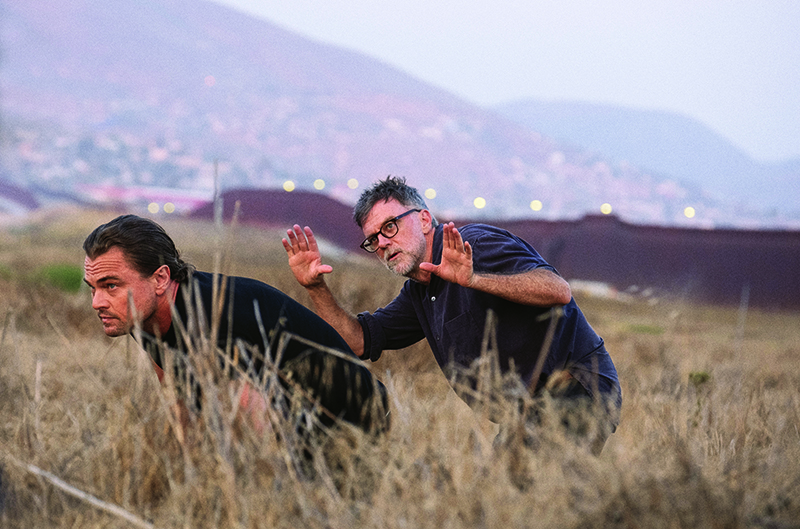
Jose Antonio Garcia: The film was shot mostly with a VistaVision camera, its eight perforations per frame, so it’s noisy. I say mostly, because when it came to intimate dialog scenes Paul would use a Super 35 camera. We shot for more than one hundred days. It was my first time working with Boom Operator Dave Roberts, who has worked on many PTA (Paul Thomas Anderson) projects with John Pritchett. Rachel Schroeder was our Utility Sound Technician and has been working with me for a couple of years. A very good crew with incredible spirit. I really enjoyed Dave very much. It’s the first time I’ve worked with him, and I would work with him anytime.
Richard Lightstone: This is also the first time you’ve worked with Paul Thomas Anderson?
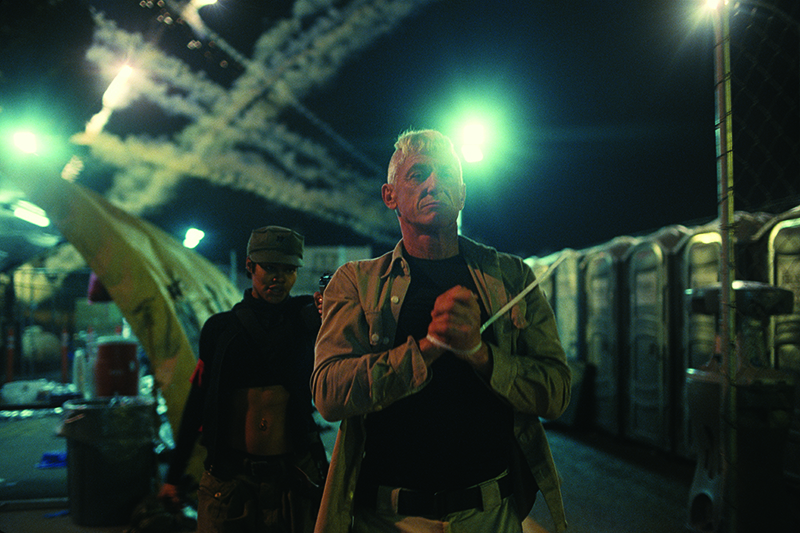
JAG: It was a pleasure to work with a filmmaker like him and with such fine actors, too: Sean Penn, Leo DiCaprio, and Benicio Del Toro. What’s amazing about this project was that there’s no egos. It was always about the movie. All the problems, all the solutions, all the thinking was, how do we make it better. How can we do this? It was a very intense project, but there was no video village, there were no producers.
We used to joke about an eighth of a page on the call sheet, calling it “death by an eighth,” because it was never easy. Suddenly, there were seven microphones out there. Paul likes to be in the car shooting with the actors. So, there is no space for me, it was a Hail Mary, tie the recorder as best as I could, and then feed Paul hardwired headphones, he has a very good ear. Then pray a lot, and light a lot of candles.
We were constantly on the move with a bag-rig. There were scenes that started with me mixing off the cart, let’s say it starts on the stairs, and then they come down, get in the car and take off and the bag-rig takes over.
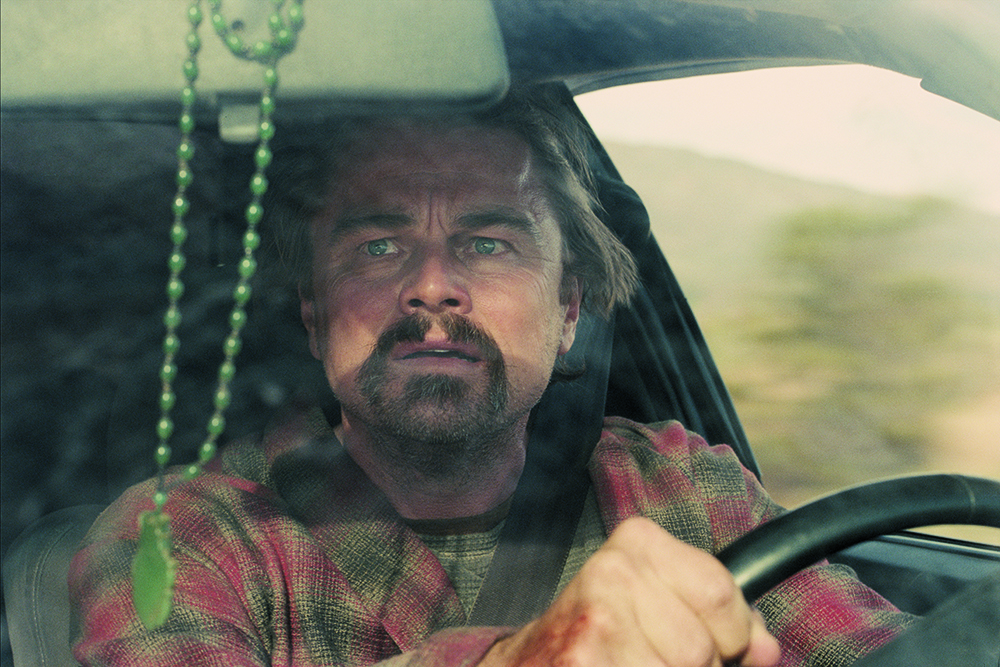
We ended up mic’ing the cars a lot and putting lavaliers on the actor and a planted lavalier on the visor. We also had a bunch of what I call stunt mics, because they were constantly being smashed by the car door closing or placing them near the exhaust or on the engines. I think it worked, it helped a lot for post.
RL: It was a majority location film?
JAG: There were more than thirty locations. We started up in Eureka and then we went to Modesto, Sacramento, the Stockton area, then the mission in San Juan Bautista. Then we moved back to L.A. for a day or two, of exteriors, and then to San Diego and Tijuana and El Paso for the opening scene that we recreated by Tecate. We were also in Borrego Springs which was deadly in the summer. That was tough.
RL: Was there any stage work at all?
JAG: Very minimal. The stage work was two or three days for the tunnel scene, a tunnel that you could shoot down into and the body drop through the dumpsters. I have very deep respect for Paul, because he has all this recognition and power but it’s never about him, it’s always the movie in his mind, the movie, the movie, the movie. I really enjoy working with him. It’s very motivating working with an individual like that. For instance, Paul always wants both sides of a telephone call recorded with the actors. PTA would even fly the off-screen actor in to the location to achieve this. The post people also did some magic to mask the camera noise; it was very impressive.
RL: Your 1st AD was Adam Somner.
JAG: I loved Adam, he was one of the best AD’s I have ever worked with, and unfortunately, this was his last movie. He died of thyroid cancer November 27, 2024. You know sixteen of the movies he worked on received a Best Picture Oscar nomination. I loved that guy.
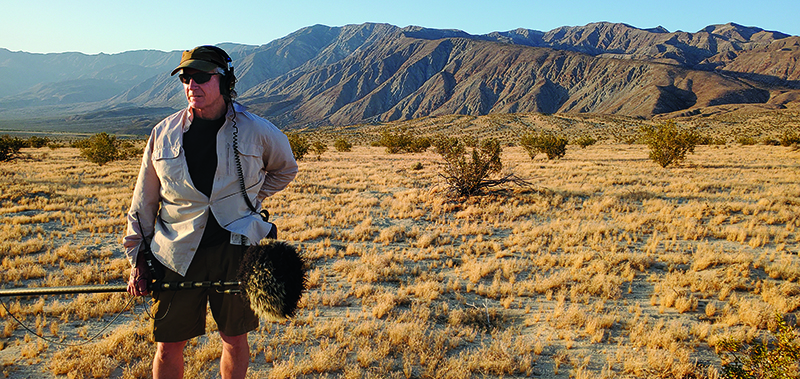
Boom Operator Dave M. Roberts
Dave Roberts: Even though this was my first time working with Jose, we dovetailed pretty quickly. It was good fun and it just felt like a fever dream. That’s kind of how it was, a fever dream.
RL: You have worked with Paul Thomas Anderson and many times with John Pritchett. Tell me about your relationship with Paul, PTA.
DR: He likes a small nimble group and likes to move very quickly. What you see on the call sheet may not necessarily be how the day is going to go. Paul folds you in as things evolve. You just kind of let him do what he does because he knows that everybody’s going to flow with what he’s trying to do.
RL: How did you work with the VistaVision camera?
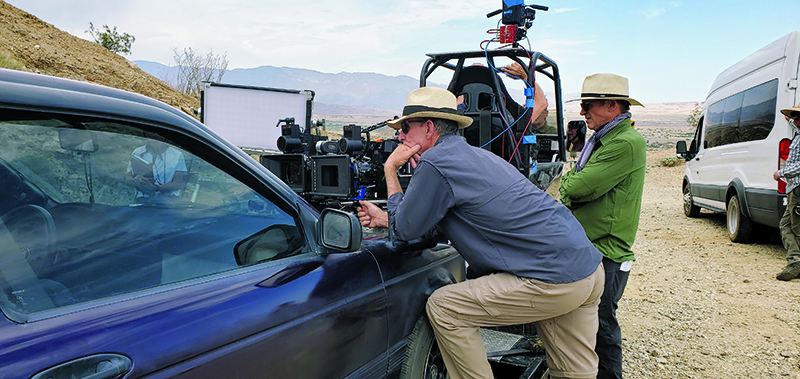
DR: You do what you can, and the Camera Department was very helpful to get rid of as much of that noise as they could. Rachel wired everybody, and she was miles ahead of the curve. We would go into scenes on Paul’s show like, “Oh, this is great.” We’ll walk in, we’ll have two booms and decide who will cover what. Then you’d see the VistaVision sitting in the corner. You just have to be okay with it. But I think the post-production teams were wizards as well.
Paul’s style is very Altman-esque. He doesn’t want to loop. He had to really get comfortable with the fact that they can fix the noisy VistaVision camera, and we had to get comfortable with it as well. It all came together, and I was thrilled at how good it sounded.
RL: You had to deal with over thirty-one locations.
DR: It was difficult in terms of the number of locations. The locations themselves were not always very pleasant and there was a lot of car work. You put everything in a bag and send it off and hope it comes back with something good. There was a lot of free driving. That’s the way Paul likes to do it. He likes to go off on his own and make his movie.
We went to these places that were so far off the beaten track, you’d wonder why you’d go all the way there. But there’s something about actually being in the spot, that’s the kind of places Paul likes to create for the actors. He takes them to these places because it provokes a certain type of emotion. It helps his actors.
My recollection the most aggravating scene was the exterior phone booth outside of a market. It was a non-working phone with a sealed handset; we couldn’t get anything in there. Every take, we’d move a plant mic around because shooting VistaVision, you can see everything. Even trying to get a boom in there was problematic.
Also, some of the places were so blasted windy, it was just desert wind. You can conquer most of it, but between wind covers for the lavs, and wrapping the dead cat over his Sennheiser with another dead cat. It’s just constant wind, wind, wind.
It was a long shoot more than five months. We started in January in Northern California and finished up the end of July in Texas. We had a hiatus for a few weeks for Benicio. Paul wanted to wait for him, so they shut the company down for three weeks.
RL: Was there any VFX paint out employed?
DR: At times there were, it was kind of a negotiation. “Are you willing to paint this out? Is it a problem?” Then as time went on, it’s like, oh, yeah, we’ll just paint it out. They tried to protect the frame most of the time, but they would give us a take to get in there once they felt like they had the visual. The other thing we would do if it was really an egregious sonic invasion, they’d say, all right, we’ll just wild line it right now, while it’s fresh. We carried a silent camera, a Super35mm, and it would come out for intimate scenes or when they couldn’t get the VistaVision camera into some of the sets.
They did carry a blimp for the VistaVision. It was a brutal affair, a giant steel box that went over this giant camera. It was a fifteen-minute deal to reload.
RL: I understand where you live in North Carolina you suffered through a series of hurricanes?
DR: Three years ago, a giant oak tree fell through our home unannounced. We were out of our home for more than a year. Just when we were getting moved back in and life was looking normal, Hurricane Helene came along with nineteen inches of rain prior to the winds so the trees were sitting in soup. Our damage was minimal compared to many and luckily no injuries with us or in our neighborhood! The past year has been a little unpredictable.
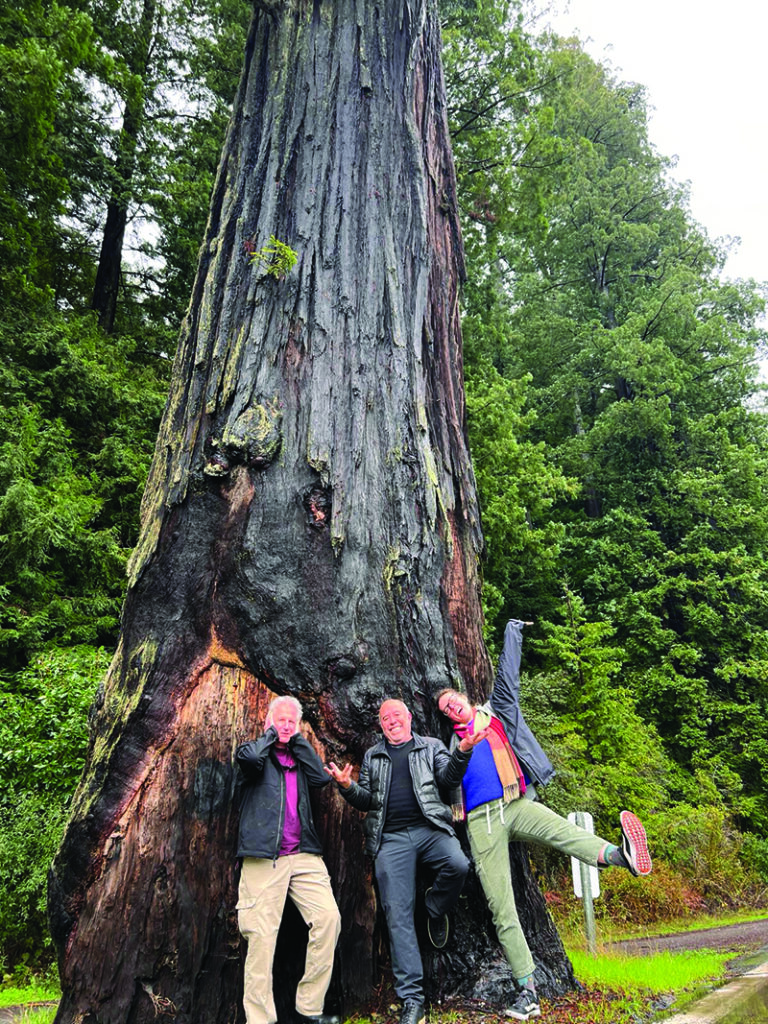
Utility Sound Technician Rachel Schroeder
RL: How long have you been working with Jose?
Rachel Schroeder: The first time we worked together was a movie called Amsterdam and that was the beginning of 2021. So, we’ve done quite a few
RL: How was it working with Paul Thomas Anderson?
RS: Paul’s amazing. He’s very intense and knows exactly what he wants and not afraid to reshoot whole scenes just to make sure he gets exactly what he wants. Paul is also very kind and he knew everybody’s name on the crew. I felt that he really cared about us, he tends to bring the same people onto his movies, everybody goes way back with him. It’s a family feeling on the set. It was really nice.
RL: And the many locations?
RS: I enjoyed us being a traveling ‘circus,’ but it was tough. The weather challenged us in a lot of the places like Eureka. It rained pretty much every day we were shooting there, so it was very wet and very muddy. But I prefer that to the desert. When we went out to Borrego Springs in May, it was already one hundred and fifteen degrees, very dusty and windy. I managed to scratch both of my corneas the first time we were in the desert, after that I resolved to always wear goggles.
RL: Jose complimented you on your wiring of the cast, what’s your technique?
RS: I approach every costume individually, and having several years of experience, I can predict what’s going to work best. I usually try to have at least three options. If the first one doesn’t work, I have something else in my head where I place the lav. These costumes were fairly straightforward, but with all the action and movement, it did interfere with my ideal wire placement. Leo often had a crossbody bag. I couldn’t place it where I would normally put it, so I had to go to the collar and make sure it was on the side where the strap wasn’t going to be. I worked closely with the property and costume departments.
The cast would show up one hundred percent ready and immediately start talking to Paul working things out, as they didn’t stick to the script that much. I’d hang back waiting with Key Set Costumer Corey Bronson, who was amazing. We worked well together, and he was very cooperative. He would cut holes or whatever I needed, and be there for moral support too. You just get it all done at once, I always like that.
RL: What was it like working with Boom Operator Dave Roberts?
RS: Dave is amazing, I’ve never seen a Boom Operator who’s more in tune with what’s going on, which was extremely important because of the free-form style. We followed Paul around and he would decide what he was going to do next. Dave was always on top of it. We never had to worry about missing anything because he knew exactly what was going on, what was going to happen next, and even what was going to happen after that. I’ve never worked with someone who was quite so on top of it like that and he obviously had a great relationship with Paul, almost as if he could read his mind.
RL: What sticks out about working with Jose?
RS: I remember when we were shooting in Sacramento, doing a lot of car stunts. We could have just sat back taking it easy. Jose was like, “No, we’re going to put mics on every single car,” to get the engine sounds and the crashes. We placed two mics on the car, one in the back, one in the front, in every single stunt vehicle.
That to me is Jose in a nutshell. He’s not going to sit there because there’s no dialog. He will find something to do, and it’s never superfluous. It always ends up being very important adding a whole new element to the car-chase scenes. I’m very proud of that; we had to crawl under so many cars and it was not easy, but the results were fantastic!