by Ebiut Cervantes
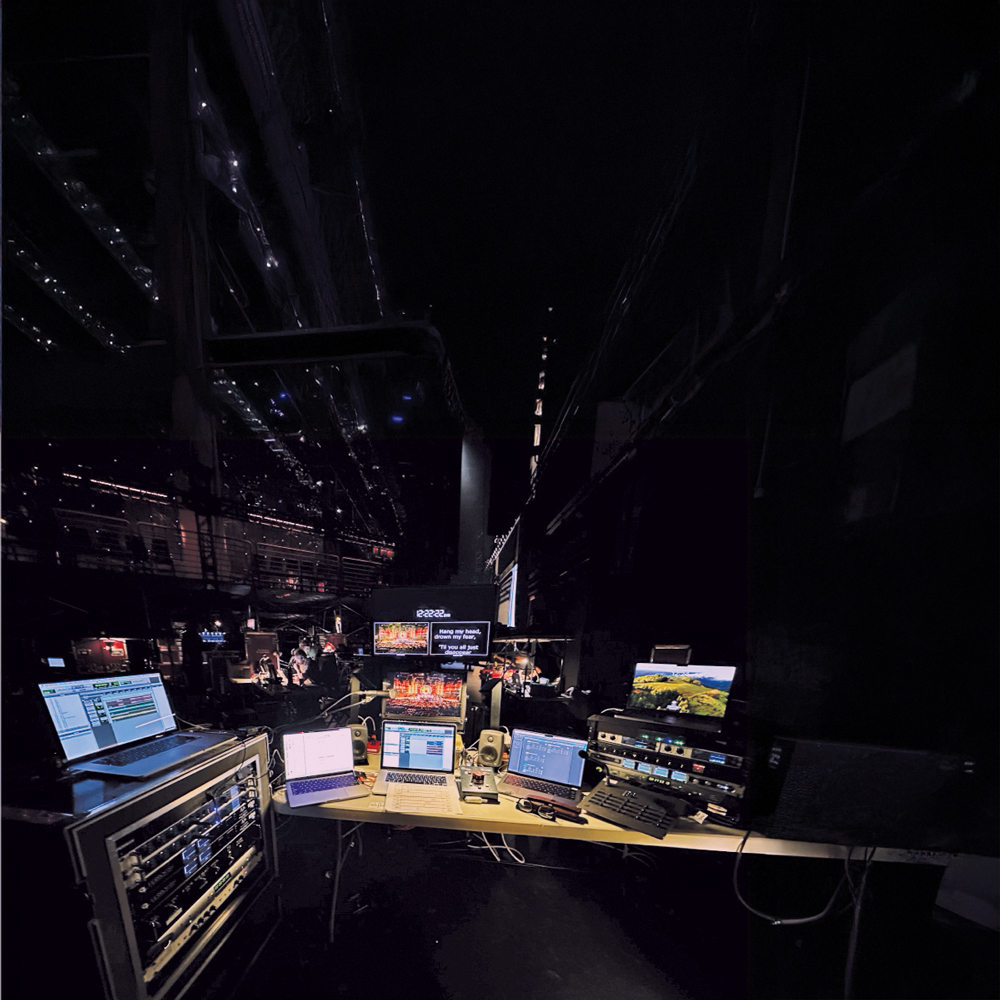
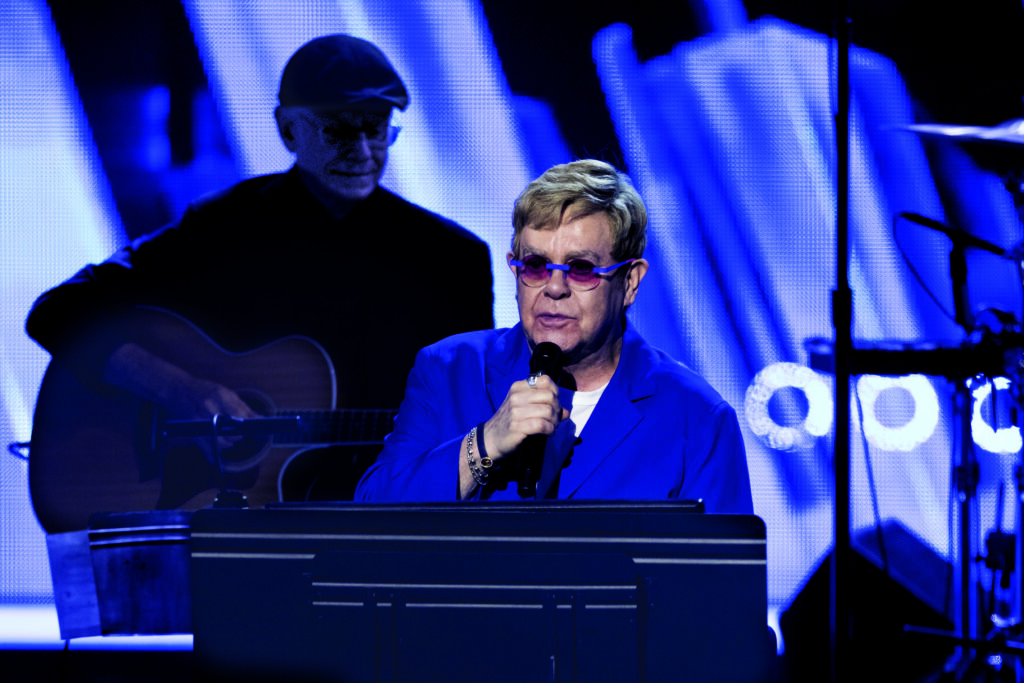
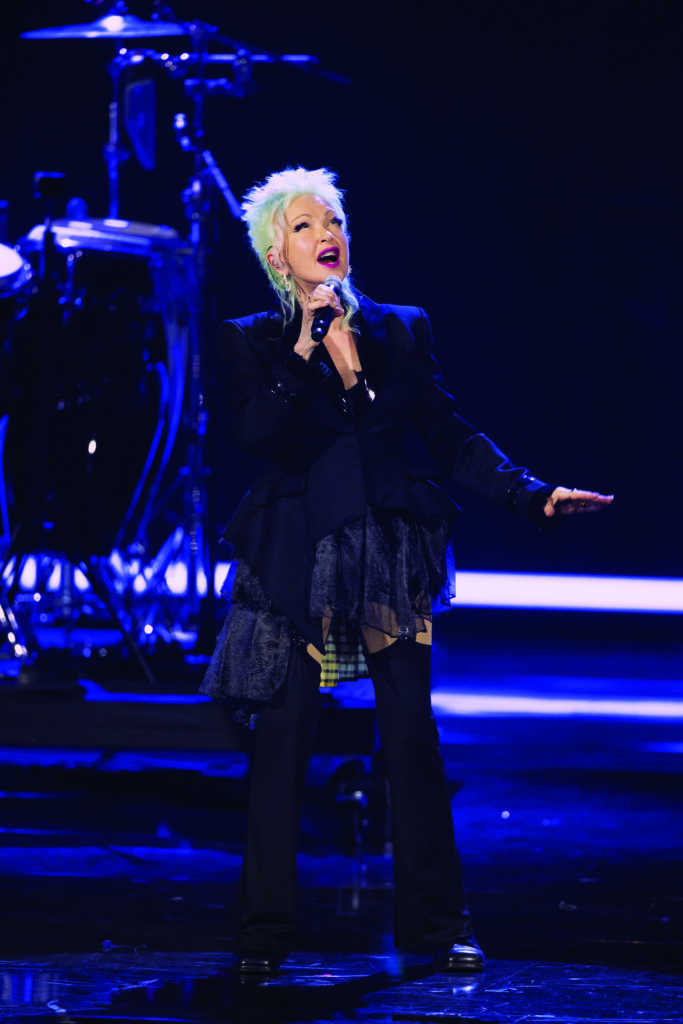
The 2025 Rock & Roll Hall of Fame Induction Ceremony was held on November 8 at the Peacock Theater in Los Angeles, celebrating inductees Cyndi Lauper, OutKast, Soundgarden, The White Stripes, Bad Company, and Chubby Checker. The event streamed live on Disney+ and will have aired as a primetime special on ABC on January 1, 2026. ESU and rehearsals began on November 5, but the work started much earlier than that for my team and I.
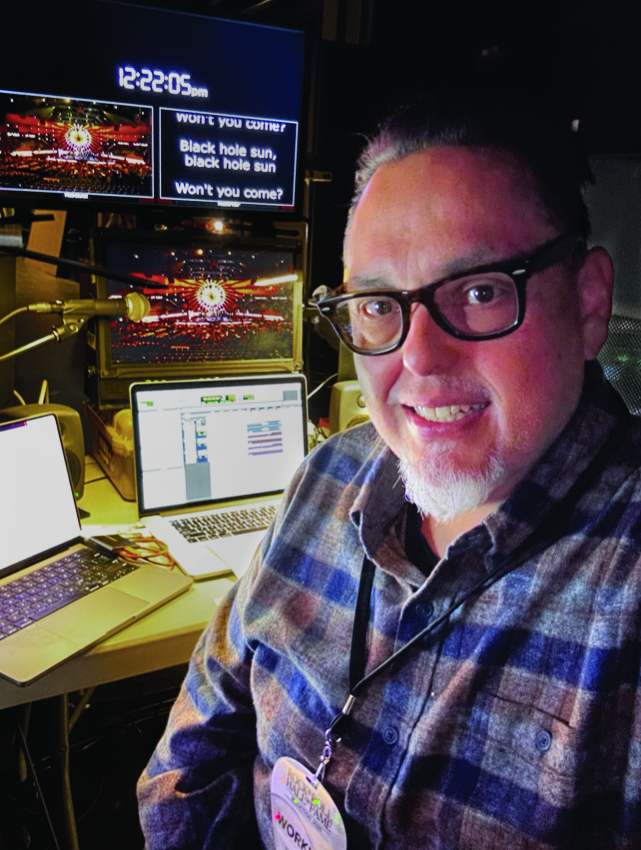
I got the call from our Audio Supervisor, Skip Kent, to provide Pro Tools playback for this legendary event. This would be the second time I was involved with the RRHOF Induction Ceremony. I handled playback in 2022, the last time the ceremony was held in Los Angeles.
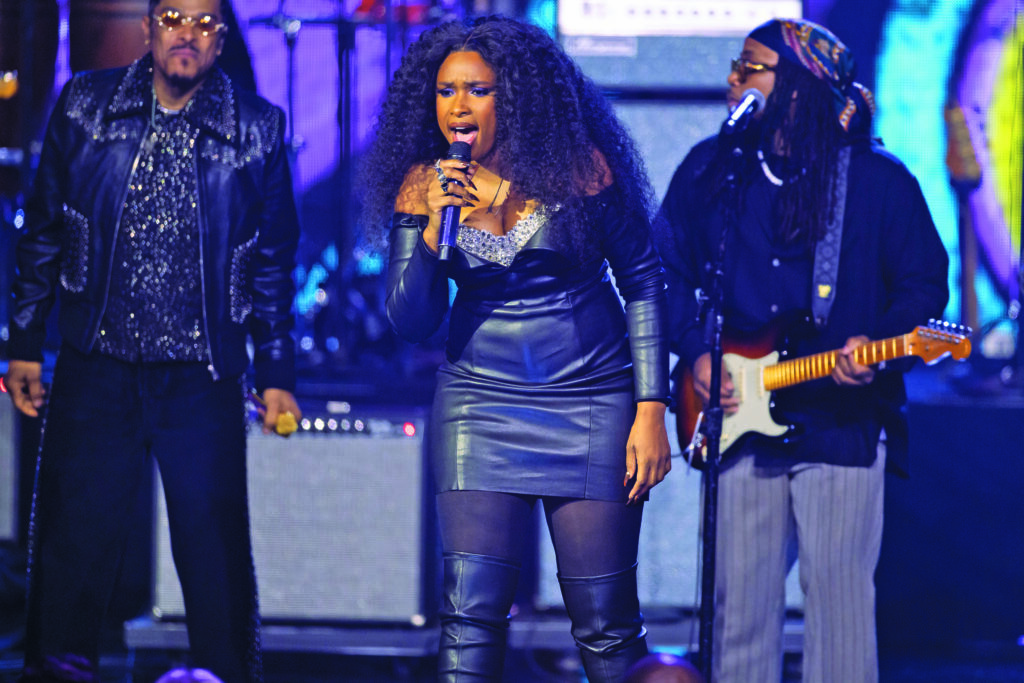
We had twelve live performances, some with Pro Tools and some without. The first performance alone was the Sly and the Family Stone Tribute (Stevie Wonder, Maxwell, Jennifer Hudson, Leon Thomas, Questlove, Flea, Beck, Omar’s house band). Now, I won’t be able to break down every single performance, but this one was particularly interesting due to the characters and situation involved.
I often get asked, “Why does ‘x’ artist even use Pro Tools?” Well, let’s clear up some misunderstandings. Using playback does not mean that the band or artist is not playing or performing. First of all, there is a huge spectrum of reasons to use playback. For some artists, it’s just a simple click and count for their IEM’s. For most, it’s used to add musical elements that need reinforcement and are not cleanly captured on a loud stage, such as string orchestras and choirs. And yes, there are “some” acts that are 100% “in the box” (I’m happy to report that we didn’t have any of those on this show). However, by far the most important reason to use Pro Tools playback is so that the show looks good.
Why “looks,” you might ask? Well, even though we can all agree that people don’t go home humming the lights, video content and lighting are a HUGE part of the show, and we play an integral role in making sure that light cues and video rolls happen perfectly in sync with the music. We do this through the use of LTC (linear timecode). Weeks before there is even a single soundcheck on stage, I receive temp tracks from the artist camps and assign LTC addresses based on the performance order. So, performance 1 gets LTC 01:00:00:00, performance two gets LTC 02:00:00:00, etc., etc. I import the temp tracks into a session and line up the start of the music with the top of the hour. The challenge with this is that as we get closer to the event, I receive final stems from the artist camps that, more often than not, don’t exactly line up with the temp tracks they originally sent. I’m then forced to re-sync the stems with the TC and re-export split tracks with a music reference on the left channel and LTC on the right, then send them over to our lighting and video friends who line up their programming and video/screen content. Using Pro Tools doesn’t mean an artist is cheating. It’s a powerful production tool used to make sure the show not only sounds good, but looks good too.
For this gig, I was asked to bring twelve channels of analog playback and four channels of Auto-Tune. We never know exactly which camps will request this, so we have it in our back pocket, ready to use if necessary. The “normal” stem output assignments from my rig are:
TRACK SOURCE
1 DRUMS
2
3 MUSIC
4
5 PROGRAMING
6
7 BGVS
8
9 LEAD VOX (REF ONLY)
10 CLIX
11 SLATE
12 Artist Slate
13 AT 1
14 AT 2
15
16 TC
I try my hardest to keep the outputs consistently laid out like this so that there is no confusion for the mixers downstream from me. That being said, some acts don’t have all of these elements in their playback, so I send out specific assignments for every act detailing what they should expect coming from me.
My outputs hit split world, handled by Steve Anderson and his crew of A2’s—and some of my dearest friends (Damon Andres, Steve Crane, Craig Rovello, Brandon Gilbert, Jason Sears, JP Elmore, Erik Bender, and Kim Petty). Here, all the signals hitting the stage get sent to all the different mix positions: FOH Production (Dan Gerhard), FOH Music (Robert Scovill), Monitors (Michael Bové), Music Mix in the M3 truck (Carl Glanville and Bob Clearmountain—yes, THE LEGENDARY BOB CLEARMOUNTAIN), and Broadcast Audio (Larry Reed).
Once I have actual stems ingested for playback, I assign them to their respective outputs and level-match them to a consistent level that will hit relatively consistently from act to act. This is key to the success of the show. Mixers shouldn’t be “fishing” for levels. The challenge is to keep the general balance that the artists are used to rehearsing with while still providing a consistent average broadcast level that everyone is comfortable with. I accomplish this mostly by automating levels, clip gain, and the occasional use of “gentle” compression.
My playback rig for this gig consisted of two MacBook Pros running Pro Tools 11 HD, two RME Fireface UFX units, two Ferrofish A16 MK2 AD/DA converters (for additional outputs), a Gearworks custom analog switch, a Digidesign Sync IO, and a Brainstorm SR-26 for TC distribution.
It’s a very basic setup. Both laptops run the exact same session simultaneously, each with its own hardware chain and outputs. Both sets of outputs then feed the switch. If the “A” machine or system were to fail, a tone signal driving the analog switch would trigger it to automatically flip to the “B” outputs.
For Auto-Tune, I use a redundant RME Madiface XT system running PT 2024 and the latest version of AT. I take a single MADI stream from split world to feed a DirectOut MADI bridge, which distributes the MADI stream to both systems. I feed the MADI outputs of the RME MADIface XT’s to a DirectOut EXBOX.SG so I can switch between the A/B outputs, and then feed the output of the EXBOX to a Ferrofish A32 to convert the MADI signal to analog. In the case that there are pitch or key changes in the middle of the performance, my AT system can chase the same show LTC I’m providing to the rest of the world, and I can automate any changes needed by the artist.
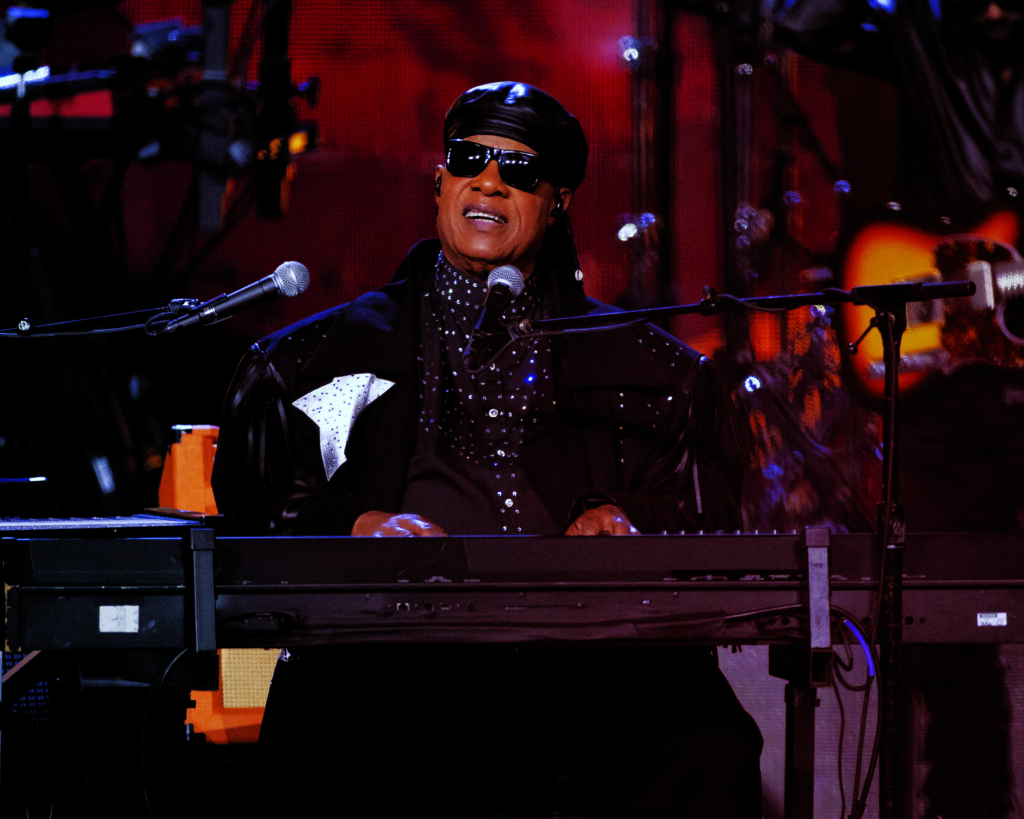
Now, back to the first performance: The Sly and the Family Stone Tribute (Stevie Wonder, Maxwell, Jennifer Hudson, Leon Thomas, Questlove, Flea, Beck, Omar’s house band). This was both the easiest and hardest performance of the night. Easy because they didn’t need much—it was just clicks and counts for the artists. That’s it. No Auto-Tune, no backing tracks, nothing. Just great music by legendary artists. What made it challenging was that some of the songs performed didn’t have much to “hold on to” musically since it was JUST click and counts and odd meters. During rehearsals, the band would get off the click when and if the singers decided to come in a bar or a beat earlier. So, it was on me to cut the click and counts on the fly so that the band could continue playing without being off from the click. This is nerve-racking because it’s a quick move, and you have to be 100% sure you’re making the correct call.
This actually DID happen during the show. Thankfully, I had the blessing of the house band’s playback engineer—my friend and colleague, Danny Cheung—and no one knew that anything had even happened.
The rest of the show went on without a hitch, and I’m looking forward to doing more of these amazing shows. Amazing not only because of the performers and inductees, but because I get to see and work with some of the best of the best in their fields—people I have the pleasure of calling friends.