• Skip to primary navigation
  • Skip to main content
  • Login

IATSE Local 695

Production Sound, Video Engineers & Studio Projectionists

  • About
    • About Local 695
    • Why & How to Join 695
    • Labor News & Info
    • IATSE Resolution on Abuse
    • IATSE Equality Statement
    • In Memoriam
    • Contact Us
  • Magazine
    • CURRENT and Past Issues
    • About the Magazine
    • Contact the Editors
    • How to Advertise
    • Subscribe
  • Resources
    • COVID-19 Info
    • Safety Hotlines
    • MyConnext
    • Health & Safety Info
    • FCC Licensing
    • IATSE Holiday Calendar
    • Assistance Programs
    • Photo Gallery
    • Organizing
    • Do Buy / Don’t Buy
    • Retiree Info & Resources
    • Industry Links
    • Film & TV Downloads
    • E-Waste & Recycling
    • Online Store
  • Show Search
Hide Search

Departments

News & Announcements

by Casey Weiss


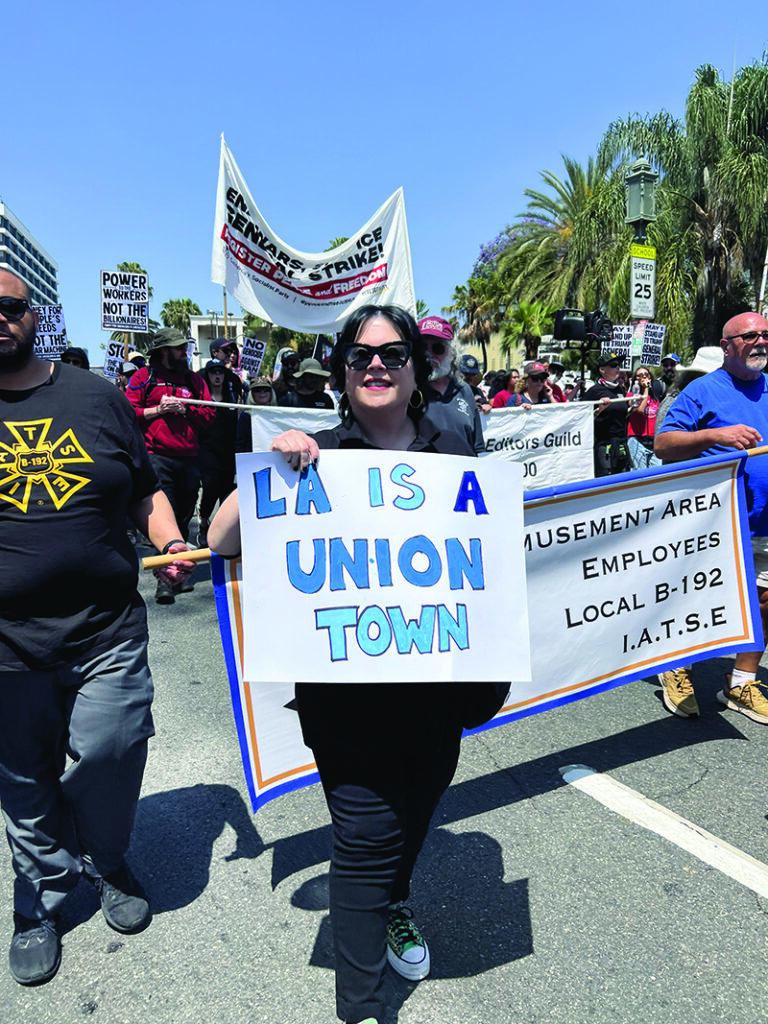
LA IS A UNION TOWN: May Day March

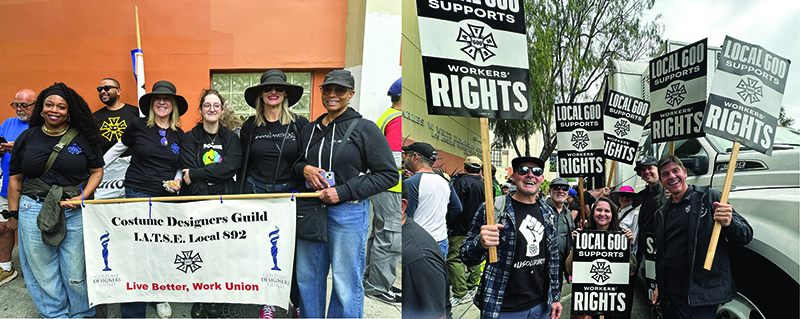
On Friday, May 1, in honor of International Workers Day, also known as May Day, hundreds of union members and kin marched through the streets of Downtown Los Angeles. The crowd was full of creative displays of union artistry from handcrafted puppets, totems, and banners to mobile bands playing along the roughly three-mile route. IATSE was represented by the many members proudly wearing their union gear and displaying their signage. LA is and will always be a union town!

Local 695 Assistant Business Representative Heidi Nakamura

Report Your Work

As the improved tax incentive credits begin to increase entertainment work in California, it is more crucial than ever for workers to report their jobs. Whether signatory or nonunion, reporting your work helps us understand production trends and identify opportunities for organizing, which then supports the Motion Picture Health and Pension Plan. It is easy to report your work online: https://www.local695.com/membership-services/job-repor ting/


IATSE Training Trust Fund: Safety First! Webinars

Biweekly and completely free webinars are available to all IATSE workers through the IATSE Training Trust Fund. Topics range from Basic Entertainment Safety, Sets Utilizing SFX and Fog Effects, Biological Hazards, and more. Keep yourself and your fellow crew members safer on set by checking out upcoming webinars at:
https://www.iatsetrainingtrust.org/webinars


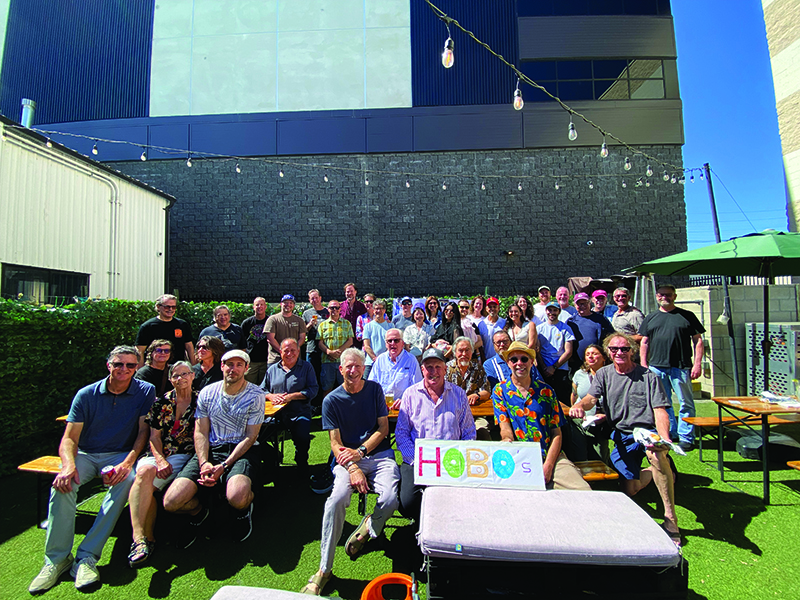
OLD FRIENDS

Front row: Joel Schryack, Peggy Names, Rene Defrancesch, Dave Kirshner, Joe Kenworthy, Devin Golub, Knox White.
Second row: Alenka Pavlin, Misty Coen, Glenn Berkovitiz, Mychal Smith,
Tim Song Jones, Andy Adams, Natasha Fagan.
Third row: Johnny Evans, Andy Rovins, Kevin Becker, Eric Alstad, Gunnar Walter, Rob Cunningham, Patrick Martins, David Raymond, Michael Primmer, Mitchell Gebhard, Rebecca Chan, Tanya Peel, Rie Nasu, Yvette Marxer, Nick Allen, Veronica Kahn, Eva Rismanforoursh, Frederick Weinberg, Richard Novick, Todd Bassman, Roger Stevenson, Randy Johnson, Scott Solan, Tom Hartig. Others in attendance, but not in the photo: Doug Shamberger, Jonathon Fu, Rocky Quiroz, Steve Morantz, and Joe Turrentine

On March 15, Randy Johnson writes that the H.O.B.O.S. (Hollywood Old Boom Operators), a random group of friends and working partnerships over many years, got together. There was no agenda beyond relating some favorite stories with hugs and hardy hand clasps. It was special to me and heartening to reaffirm how many great people there are in this business of ours.


New Members

Local 695 Welcomes its New Members
Jacquelyn Andrade Y-7
Kevin Erpenbach Y-16
Fiona Gay Y-1
Wesley Harris A-2
Francisco Hinojosa Y-7a
Andrew Huigens Y-6
Hunter Jackson Y-7
Pearce Lawrence Y-16a
Brian Nowac Y-4
Matthew Ortiz Y-16
Steven Ricks Projectionist
Shorif Suhel Y-16a
Arthur Tran Y-16a


IN MEMORIAM

LARRY A. LASOTA – Y-1
March 21, 1949 – May 2, 2026
WILLIAM JOEL PARSONS – Y-16
May 9, 1971 – April 20, 2026
MICHAEL SEEMAN – Y-7a
July 15, 1944 – April 3, 2026
ANDREW C. STRAUBER – Y-1
April 17, 1952 – February 10, 2026
KIRK H. FRANCIS – Y-1
August 27, 1947 – February 8, 2026
THOMAS D. CAUSEY – Y-1
December 5, 1949 – January 11, 2026
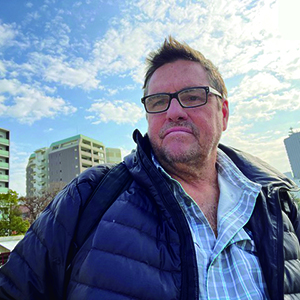
DONALD C. ROGERS – Y-1
May 4, 1931- January 4, 2026

Ric Rambles

Sometimes work in television can be more fun than fun.

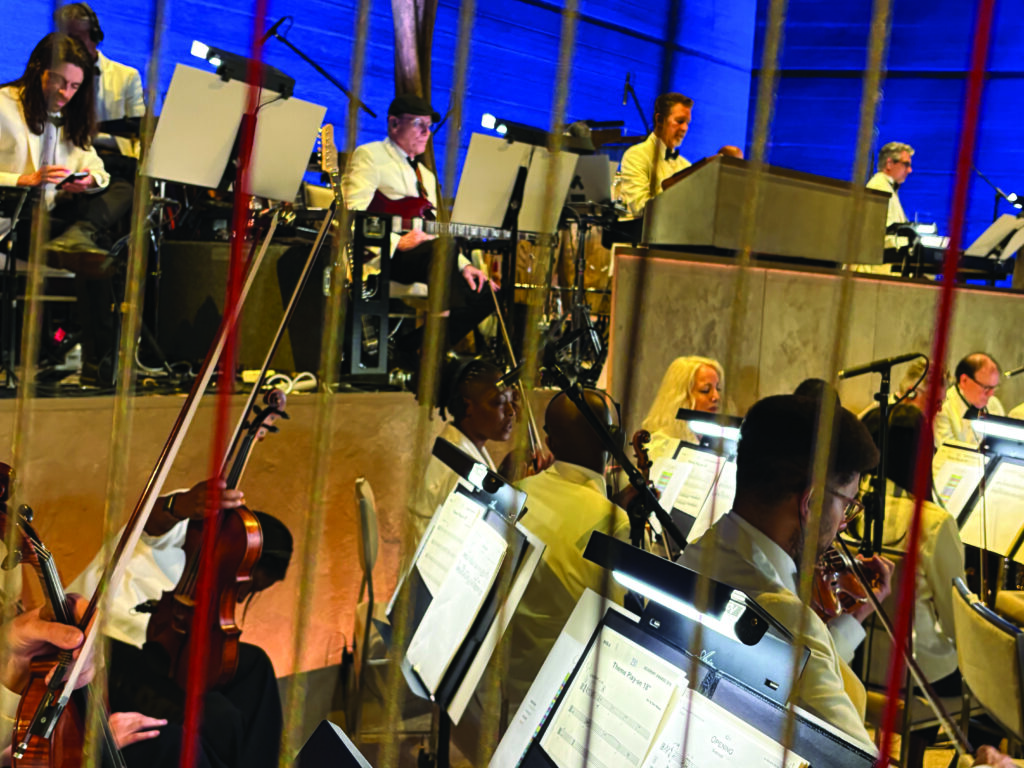
Yeah, I didn’t make that up. Um, I borrowed it (and don’t start a sentence with ‘Um’). If you wrote it, let me know and I’ll credit you in the next column. As I write this, I have enjoyed a lovely week on a music awards show in Miami, working with a group of people I am grateful to call friends. Today, during the dress rehearsal, I was upstage of a video wall, the talented live band was encouraging everyone to dance. At that moment, I thought about how very fortunate I have been to do what we do instead of working. And heck yes, I danced. At a pretty early age, I figured out that I wasn’t really smart. Rocket surgery was out, and I realized that I wasn’t a great rule follower. Not that rules don’t apply, just that I sometimes see them as suggestions that can be modifiable. The idea of not having a job … at a place … every day, was kind of a career goal. Young people, when I started this adventure, picture was 4:3, sound was mono, and the networks and local Los Angeles television stations had staffs of engineers. KTLA alone had about one hundred in their engineering unit. It was educational and also comfortable; you could make a nice living, health insurance and retirement included. For a beginner, it was perfect. A comprehensive learning experience taught by true professionals. With pay.

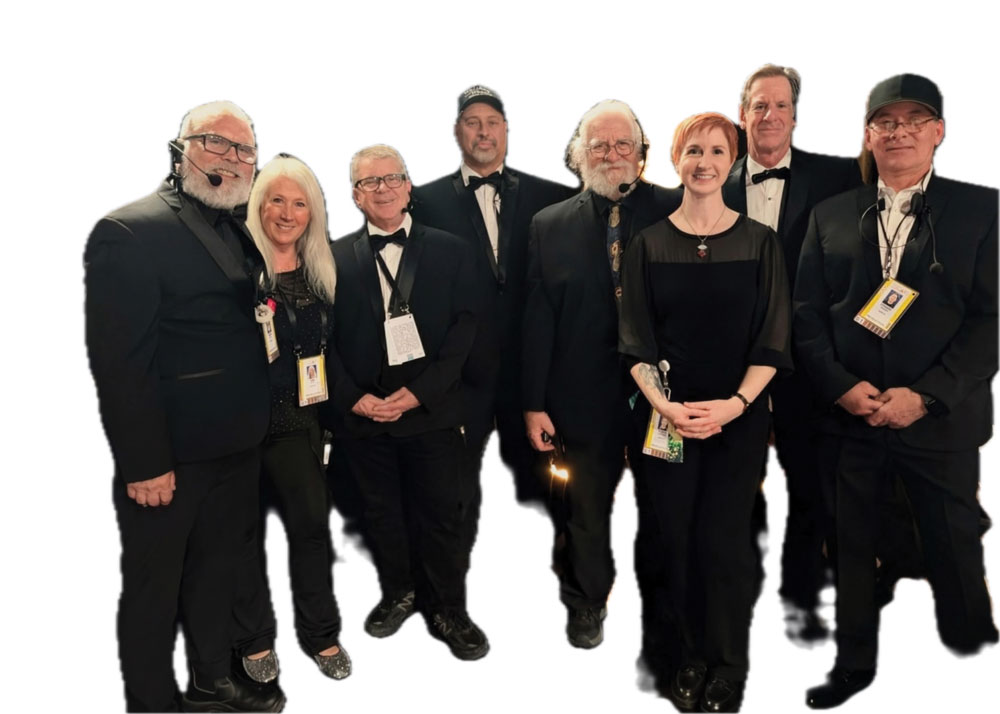
A2’s all dressed up

Then I met some of the freelancers. Television was not always a freelance-friendly occupation. Once upon a time, nearly everyone in television worked for a network, a studio, or a local TV station. As I have often noted in these columns, KTLA, in the late ’70s and early ’80s, was a very busy TV station and production facility. Like most of the network/studio/broadcast facilities, you had to be on staff to work there. On a rare occasion, a freelancer would appear, usually requested by a director or producer. Even then, the production hired a KTLA staffer to man-for-man that position. I would explain man-for-man, but it is an archaic term like roll tape, a rock on the AT, and of course, fiddlesticks. In 1985, the station no longer wanted to be in the facilities business. I left, along with about half the crew. I was freelancing. Soon, the three networks, Metromedia, and other facilities companies were shedding full-time employees and freelance became the norm. It seemed to happen in one fell swoop. Yes, I quoted Shakespeare. Macbeth. No, the original quote wasn’t about freelancing.

Immediately, the stages at KTLA became available for rent by productions that hired their own crews. Freelance crews. I had some experience doing shows on those stages and ended up getting work there on a couple of classic game shows. A lovely and talented woman named Kat Landsberg called me into her office and told me that she thought Russ Gary and I would get along well and should work together on Let’s Make a Deal, starring Monty Hall. Russ, prior to a long career in television, mixed records. A lot of really great records. We teamed up for about fifteen years on game shows, talk shows, and on many sitcoms, including a very nice run of film shows with Miller/Boyett Productions. Thanks to Kat and Russ, the trajectory of my career changed drastically. Within a year, Russ asked me to do a sitcom at Warner Bros. The Technical Director, Chris Donovan, was very involved with crewing Dick Clark shows. He kindly asked me to join and with that, I added specials and award shows to my calendar. As JFK might have said, “Ich bin ein freiberufler.”

With freelancing came travel. At last count, I’ve worked in twenty-six states. A few countries as well. I learned to pack efficiently and be prepared for weather. All kinds of weather, including rain and snow, and all the other possibilities recounted by Herodotus when writing about sound crews in the Greco-Persian Empire. I wonder what the rate was back then (what’s a Grecian earn?). Anyway, there I was, holding a fishpole in a heavy snowstorm, capturing dialog in Aspen, Colorado, happy to have good boots, coat, scarf, and hat, all very helpful on the job and on a snowshoe hike in the Rockies the next day. As I have mentioned in previous columns, friends and I have searched for and found a wide variety of excellent local food choices. And on occasion, sometimes by design and often by dumb luck, a special event or opportunity presents itself. I’ve tried to find ways to appreciate those fortunate circumstances. While on location, I’ve visited several baseball parks, including trips to Yankee Stadium (the original one), Veterans Stadium in Philadelphia for Sean McClintock’s birthday, an opening day visit to Wrigley Field in Chicago, a game at Nationals Park in Washington, D.C. where you can get a half-smoke with chili from Ben’s Chili Bowl (mustard and onions, please), and a very special visit to Orioles Park at Camden Yards. Music adventures include John Hobb’s all-star band at a club in Nashville, Preservation Hall in New Orleans, and trips to the Iridium in New York to see Les Paul up close. New York has also provided shows on Broadway and shows Off-Broadway and shows so far from Broadway that you would have to consult the Hagstrom New York City Five Borough Atlas to locate the theaters. LA friends, the Hagstrom Atlas is the New York version of our Thomas Guide. Young people, The Thomas Guide was like Google Maps, but on paper. I’ve been in waist-deep water up close with a dolphin named Lono, while carrying a mixer and a fishpole in Hawaii, and on the same trip, I enjoyed a long bike ride from Waikoloa to find a Malasada and coffee. On one trip, I walked the Freedom Trail in Boston. I’ve explored all over Washington, D.C. Gone sailing off Waikiki. And the most memorable, watching a Space Shuttle Discovery launch (STS 96) with friends from the causeway at Cape Canaveral. To be able to share so much fun while on location with wonderful friend workers has been one of the great pleasures of my life.

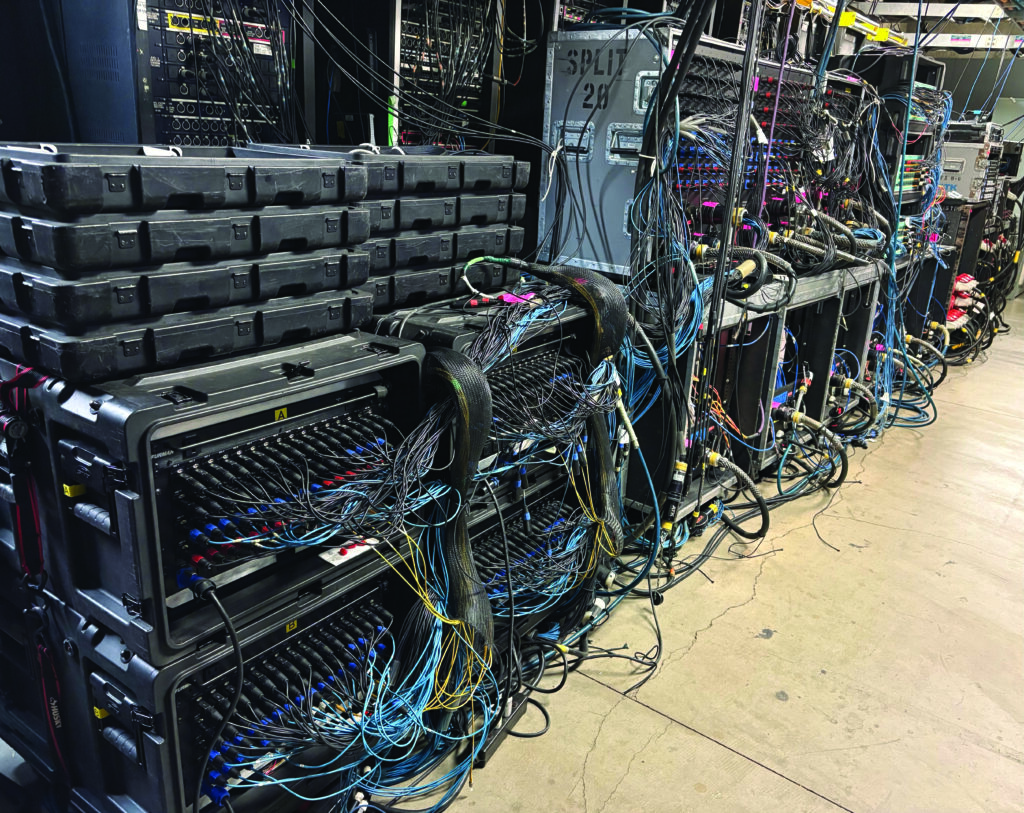
Splitters and stage boxes

And now for something completely different.

I took a little break from writing, and now It’s Oscar time. No, not while you are reading this, it’s Oscar time while I am writing. Working on the Academy Awards has been one of the great honors of my career. I believe this was my 34th. Maybe 35th. Bob Hope hosted the first live broadcast of the Oscars in 1953; I was too young to appreciate it. We didn’t have a television until six or seven years after that. The Oscar audio crew which totals around forty mixers, techs, and A2’s all collaborate to work for a common goal: to find a decent place to have lunch near the Dolby Theatre. Lead A2, Steve Anderson, assigns tasks to each of the A2’s: Bandey, Hostey, Leader, Tuxey, Patchey, Short Straw, Schoepsey, and Edgey.
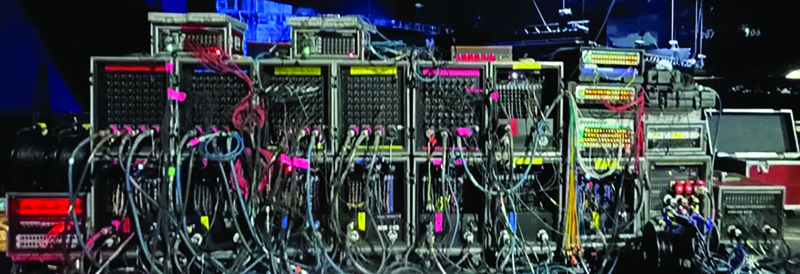
Some jobs are part of the setup, others are important for rehearsals and the live show. Steve keeps the Audio Patch Book that he creates, along with FOH Engineer Pat Baltzell, Orchestra Mixer Caleb Morris, and Denali Engineer Hugh Healy. He then assigns mics on the rundown and creates a mic grid. The rest of us organize, set up, and prepare for rehearsals and the show. The biggest challenge was wiring the eighty-input orchestra by dropping the cables through holes cut in the platform for a clean look. Eddie, Damon, and Niles did an amazing job. My little portion includes patching in the rack room.

Harp strings, orchestra

The Audio Patch Book details all the show’s patching needs. RF mics, orchestra instruments, band instruments, vocal mics, and the audience mics come as analog inputs. Others arrive via fiber, including ATPB, VTPB, Pro Tools, and other high-level feeds. All are turned into analog sources to patch into our three 56-input analog splitters. Each splitter has a direct output and three split outputs. The direct is patched to the console providing phantom power. The direct and split outputs feed proprietary devices for each type of console. FOH and monitors use DiGiCo desks and are connected to DiGiCo SD stage racks, the Denali Summit truck uses a Calrec console which is connected to Hydra stage boxes, and the two M3 music trucks feature Lawo desks and 5×8 stage boxes. In the patch room for the Oscars, we used six SD racks, three Hydras, and four Lawo boxes, two for the orchestra going to M3 Eclipse and two for bands and vocals patched to M3 Voyager. All the stage boxes connect with the consoles via fiber using proprietary language. The DiGiCo speaks Optocorean, the Hydra uses Hydrish, and the Lawo language is Lawonian.

Composer and Arranger Chris Walden

Many of my Oscar highlights involve the wonderful orchestra made up of forty of the best players anywhere.

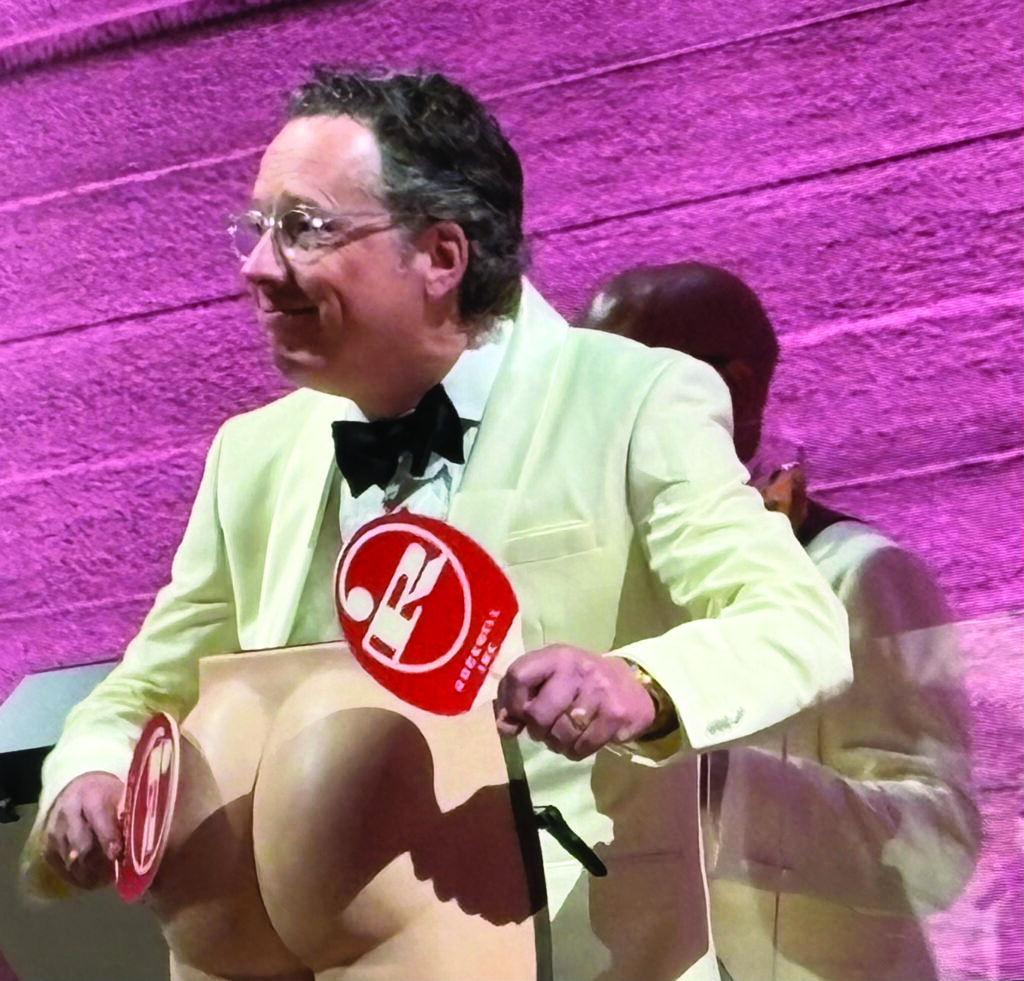
I am fortunate to have known many of these talented musicians for years. First trombone player, Andy Martin, and I met in 1979, months before I started in television. Harpist Gayle Levant has graced almost every Oscars I’ve attended. Being in the presence of this amazingly talented ensemble is a special kind of fun. One last bit of Oscar Orchestra business. For the first time in my tenure, I put a mic on a bum drum.

As Damon would say: END IT.

Our Contributors


Shawn Holden
Shawn began her career traveling around the world as a network news Sound Technician. In 1995, she moved to Los Angeles to transition into narrative filmmaking. She is a CAS and Emmy award-winning Sound Mixer and currently serves as a Trustee on the IATSE Local 695 Executive Board. She holds membership in the CAS, the Television Academy and the Academy of Motion Picture Arts and Sciences.


Ed Novick
Ed Novick has been a Production Sound Mixer for over 40 years. He has enjoyed a long working relationship with Director Antoine Fuqua (Michael), spanning more than twenty years. Ed has an Academy Award, a BAFTA award, and numerous nominations. He continues to enjoy new challenges with each new project.


Screenshot

Ric Teller
I’ve been very fortunate in my more than 40 years working in television, going places, and doing things that a kid from a small town in Nebraska could not have imagined.


Mark Ulano CAS AMPS
Mark Ulano has been recording sound for film since 1976 with over 150 film and television projects. He is a four-time Oscar nominee, and his work on Titanic won him an Academy Award, and the Cinema Audio Society Award. Mark has also served as both Vice President and President of the CAS as well as five terms as President of IA Local 695.

From the Editor

Welcome to the summer edition of Production Sound & Video.

Ed Novick describes the challenges of the film Michael and Shawn Holden writes on the newest in the Star Wars franchise, The Mandalorian and Grogu.

“The Sound of Time” by Mark Ulano with a global panel of Production Sound Mixers discuss the use of working period microphones. We pay tribute to passing of Thomas Causey and Ric Teller gives us “Ric Rambles.” We round it all out with this year’s Sound Award winners and “News & Announcements.”

Enjoy the read.

In solidarity,

Richard Lightstone CAS AMPS
Production Sound & Video Editor

From the Business Representative

Respecting the Craft: What Goes Into the Work You Don’t See

In every production, there are moments that stand out—the performances, the visuals, the final product that reaches the screen. What often goes unseen is the work behind the scenes that makes those moments possible. For the members of IATSE Local 695, that work is constant, detailed, and essential.

Sound and video departments operate in a space with little margin for error. When everything works, it’s invisible. When it doesn’t, it’s immediately noticeable.

What may appear on the surface as a simple setup—a microphone, a playback system, a video assist feed—actually involves layers of preparation, coordination, and technical expertise. Long before a camera rolls, crews test equipment, coordinate with other departments, troubleshoot potential issues, and make adjustments to meet the specific needs of each production.

Every environment presents its own challenges. Whether it’s managing audio in difficult locations, adapting to last-minute changes, or ensuring seamless communication across departments, the work requires both technical skill and real-time problem-solving. There’s no pause button on set, and no opportunity to “fix it later” when it comes to capturing clean sound or maintaining reliable video workflows.

That level of consistency doesn’t happen by chance. It comes from experience, and the members of Local 695 bring years—often decades of knowledge to their craft. They understand not only the equipment, but how to work efficiently within the fast pace of production. They anticipate problems before they arise, communicate effectively with other departments, and adapt quickly when conditions change. This expertise also plays a direct role in keeping productions on schedule and on budget. Avoiding delays, minimizing retakes, and ensuring that technical systems function reliably all contribute to a smoother production process. In that sense, the value of skilled crews extends well beyond their individual departments.

The human element to this work shouldn’t be overlooked. Long hours, tight turnarounds, and physically demanding conditions are part of the job. Maintaining focus and precision under those circumstances requires professionalism and commitment. It’s a standard our members take seriously. For employers, understanding the scope of this work helps explain why proper staffing, realistic scheduling, and respect for established working conditions matter. These are not just contractual considerations—they are part of what allows crews to perform at a high level, consistently and safely.

For our members, it’s a reminder that the work you do—often without recognition—is critical to every production’s success.

Respecting the craft means recognizing both the visible and the invisible contributions that bring a project to life. It’s that collective effort, built on skill and experience, that continues to define the standard of our industry.

In Solidarity,

Scott Bernard
Business Representative

From the President

Let’s talk about breaking tech.  

On April 10 at 5:07 PST, four crew members of NASA’s Artemis II moon mission returned to Earth. The Artemis II mission was the first to travel toward the moon in more than fifty years. This crew of four set a new record for the farthest distance ever traveled from Earth. NASA recovered the astronauts from the Orion spacecraft in the Pacific Ocean. Reentry, or any entry onto planetary surfaces, is one of the riskiest parts of spaceflight. Most of my time at NASA’s Jet Propulsion Laboratory (JPL) was spent testing for the entry, descent, and landing (EDL) teams on various spaceflight hardware. The process of stress-testing software and hardware for planetary reentry takes years of human spacecraft interaction to find the limitations of their designs. Identifying technological limitations is the first step toward human control. This is the lesson I learned on my assignment with the Orion spacecraft.

Fifteen years ago, I was assigned to shoot footage of Orion’s waterdrop tests. It was a frigid February week at the Aberdeen Proving Grounds, north of Baltimore, Maryland. Our role was to set up high-speed, stereoscopic 3D cameras around Orion to record drop tests into an almost frozen, manufactured lake. At the time, I weighed about half the payload of the camera rig, which consisted of a Ronford Baker tripod with two fully accessorized Red One cameras, each with a long zoom lens, mounted side-by-side. I rigged the payload to the small three-person barge, using every ratchet and bungee in our arsenal. The tests involved hoisting Orion into the air by crane and releasing it into the water about twenty-five feet from the barge

I heard the countdown from the crane operator over the walkie-talkie. “Five-Four-Three…” The barge captain yelled at me, “Hold on, girlie!”

“Two-One-Drop Craft.”

Orion dropped from the sky into the lake, creating a wave so big that I went flying off the back of the barge, barely managing to grab an anchored oar attached to the boat. As I pulled myself up, I looked at the cameras and panicked. Did I strap down NASA’s only two Red Ones well enough? Thankfully, I did. I got hit with another wave and flew through the air again. In hindsight, what I did not account for was my own well-being.

The waves continued to crash against the barge from the direction of the spacecraft until they hit the retaining wall behind us and returned. The barge captain and I now had waves hitting us from both sides. He laughed hysterically as he watched me being tossed around. I was a little banged up, but I did not get seasick.

We did this test ten times.

That day, I learned a few lessons. Hold onto the barge for dear life, do not trust that the testing pool’s water is safe enough to touch skin (It was not; it burned), and keep testing until you find the limitation.

One of the best lessons I learned during my time at JPL was the purpose and process of testing new hardware. With each drop test and every parachute test, engineers and scientists are looking for the breaking point of their designs. If we don’t know the limitations and, with that, the scope of the hardware or software’s potential, we can’t fully control operations in our day-to-day activities. Finding the breaking point of a design is never a failure for these engineers; it is an opportunity to reimagine design and workflow, ultimately strengthening the project. This process for Orion’s team took more than fifteen years. Like our own industry, it is not usual for the payoff of our labor to be celebrated years later.

Fifteen years later, I am back in Baltimore, Maryland. It is the week of the Artemis II reentry. This time, I am working with a group that is trying to integrate AI (artificial intelligence) into their workflows safely and ethically. This hands-on, practical workshop, in partnership with the American Federation of Teachers (AFT), gave this group an entry-level taste of how AI can optimize their time-consuming workflows without displacing their jobs.

One member of the class admitted that his top takeaway from the workshop was the encouragement to experiment and to find the model’s breaking point. He also said that, so often, when we learn new technology, the process feels fragile. We don’t want to break it, so learning new products can be intimidating or off-putting. When he found an endpoint to the process he was trying to prompt, he felt reassured. Being encouraged to find a model’s frustrations or faults made him feel more comfortable that artificial Intelligence wasn’t going to take over his life. At this point, AI still needs human intervention to fully carry out tasks that feel authentic to humans.

I was flying back from Baltimore when Orion made its splash in the Pacific. There was something poetic to me that fifteen years later, I was not in the water next to the spacecraft, but in the sky it came from. There was a huge sense of relief when I watched the broadcast and the four crew members returned to Earth safely. That assurance and that safety came from years of human testing and evaluation of technology’s limitations, and from the creative redesigning and reimagining to course-correct and offset the spacecraft’s limitations—all done by humans.

In Solidarity,

Jillian Arnold

PS October 31, 2000, was the last time all of humanity was on Earth. Since then, there has always been at least one person in space.

News & Announcements

Lean in & Lean On Holiday Party & Toy Drive: 2025 Recap

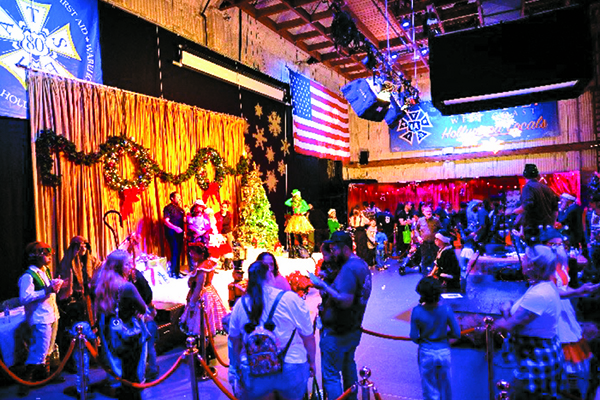
Local 80 full of IATSE families enjoying games and the toy hall.

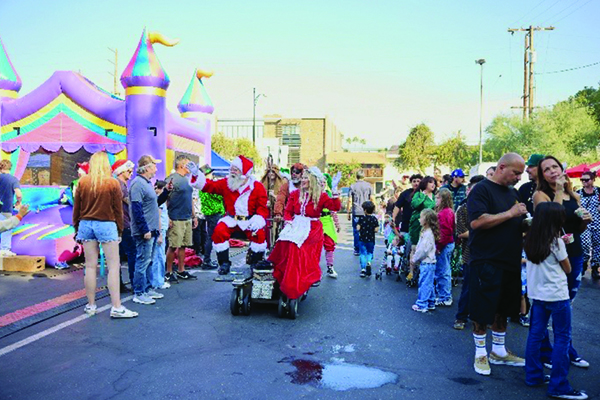
Our 2025 Lean In & Lean On Holiday Party & Toy Drive on December 13 was an overwhelming success, thanks to the generosity of our members, volunteers, and sister Locals. Nearly 400 families—over 1,500 attendees—joined us for a day filled with smiles, community, and holiday cheer. With the help of 90 volunteers, we distributed 300 food boxes, hundreds of gift cards, and an incredible assortment of toys, ensuring meaningful support for our member families.

Santa on a ride through the outdoor activities, including bounce houses and food trucks hosting a variety of great food.

The event also raised more than $42,000 to cover gifts, toys, and event costs, featured a new member-maker marketplace with vendors from multiple Locals, and included raffles, food, and festive treats enjoyed by all. From Santa’s Workshop to churros, hot cocoa, and popcorn, the joy was undeniable. Thank you to everyone who helped make this growing tradition such a powerful reminder of what we can accomplish together.


Operation Warm: Another Successful Drive

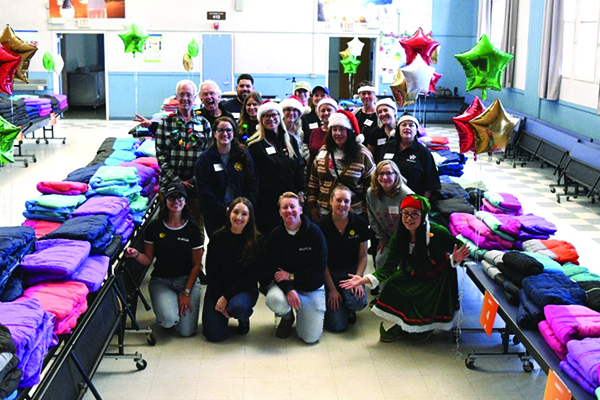
Volunteers from Locals 44, 695, 700, 728, and 800 with International Reps from the IA West Coast office.

Hollywood-based locals partnered with Operation Warm to distribute coats to the children who attended Flory Academy of Sciences and Technology in Moorpark on December 17, 2025. Midwest and East Coast locals have been working with Operation Warm for years, and in turn, inspired the Hollywood locals to volunteer to help keep kids warm during winter.

Operation Warm has been distributing coats and shoes to children for over 26 years. Their motto is to “Give the gift of warmth, confidence, and hope.”


New Members

Local 695 welcomes its new members

Chad Algarin Projectionist
Joshua Beg Y-9
Jess Daily Projectionist
Michael Napoli Y-7a
James Nelson Y-16a
Cole Ryden Y-7a
Bryce Stiell Y-4


Free AVIXA Training through the IATSE Training Trust Fund

Part association, part society, AVIXA provides training and certifications for the constantly evolving world of audiovisual (AV) technologies. Through the IATSE Training Trust Fund (TTF)/AVIXA partnership, their Elite Membership tier is free to access for all IATSE members, and includes online AV training. For additional classes, as well as the CTS exam, generous discounts are also on offer. To learn more about these resources and to register for your free AVIXA account, please
visit: https://www.iatsetrainingtrust.org/avixa


IN LOVING MEMORY OF
JEFF WEXLER Y-1
April 18, 1947 – December 9, 2025

by Vanessa Withers, Jeff’s daughter

Yesterday, (Tuesday, December 9), our dad, Jeff Wexler, passed away at his home in Santa Monica after years of struggling with chronic kidney disease. He was 78. Losing him is overwhelming, even though we knew his body had been fighting for a long time.

Our dad was kind in a way that felt effortless, generous in a way that asked for nothing back, and endlessly curious about the world. What meant the most to him was his family. He was a source of unwavering support, encouragement, and love, always present for us regardless of his professional commitments.

He also had a life in cinema that shaped who he was. He grew up around film sets as the son of Haskell Wexler, but he carved out his own path. He once thought he would become a sociology teacher, until a summer job on Harold and Maude showed him exactly where he belonged: right there on set, actively listening, creatively contributing, paying attention in the way only he could.

Over the next five decades, he became one of the great Production Sound Mixers, working on more than seventy films. His credits include Coming Home, Fight Club, Almost Famous, The Last Samurai, Jerry Maguire, As Good as It Gets, and so many others. He cared deeply about his craft and was always pushing it forward. He helped usher in new recording technologies long before they became standard. He mentored younger sound people. He loved problem-solving. He loved being part of something bigger than himself.

But the main thing we want people to know is that he was a great dad. Someone who showed up for us. A man of quiet integrity, whose deep and comprehensive exploration of the human condition was evident in all he did. He loved film for its ability to connect people.

Our stepmom, Carol, passed away earlier this year, and even though losing them both so close together feels surreal, we are grateful they are at peace. We know our dad will be missed far beyond our family. The film community loved him, learned from him, and was inspired by him. We were fortunate to have him as a father, and despite his physical absence, he remains with us always.

With love, Vanessa and David

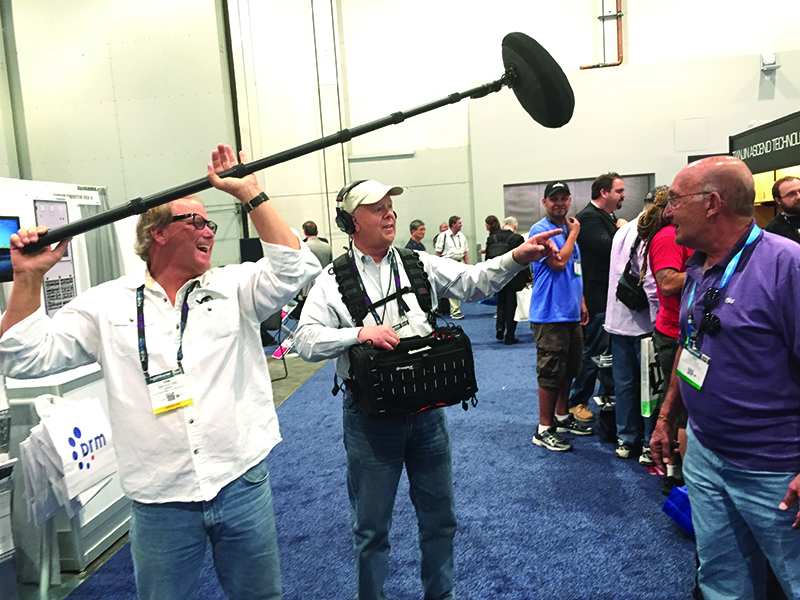
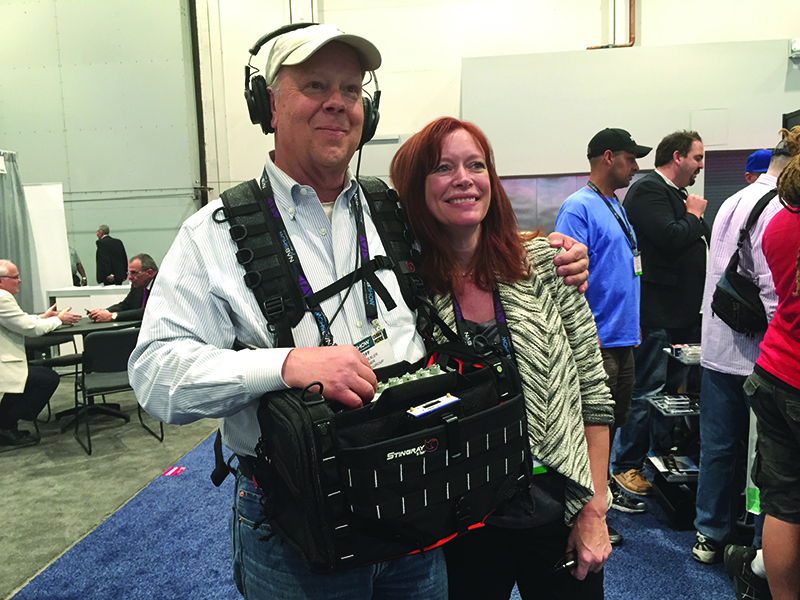
Jeff Wexler wearing a bag rig, for the first time ever at NAB 2015 at the K-Tek booth with Dan Hale booming Eric Toline. Photo by Whit Norris

Steve Nelson

Along with all the richly deserved accolades and loving memories, what is also significant in his legacy is that Jeff was a community builder. JWSoundgroup.net is a place not only for buying, selling, and trading equipment, but where knowledge and expertise is freely shared and passed along. Newbies can ask without fear and be answered by those who know. Jeff was key in making a formerly atomized group of folks all doing the same work, all over the world, and creating a community. Always a generous and lovely soul, he will be missed.

Peter J. Devlin

As so many have said, Jeff created community, and what a legacy he has left. His work speaks to a different era in cinema, and he always embraced technological change. It was in 1999 when I spoke to him in a long telephone call about my concerns in moving to hard disk recording, he told me of his own battles with post production and their adapting to how he wanted to record on set. He soothed my fears and I knew he was always available to talk. His appearance at so many events, Zooms, and sound gatherings spoke to how he was so invested in this art form and he gave so much to us. He will be sorely missed and I know that any time in the future when I watch his films, I will feel fortunate to have met him and know that his work influenced so many of us.

Jeff Wexler and Brenda Klemme. Photo by Whit Norris

Simon Hayes

Rather than write about his gargantuan contribution to the film industry & sound mixing which really goes beyond words, I’m going to write what he meant to me.
Jeff was someone who has inspired me since I started my journey as a Mixer. I would read interviews with him and scour journals and articles for his thoughts and workflows as a 20-year-old. I followed his career in awe.
When I finally found myself in a unique and unexpected situation: being thrust into a spotlight with Les Miserables being recognized internationally, it was Jeff who first reached out and wanted to know all about it. It was like Pelé contacting a young footballer: one of the globe’s most revered and storied Sound Mixers wanted to talk to me about my work. I was completely taken aback.
Jeff told me I’d be coming to LA: He called it, and told me the moment I arrived he wanted to meet up. We had lunch in his favorite restaurant in Santa Monica and spent the afternoon telling film stories and laughing.
It was the start of a beautiful friendship & mentorship. We were constantly in touch and each time I went to LA, we’d meet and laugh. It was like we’d known each other forever. Jeff was so generous, so inviting. So eager to share his thoughts and always seemed very interested in my opinions. He was an extremely important person in my journey.
Thank you, Jeff, for everything. I will miss you greatly. Our industry and craft lost one of the greats. Rest in peace, Jeff. Until we meet again.

Whit Norris

Jeff was a good friend and colleague. Over the years, we spent many Saturday and Sunday mornings with fellow mixers on Jan McLaughlin’s Zoom group. I greatly benefited from all of his advice, techniques, wisdom, and stories. It was always an honor to sit with him for many years at the CAS Awards, as well as meeting his father, Haskell Wexler.


TRIBUTE TO
Frank Zaragoza Y-8
June 23, 1969 – October 30, 2025

Frank Zaragoza’s legacy is a beautiful blend of kindness, creativity, and a wickedly funny sense of humor. He instilled in us the vital lesson of being present for others, no matter how chaotic life may become. His deep passion for filmmaking drove him to generously offer his time and expertise to support friends in pursuit of their dream projects. At Frank’s Celebration of Life, his family and work family felt exactly the same way about him. We both grieve his loss deeply and find comfort in our happy memories. Our friendship flourished through our shared interests and created countless cherished memories. Go Raiders! May the Force be with you, always. 
–Susan Moore-Chong & Dirk Stout


In Memoriam

Thomas Causey – Y-1
12/5/1949 – 1/11/2026

Donald C. Rogers – Y-1
5/4/1931 – 1/4/2026

Jeffrey S. Wexler – Y-1
4/18/1947 – 12/9/2025

Ric Rambles

by Ric Teller

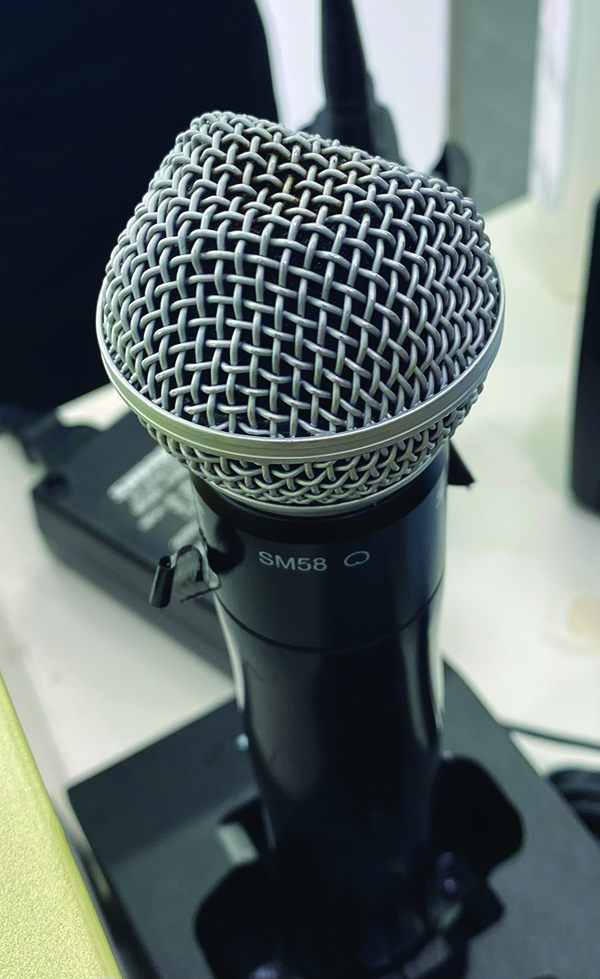
Try having ’em sing into a 58

Show of hands. How many of you played in a band when you were young? No, not the school concert band or the marching band, although I am a big supporter of school music. In my younger days, I enjoyed time in the Hastings Junior High Band, under the direction of the terrific Jack Minshall, followed by the Hastings High School Marching Tigers Band. And in the fall of 1970, I passed the audition for the University of Nebraska Cornhusker Marching Band, 188 marching men under the direction of the great Jack Snider. That’s right, from its roots as an offshoot of ROTC, no girls participated in the band. That changed in 1972 with the passage of Title IX. My sister, Beth, joined the band a couple of years later, one of the pioneers. Okay, thanks for indulging my marching band reminiscence; now, back to the original question. Did you play in a band? One that had microphones and a PA. I believe many of us were introduced to sound gear while playing in someone’s garage or basement. Often those stories, including mine, begin with, “When I saw the Beatles on The Ed Sullivan Show…” A few years later, The Fabulous Flippers, a terrific band from Lawrence, Kansas, featuring an excellent horn section, played at The Hastings City Auditorium. There was the lead vocalist, Denny Loewen, singing into what was probably a Shure mic. Maybe a 565, but more likely an SM58. Who can remember that far back?

The famous newspaper, the iconic microphone, and the man who was President when I was born

The first band I joined had high-impedance microphones. Our Sound Mixer, Don Robertson, sat right in front of the seven-piece band in order to keep the length of mic cables under twenty feet. In the high-impedance world, longer cables have higher capacitance, creating a low-pass filter, cutting the high frequencies, resulting in lower output and a duller sound. Each night, Don would jump up from his mixing position, hop onto the stage, and sing “Jumpin’ Jack Flash.” It was the best thing about having him set up so close to the band. A couple of years later, I was asked to play in the Chancellors. Not the Minneapolis Chancellors who covered Bill Medley’s “Little Latin Lupe Lu.” Personal note: The best version was recorded by Mitch Ryder & The Detroit Wheels. I played in the Chancellors from Lincoln, Nebraska.
We were a popular regional band that had a PA from Stanal Sound, and a bunch of Shure SM58’s. Our PA Tech/Mixer was Monte Krabiel, who worked for Stan Miller at Stanal for a long time.

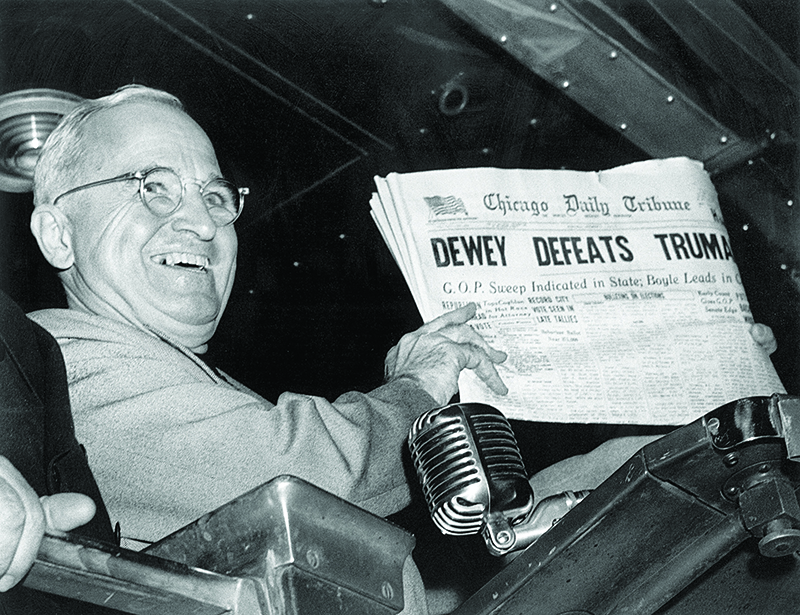
This year, the Shure SM58 turned sixty years old. Every band I played in had them or wanted to get them. The Shure corporation recently celebrated a century in business. They have had a remarkable series of products with longevity not often seen in the professional audio world. Among other things, they are known for making the most visually recognizable microphone, the Shure 55. In 1939, when it was released, the 55 offered performance superior to its competitors and an iconic design. Through various versions in its eighy-seven years, the 55 is still in use and can be found in many logos and photos, including the famous picture of Harry Truman holding the front page of the Chicago Tribune with the banner headline, DEWEY DEFEATS TRUMAN. Spoiler alert. He didn’t.

When the SM58 was released in 1966, it wasn’t a big hit. Same story is true for the SM57 that entered the market a year earlier. The SM, which stands for studio microphone, had a lot of competition. In recording studios, the Neumann U87 was released about the same year. RCA had the very popular 77DX on the market about a decade earlier, and the reliable and rugged 635A from Electro Voice became popular for TV, radio, and carpentry applications. According to Michael Petterson, Director of Corporate History at Shure: “Sales were sluggish, and plans were afoot to discontinue the SM58 and the SM57. As a last-ditch effort, the Shure national sales manager suggested introducing the mics to live sound engineers in Las Vegas. The mics were a hit in Vegas, and entertainers began to embrace these models for live performance.” Soon the SM58 became the standard for live vocal mics, whether you were Roger Daltrey on tour with The Who or in a combo playing songs at a Holiday Inn Lounge.

Today on Amazon, you can purchase a Neumann U87 Ai for $3,750, an RCA 77DX is available on Reverb for $2,850, the Electro Voice 635A, discontinued in 2024, after a sixty-year run, can be found used for around $200, and you can purchase a new Shure SM58 for $99 wherever quality microphones are sold.

It’s only a flesh wound

In the 1960s, about the time of the birth of the SM57 and SM58, the abbreviation for microphone changed from mike to mic, making the present participle of the verb “to mic” the somewhat confusing ‘micing,” which looks like it has something to do with a small rodent. Some use “miking,” others “mic’ing.” The etymology of micification can be mystifying. Around that time, Dad had a Wollensak tape recorder for business use. It was my first personal experience with a microphone and with reel-to-reel tape. My good friend, Jim Standley, and I recorded radio commercials for high school events on that rugged machine. The same year, I successfully auditioned for the Nebraska All-State Orchestra. I had never played trombone in an orchestra (I was a percussionist in the Hastings High School ensemble my senior year). Being selected was kind of a big deal. Players from high schools all over the state traveled to Omaha, spent a couple of days rehearsing with a guest conductor, and performed a concert, including the “1812 Overture” by Tchaikovsky. We each received an LP of the live recording. Wish I could travel back to see what mics and recording equipment were used to make that record. Today, I learned that my maternal grandmother’s life overlapped with Tchaikovsky’s. Her husband, my grandfather, was born before time zones existed. In 1972, after the passage of the 26th Amendment, I was excited about voting for the first time. My grandmother told me that she had that same feeling at age 35 when she first got to vote in the 1920 election. The first election after the passage of the 19th Amendment. The first time women voted. I like time-span factoids and will share another favorite later in this ramble if space allows.
Those of us who have reached a certain age probably remember pulling cable in the plenum of the Shrine Auditorium and the Pantages Theatre, or maybe dragging a long DT12 through the wet grass and mud in Pasadena for the Rose Parade. If you never experienced that rite of passage, be grateful. When the Calrec Alpha came on the scene, we began to embrace audio signals being transported over fiber optic cables. In the beginning, we ran copper backups for the fiber, but now we are totally reliant on those lightweight, back-pain-saving cables. On a recent show, audio information between the stage and the broadcast truck ran on TAC 12 fiber to and from the Calrec Hydras (stage boxes). FOH and monitor Digico consoles were connected with Optocore fiber. We used a Ferrofish, an AD/DA device to send Pro Tools and Autotune outputs to the splits, a Yamaha Rio on fiber to the truck for emergency backups, audience mics, and lighting board timecode at FOH, and a CPT Systems Dio 0808MA-XLR for emergency backups between split world and the truck.

The meeting of analog and digital in split world

We still run some copper mults, mostly W-2 and W-4, but not nearly as much as we once did. I wonder what is next. Whatever it is, chances are good that an SM58 will still be involved. Oh, yeah, and it has been years since I’ve been in a plenum.

The voice of Vin Scully, whether coming through a Shure SM58 or any other microphone, is iconic. In 1950, when Vin started announcing for the Brooklyn Dodgers, Connie Mack was still the manager of the Philadelphia Athletics. Connie Mack was born when Lincoln was President.

Our Contributors

Ebiut Cervantes
I’ve been a Local 695 union member since 2016, specializing in playback work on award shows. I have had the privilege of working on shows like The Oscars, American Music Awards, BET Awards, Kids’ Choice Awards, and ACMA’s, to name a few.


Simon Hayes CAS AMPS
Simon Hayes is an Academy Award-winning Production Sound Mixer. His innovative techniques on Les Misérables redefined on-set vocal recording, setting a new standard for authenticity and emotional resonance in musical films.


Jeffrey Humphreys
Jeff’s film career began in 1978, working on many epic films like Body Bags, Drillbit Taylor, and Meet the Deedles. Jeff hasn’t won any awards, and isn’t in any sound or film societies. He continued in the business because “Life is for people that can’t handle the film business.”


Richard Lightstone CAS AMPS
Richard began his career in Montreal and continues to mix in Los Angeles. He is the Editor of Production Sound & Video, served on the Executive Board of Local 695, and President of
the Cinema Audio Society for two terms.


Susan Moore-Chong
Susan has been a member of Local 695 since 1983 and worked primarily as an episodic television Production Sound Mixer. She also served on the Board of Trustees for several terms. She is happily retired and living in Hawaii once again.


Ric Teller
I’ve been very fortunate in my more than 40 years working in television, going places, and doing things that a kid from a small town in Nebraska could not have imagined.

From the Editor

Welcome to 2026. Sadly we begin this year mourning the loss of members of our sound community: Frank Zaragoza left us in October, then Jeffrey S. Wexler, this past December, and in January, Donald C. Rogers and Thomas Causey, all sound legends and gentlemen. They will be sorely missed.

It is the unofficial beginning of awards season, and we give you the sound nominations from AMPS, CAS, BAFTA’s, and Oscars. We have an interview with the sound crew of One Battle After Another and Simon Hayes goes deep into Wicked: For Good.

Retired Boom Operator Jeffrey Humphreys reflects on the Production Mixers who enriched his career and Ric Teller continues to regale us in “Ric Rambles.”

Skip Kent, Larry Reed, and Ebiut Cervantes explain the complexities of the monumental work they do to bring us the 2025 Rock & Roll Hall of Fame Induction Ceremony.

There is “News & Announcements” from Casey Weiss, and loving tributes to Frank Zaragoza and Jeff Wexler.

Wishing all a safe, happy, and successful year.

In Solidarity

Richard Lightstone CAS AMPS
Production Sound & Video Editor

From the Business Representative

A Look Ahead

The past year has been one of the most challenging periods many of our members have faced in a long time. Extended slowdowns, canceled projects, and long gaps between calls created real uncertainty for working families across our crafts. For some, it meant hard financial choices; for others, it meant stepping away from the industry entirely, even if only temporarily. That reality should not be forgotten as we look ahead.

As we move into the new year, there are signs that the industry is beginning to regain momentum. Production is slowly increasing, more projects are moving forward, and more of our members are getting back to work. The pace of recovery remains uneven, and no one should expect an overnight return to “normal,” but the overall direction is positive. For many members, even incremental improvement makes a meaningful difference.

At the same time, technology continues to evolve rapidly and reshape the way our work is done. Wireless communication systems are more powerful and more complex. Remote workflows, once considered a temporary solution, are now a standard part of production. Virtual and hybrid production models continue to expand, changing how crews collaborate both on set and in post. These tools may be new, but the requirement for skilled professionals is not. In fact, as technology advances, the need for experience, judgment, and problem-solving only increases.

Producers are moving forward with tighter schedules and closer budget scrutiny, placing additional pressure on crews to deliver high-quality work efficiently. Our members do that every day. Sound, video, and communications are critical to production, and they require preparation, training, and professionalism. These are not areas where shortcuts lead to success, and the industry continues to rely on our crafts to meet increasingly high expectations.

This environment makes the role of the union more important than ever. Protecting jurisdiction, defending standards, and ensuring that new technologies are implemented responsibly are essential to preserving good jobs and safe working conditions. Training and education remain key priorities, not only to help members adapt to new tools, but to ensure that those tools are used in ways that respect the work and the workers.

There are still challenges ahead, and the road forward will not be without obstacles. But as production increases and the industry continues to evolve, our focus remains clear: supporting our members, protecting the work, and advocating for the value of skilled professionals. The strength of Local 695 has always come from the people who do the work, and that will continue to guide us in the year ahead.

In Solidarity,

Scott Bernard
Business Representative

From the President

Let’s talk about sports. 

The end of the 2025-2026 NFL season marks my eleventh season. During those eleven seasons, I worked the final San Diego Chargers game at Qualcomm Stadium, welcomed and closed out the Rams at the Los Angeles Coliseum, and survived the opening seasons of both teams at SoFi amid a pandemic. However, in the world of sports broadcasting, the pinnacle gig to book is Super Bowl week.

The Super Bowl was held on February 8 in San Francisco, California. The big game is more than two teams duking it out for the Vince Lombardi Trophy. The Super Bowl machine is a sports-based entertainment program that feeds into one of the largest global economic revenue streams, fueled by union labor from all corners, in and out of the stadium. Let’s break it down…

According to the online publication Sportico, a news outlet dedicated to the business of sports, consumer spending on sports and sports-related entertainment is at an all-time high in 2025. For example, every NFL team receives more than $400 million from the league before a single down is played, and top MLB teams now earn more than $4 million per game in ticket revenue. The revenue from a single event is just a line item in the global sports economy.

Sports revenue spans the broader range of how fans spend their money across three sectors—fan engagement, sports products, and sports participation. To comprehensively analyze the global economic impact of sports, we need to not only include the money fans spend at or adjacent to a sporting event but also the fees they pay for gym memberships, golf and tennis clubs, and access to outdoor recreational areas. In addition, sporting equipment, recreational gear, sports medicine, and footwear and apparel are included. Lastly, fantasy sports, sports betting, sports bars, merchandise, collectibles, and licensing and monthly fees for streaming and transmission media packages must be included in the final tabulation.

The full economic magnitude of the sports industry is estimated at a global revenue stream of $2.65 trillion. The sports market should not be overlooked or undermined.

The Super Bowl has a significant financial impact on the host city. According to the US Chamber of Commerce, the final estimated economic impact of the 2024 Super Bowl in Las Vegas, Nevada, was $1 billion. New Orleans, the host of Super Bowl 2025, reported that the event generated $1.25 billion, creating almost 10,000 local jobs and $395 million in wages for Louisiana workers, according to the Louisiana Economic Development website.

The Super Bowl also represents thousands of hardworking union members from many AFL-CIO affiliates. Union members are not only on the field but also in all corners of the stadium and in the travel and hospitality surrounding the big event. At the 2023 Super Bowl, hosted by Glendale, Arizona, the players, referees, the broadcast and halftime shows, the electricity, stadium construction, food, journalism, local transportation, hotels, travel, and first responders were all represented by union membership.

The official game balls of the NFL are also produced by union labor. The leather is crafted by members of the United Food and Commercial Workers (UFCW) Local 1546 who work at the Horween Leather Company in Chicago, Illinois. The Super Bowl footballs used at the game are handmade by Workers United Local 1385 in Ada, Ohio.

Every punt, pass, and throw executed at the Super Bowl is union-made.

Local 695 has a strong presence during Super Bowl week. Our Local membership provides broadcast engineers, record-and-playback operators, and technical services for audio mixing, recording, and playback at all scales. Our members also operate and engineer all comms systems, projection, and video wall playback for various shows in and around the big game.

We must recognize that events like the Super Bowl and other sporting events are essential to our Local’s economic stability, and we should be proud to help produce events that bring so many people together and support so many union families. That is why it is essential that we protect this jurisdiction. As the entertainment landscape shifts, some companies have tried to maximize profits by cutting labor costs. Union crewers who have been at the table for decades are being replaced by nonunion crewers who are bent on cutting rates. Rather than handcrafting a show around the unique experience of each game, some are looking to produce content factories run by a nonunion skeleton crew.

Sports matter. The work our members do to bring communities together matters. When the last second of the game has come to pass, and ticker tape has fallen, the IATSE, along with other union affiliates, will be there to support one of the most significant sports broadcast entertainment events of the year.

In Solidarity,

President Jillian Arnold

News & Announcements

IATSE Training Trust Fund

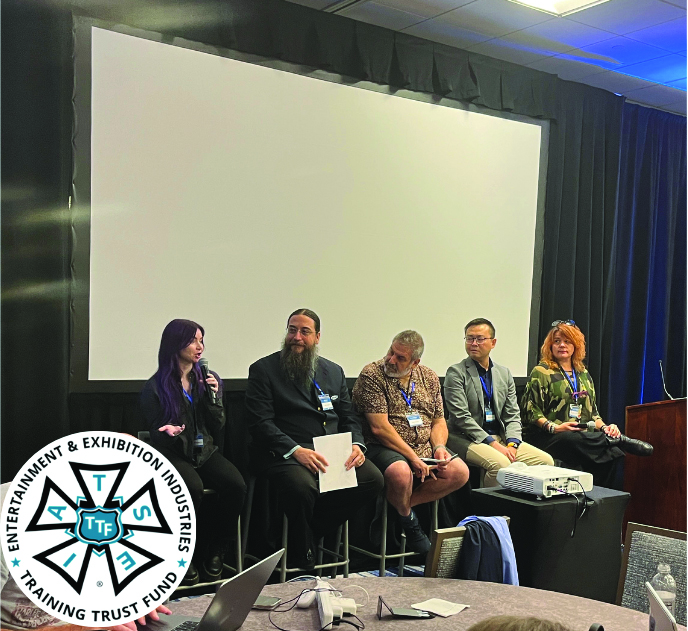
IATSE Training Trust Fund Summit Panel ‘Staying Motivated in Difficult Times’ with Casey Weiss (L695), Tim Adams (L631), Rocco Palmieri (L52), Alan Chang (L134), and Jenn Bullock (L798)

This past October, the IATSE Training Trust Fund (TTF) hosted their second annual Education Director Summit in Orlando, FL. IATSE training directors from the US and Canada met for three days to establish training partnerships and learn more about how the IA and TTF will be enhancing educational resources for the membership in the new year. Local 695’s very own Director of Communications & Education, Casey Weiss, was invited to participate on a panel with several other training directors representing various crafts/jurisdictions, sharing how we are staying motivated in difficult times. TTF has expanded their LinkedIn Learning platform, as well as their partnership with AVIXA. These resources, along with more exciting releases coming soon, are all free to IATSE members. To learn more, please visit: https://www.iatsetrainingtrust.org/additional-training


Member Spotlight

MEMBER SPOTLIGHT

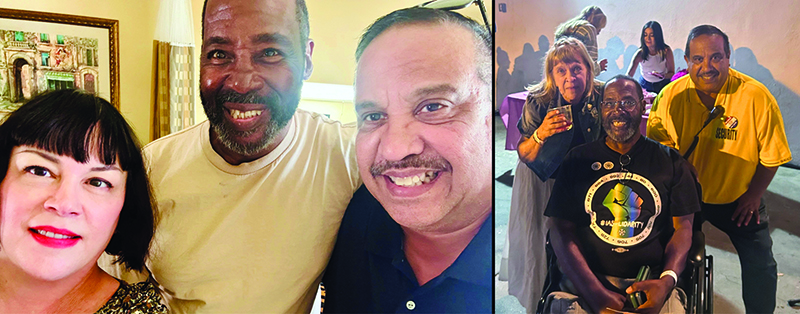
Member Ray Porter with Assistant Business Reps Heidi Nakamura and Joe Aredas; Ray at the “All-In” Mixer with Local 33 Board member Caroline Hyndman and Joe Aredas

Say hello to member Ray Porter, A2/PL Comms, on such shows as The Voice, The Oscars, American Idol, and the MTV Movie Awards. Ray’s been a member of Local 695 for more than twenty years. He’s not been active for a while due to an illness but he’s recuperating and getting back on his feet!
Reps Joe Aredas and Heidi Nakamura had the privilege of visiting Ray recently and he came out to enjoy the “All-In” Mixer PAC Fundraiser event on October 11, 2025.


Lean In & Lean On: Holiday Party/Toy Drive Event

Mark your calendars for the return of the Lean In & Lean On: Holiday Party/Toy Drive, which returns to IATSE Local 80 on Saturday, December 13, 2025. Last year, this initiative raised more than $63,000 and distributed more than 1,000 gifts to IA families. This season, the Hollywood IATSE Locals, Basic Crafts, and Teamsters are partnering with Labor Community Services to support more than five hundred families by providing a joyful celebration with food, gift cards, and toys for the kids. Let’s make this our most impactful year yet!


New Members

Local 695 Welcomes Its New Members

Alexandre Gilroy Y-1
Zachary Harvey Y-4
Dustin Hudson Y-4
Joshua Manville Y-7
Joshua Muehlberger Y-4
Charles Phillips Projectionist
Indrani Robinson Y-7a
Zachary Sager A-2
Nathaniel Siggard Y-16


In Memoriam

Frank G. Zaragoza Y-8
June 23, 1969 – October 30, 2025

Ted Karounos Y-9
September 28, 1949 – October 3, 2025

Gregory Ferrara Y-8
December 31, 1963 – August 1, 2025

Eric L. Roberts Y-7
December 13, 1949 – July 26, 2025

Beau Hodges Y-1
January 10, 1977 – July 1, 2025

Our Contributors

Julian Howarth
Born in the UK, with a background in music, Julian Howarth has been working in production sound on film and television shows for more than 30 years. Julian moved to the United States in 2010 after working on the award-winning BBC flagship show Doctor Who, to continue on his sonic journey. Los Angeles is now his home.


Tony Johnson
Tony trained at the New Zealand National Film Unit before freelancing in sound editing and location recording before deciding mixing sound on set was where he wanted to be. Forty-plus years and still loving it.


Richard Lightstone CAS AMPS
Richard began his career in Montreal and continues to mix in Los Angeles. He is the Editor of Production Sound & Video, served on the Executive Board of Local 695, and President of the Cinema Audio Society for two terms.


Whit Norris CAS
Whit Norris is an Atlanta-based Production Sound Mixer with more than 35 years of experience in film and television. He has been a member of Local 695 for 25 years. Whit has contributed to numerous major motion pictures and TV series. He is also an active leader in Atlanta’s sound community, helping connect and support fellow sound professionals through industry events and mentorship.


Ric Teller
I’ve been very fortunate in my more than 40 years working in television, going places, and doing things that a kid from a small town in Nebraska could not have imagined.


Photos courtesy of the respective contributors.

From the Editor

Welcome to the winter issue of Production Sound & Video.

Lisa Piñero tells us all about mixing The Lost Bus, Whit Norris journals the events of the IATSE 70th Quadrennial Convention in Hawaii, and Ric Teller returns with “Ric Rambles.”

We celebrate the Sound Emmy winners from this year’s 2025 Creative Arts Emmy Awards, and Julian Howarth and Tony Johnson detail their work on Avatar: Fire and Ash.

Cheers to this year’s 2025 World Series audio crew, and thank you to Casey Weiss, Director of Communications & Education for compiling “News & Announcements.”

As we approach the end of 2025, I wish everyone safe and enjoyable holidays, Happy New Year, and a very bountiful and fulfilling 2026.

In Solidarity

Richard Lightstone
Production Sound & Video Editor

From the Business Representative

The Changing Landscape of Set Communication

If you’ve been on a set lately, you’ve probably noticed how much the way we communicate has changed. Not long ago, we relied on a few walkies and IFB’s to get through the day. Now, those same conversations travel through a web of digital systems connecting multiple departments, remote collaborators, and cloud servers—all happening in real time.

For our members, this evolution isn’t just about new gear; it’s changed the way we work. As productions move toward digital comms, encrypted wireless, and remote streaming, managing and protecting those systems have become a central part of what we do. And it’s more visible than ever.

Today’s sets can feel like wireless jungles. Between camera transmitters, Wi-Fi controls, wireless mics, IFB’s, and cell signals, the RF spectrum gets crowded fast. Our members have adapted, using coordination tools and real-time scanning to keep things stable. In many ways, Production Sound Mixers have become de-facto RF Engineers—maintaining the invisible lifelines that keep sets running.

More shows are also experimenting with IP-based intercoms, encrypted channels, and cloud collaboration. When something goes sideways, it’s usually a Local 695 member who makes it right. It’s a good reminder that our expertise goes far beyond “sound.” We’re the people who keep the communication flowing—the connective tissue of the set.

With new technology, comes new challenges. Protecting on-set communications is now essential. We’ve all seen or heard about interference, unauthorized listening, or even leaked material. Encryption and secure networks are no longer optional—they’re part of our professional responsibility.

And as departments become more interconnected, cooperation matters more than ever. Sound, video assist, and DIT often share the same bandwidth and data paths. When everyone understands how their systems interact, the whole production benefits.

Looking ahead, Local 695 will continue to push for training and contract protections that match the realities of today’s communication landscape. From RF management workshops to emerging digital workflow training, our goal is to keep members at the forefront—not reacting to change but leading it.

Technology will keep evolving, but our mission stays the same: to make communication possible—clear, reliable, and professional—no matter how complex the production becomes.

Stay safe and stay connected,

In Solidarity,

Scott Bernard
Business Representative

From the President

Let’s talk about … AI and Washington, D.C.

This fall, I found myself in Washington, D.C., and Baltimore, surrounded by policymakers, educators, labor advocates, and technologists as they debated the future of AI. Beyond the panels, the thread running through every room was the same: Workers need a real voice in how AI is built and deployed.

In late September, I spoke at an academic collective helping college professors navigate AI in the creative sectors. I was surprised by how hesitant young artists are to integrate AI into their creative workflows. Some universities now require an introductory, freshman AI course. Other institutions are looking to the labor workforce and their collective bargaining agreements for guidance on how to support students, due to the lack of regulations at the federal level.

Additionally, I was invited to attend the Bloomberg Beta [Going to Work] think tank, where leaders from the tech, labor, venture capital, and political arenas gather to discuss real-world issues, including upskilling and reskilling, building a bipartisan pro-worker coalition, AI in primary school education, AI developments in China, and the challenges of re-industrializing the US workforce, among other topics.

Now more than ever, I have broadened my perspective and peripheral view on AI from our industry microcosm to the entire US labor force.

Policy, as we know, can evolve fast. Earlier this year, Congress considered a provision in the budget reconciliation bill that would have banned states from enacting or enforcing AI protections for the next ten years. IATSE’s Political Affairs department, led by Director Tyler McIntosh, mobilized members to contact their state senators and urge them to vote against this provision. On July 1, 2025, the Senate voted 99-1 to remove this provision from the legislation. This is just one of the many ways your PAC contributions continue to establish a presence at the federal level.

With the labor workforce having an authentic voice, Americans have the power to help shape the path forward to integrating technology safely and ethically. As published by the AFL-CIO, “AI should be about benefiting everyone, not just tech billionaires and corporate shareholders.”

On October 15, 2025, the AFL-CIO published Artificial Intelligence: Principles to Protect Workers, a set of guidelines that prioritizes people and puts workers at the forefront of the research and development process for implementing AI. This blueprint outlines how employers can collaborate with unions to ensure that workers benefit from, rather than being harmed by AI.

The eight principles published by the AFL-CIO are:

  1. Strengthen labor rights and broaden opportunities for collective bargaining
  2. Advance guardrails against harmful uses of AI in the workplace
  3. Support and promote copyright and intellectual property protections
  4. Develop a worker-centered workforce development and training system
  5. Institutionalize worker voice within AI research and development
  6. Require transparency and accountability in AI applications
  7. Model best practices for AI use with government procurement
  8. Protect workers’ civil rights and uphold democratic integrity

President Matthew Loeb, Political Affairs Director Tyler McIntosh, Vice President and AI Chair Vanessa Holtgrewe, and I met collectively to provide input on these AI principles through the Department of Professional Employees, a coalition of unions affiliated with the AFL-CIO. Our feedback emphasized copyright and IP infringement issues, which were highlighted in the third principle on this list:

  1. Support and promote copyright and
    intellectual property protections

Workers in creative industries and sports face the continuing risk of seeing their works, their voices, and their likenesses stolen by generative AI. Without protections, AI may upend the livelihoods of professionals who rely on effective copyright and intellectual property rights to earn compensation and benefits, as well as to ensure future career opportunities. Upholding these protections, like making sure AI is not trained on creative works without explicit consent and compensation, ensures creative professionals maintain their pay, healthcare, retirement security, and future job opportunities.

Public opinion is also present: Approximately 80% of Americans believe the government should maintain AI safety and data security rules, even if it slows down development. That may temper the pace—but putting workers at the table is how we get an AI future that actually improves jobs.

I encourage you to reach out to me at jillian@local695.com. Let’s talk use cases, concerns, or contract language that keep our members safe.

In Solidarity,

President Jillian Arnold

Ric Rambles

by Ric Teller

Septuagenarian.
Syn. aging, senescent, over-the-hill, superannuated, in other words: analog.

I am honored to be in that small, select group of people seventy-plus who are still working in live entertainment television. We are breaking age barriers. So much so that I felt the need to learn how to spell septuagenarian. Technology has helped us stay active, specifically replacing long runs of heavy copper mult-cables with fiber-optic cables. A couple of bi-directional single-mode TAC-12’s can transport the entire audio content from the stage to all of the mixer positions and receive from the mixers as well. It has lightened our load. See what I did there?

Credentials and galettes

Ok, I didn’t mean to over-enthuse about fiber, but it has made a big change in our workflow. In the world of live entertainment television, the Fiber Kings are Bill Eastham, who we call, Fiber Bill, and Kit Donovan, who we call Kit Donovan. They are responsible for managing the complicated fiber networks necessary to make big shows like The Oscars and The Grammys. We have come a long way from the eight-pair copper mult-cables that KTLA used when I worked there more than forty years ago. I wonder what connectivity will look like forty years from now. If you figure out a way to contact me, let’s not talk about that. In 1985, when I began to freelance, I was surprised to find that most of the crew in the freelance world was young. Not-so-annuated. A bunch of tricenarians. You know, thirty-somethings. Maybe one A2 was in their forties. Kinda like now.

Next to my desk, there is a large paper grocery bag from Ralph’s, filled with credentials. Not every single one that I have received, but a pretty good bunch. My wife, Patricia, reached in without looking and picked out a few for me to tell you about.

  1. The 1991 International Special Olympics Opening Ceremonies

This event took place in Minneapolis at the Metrodome. You know, the place that was forced to cancel a football game in 2010 because the roof collapsed. The highlight of our show was a short set by Prince. He and his band played “Diamonds and Pearls,” “Baby I’m a Star,” and “Push.” Fantastic! The day after the show, I rented a car and drove to Lake Okoboji. It’s in Iowa. You should visit there. Not in winter.

  1. Miley’s Sweet 16

For her sixteenth birthday in 2008, Miley Cyrus celebrated with a fundraising party at Disneyland. A private party at Disneyland. After the park closed. My little part included a concert on Tom Sawyer’s Island, in Frontierland. I think we had to take everything to and from the island by barge. The fireworks show, just for the birthday party, was spectacular. I understand that the island and Rivers of America will close soon to make way for a new car-themed attraction called Piston Peak National Park. Hmmm. Front Tires Land?

  1. 55th ACM Awards at The Ryman Auditorium

I rambled about the ACM’s in the last issue, but working this show at The Ryman was great. A bucket-list venue for me. Yes, bucket-list venue is a thing. Fox Theatre – Atlanta, Chicago Theatre – Chicago, Radio City Music Hall – New York, The Roof Garden – Arnolds Park. Since I started in 1987, we have done the ACM show in thirteen venues in four states.

  1. Betty White’s 90th Birthday

Early in January 2012, we did a tribute show for Betty. Ed Greene was our Mixer, and he was very concerned that we make sure to set the height of the stand mic just perfectly for the 5’4” Betty, several times reminding us how important it was to get it right. When Betty arrived to rehearse her portion of the show, Ed asked again if we would measure the stand height before she came on camera. Betty was ready to rehearse. She walked to the Schoeps stand mic and began her speech. “I..‘ould..‘ike..oo..ank..ever..body” cutting her own audio in and out. Ed yelped from the booth. Debbie and I were on the floor laughing. And Betty. Oh, Betty, you gave us a memory we will always cherish.

Thanks to Patricia for choosing the credentials that spiked these memories. And thanks for everything else, too.

I haven’t traveled internationally for work very often. Mexico and Canada, but no further. My Canada experience was interesting. Someone from HBO’s Reverb TV series wanted a person on stage to patch each band to their music mix truck. Someone they knew. I flew into Vancouver, didn’t know anyone else on the show. Bought a work permit and seemed to give some money to everyone else I met. The next day, at 6 a.m., I ran about two thousand feet of 27-pair cable, set up my patching area, and got ready for Edgefest, featuring The Foo Fighters, Green Day, and a lot of bands I can’t remember. It was a long rainy day. By midnight when I returned to the hotel, I needed a Molson. Maybe two.

As for travel within the US, I’ve worked in about half of the fifty states. A surprising amount considering I’ve never worked in the sports world. I owe a great deal of that travel to Wheel of Fortune and Jeopardy! From the time I did the 1998 Jeopardy! College Tournament at UC Berkeley, until our last Wheel of Fortune remote at Epcot, in 2017, we crisscrossed the country. Some years, doing as many as six remotes. I’ve always tried to take advantage of seeing and doing interesting things around the country while traveling for shows. On several occasions, I have flown in a day early, stayed an extra day, or taken a late flight out on a travel day. There are things to see and to do to satisfy just about any interest. I will never regret taking advantage of the opportunities.

Without going into detail about each show that facilitated travel, here are some very good memories.

It’s no secret that I like baseball. Work trips have taken me to Arlington Stadium, Candlestick Park, Busch Stadium, The Kingdome, Oakland Coliseum, Yankee Stadium (the original), and Veterans Stadium. All have been retired. Plus, Nationals Park in D.C., Wrigley Field (for opening day 1999), and Camden Yards. That one was very special. The host of a well-known television show offered his personal box to an A2 working on the show. The A2 generously asked a few of us to attend the game. Thank you, Mitch Trueg, that was amazing. For those who don’t know, Mitch is famous for putting mics on Jeopardy! contestants, encouraging them, and making them feel comfortable. I believe there is a social media presence for Mitch the Jeopardy! Mic Man.

On a trip to work in Philadelphia, we had a dark day, so Mitch and I did a self-guided historical tour. We got in line behind a bunch of school kids to see the Liberty Bell. At the front of the line, the Park Ranger asked us if we wanted to touch it. Gently. We did. We touched the Liberty Bell! I don’t think they let tourists do that anymore. That same day, after lunch at Bookbinder’s, a famous restaurant with a long history, we went to Independence Hall, where both The Declaration of Independence and The Constitution were signed. Some months later, Mitch and I were working at DAR Constitution Hall in Washington, D.C. After work, we walked to The National Archives to see both of those documents in person.

I love being a tourist in Washington, D.C. The Smithsonian Institution consists of seventeen museums and galleries in D.C. (and a few elsewhere), most of them on or near the National Mall. Many government buildings offer interesting tours, and when the weather is pleasant, take in some of the monuments and statues. Noel Roberts, my sixth-grade teacher’s favorite is The Jefferson Memorial. Go there. Last December, before The Kennedy Center Honors, my cousin David and I spent most of a day at the Steven F. Udvar-Hazy Center, part of the Smithsonian Air and Space Museum. Their collection is amazing, including the Space Shuttle Discovery. It is close to Dulles “Boondoggle” Airport and getting there requires some effort, but it is very much worth your time. The next day, I visited 695 member Joe Kendall at Arlington National Cemetery. We did a lot of shows together. He is missed. I wonder if there are other 695 members at Arlington. The day after the show, I booked a late flight home so I could see a special exhibit featuring Impressionists at The National Gallery of Art. It was wonderful, but I was surprised that they inexplicably left out my favorite, Frank Gorshin.

Local 695 brother Joe Kendall
https://valor.militarytimes.com/recipient/recipient-4977

Other memories, in brief. A snowshoe trek near Aspen. Renting a bike in Hawaii and riding on the island for a week. Traveling to IBM’s Thomas J. Watson Research Center to tape Jeopardy! Getting up close with alligators on a swamp tour near New Orleans. Hiking on Mount Charleston, near Las Vegas. And, on May 27, 1999, watching the launch of the aforementioned Space Shuttle Discovery on mission STS-96, the first mission to dock at The International Space Station.

I know. You wonder when I had time to work.

One of the other ways I’ve tried to make work travel interesting is by exploring local cuisines. I could never understand eating at a chain restaurant. Period. End of sentence. Try Joe’s KC BBQ and Jack Stack in Kansas City; have breakfast at The Loveless Café in Nashville, then make time for a drive on The Natchez Trace; don’t miss Acme Oyster House (sit at the bar with Hollywood Broadway, master shucker), Cochon, and Jacques-Imo’s Café in New Orleans; while in Washington, D.C., make time for Old Ebbitt Grill, Zaytinya, and Peter Chang (in Arlington); Las Vegas is loaded with great choices like Izakaya Go, Mint, Lotus of Siam, Jaleo, and Bouchon (where I tried to toast my fellow traveler and could only manage eight letters). Hutchins BBQ and The Heritage Table will feed you well in Frisco, Texas; don’t miss Russ and Daughters, Pastis, Oyamel, Barbuto, and hundreds of other places in New York City. My favorite New York restaurant was Esca, now closed. I ate at the bar so often that Victor (the bartender) would greet me by asking what show was going on.

Several of the restaurants mentioned above are part of the José Andrés group. His World Central Kitchen is a not-for-profit, non-governmental organization that provides food relief to places in crises. Definitely, one of the good guys. You could look it up. wct.org

I hope many of you have made the time and effort to make your work travels enjoyable. When it becomes a habit, it truly helps you blur the line between location and vacation. I’m happy to have created these memories with so many friends. Some from nearly forty years ago and others from just a few months past. So, what does any of this have to do with being a septuagenarian? My grandma Joie, the poet, taught us that age is just numbers. No matter what number you are, if you are traveling, get out there and enjoy yourself.

News & Announcements

J.L. Fisher Industry Mixer Event

J.L. Fisher graciously invited Local 695 to exhibit during the return of its industry mixer on May 17, 2025, a crowd-favorite event which hasn’t been held since 2019. Y-8 Boom Operator Shannon Cain demoed the functionality and enhanced safety offered two different Fisher booms for attendees to try out themselves. It was a great turnout for vendors and IATSE members alike, and we look forward to participating again!

Y-8 Boom Operator Shannon Cain working the Fisher boom
The Cain family enjoying the J.L. Fisher Inc. Industry Mixer
Y-8 Boom Operator Shannon Cain having attendees try out the Fisher boom

SAVE THE DATE: Hollywood IATSE “All-In” Mixer

Mark your calendar for Saturday, October 11, 2025, at Local 80 in Burbank for the return of the IATSE “All-In” Mixer. This annual event is an important opportunity to support the IA PAC Fund, which protects our pro-labor interests in Washington. Enjoy games, music, great food, and friends! More information will be announced soon.

(L-R) Local 695 Trustees Shawn Holden, Jennifer Winslow, and Jay Patterson enjoying a summer afternoon at Laurel Tavern.
(L-R) Local 695 VP Devendra Cleary with Randy Johnson
695ers hanging out after the June 28 General Membership Meeting. (L-R) Roger Stevenson, Randy Johnson, Reggie Bryant, Jay Patterson, Shawn Holden, VP Devendra Clearly, Lina Alkhatib, and Jana Lopez.

New Members

Local 695 Welcomes Its New Members

Chad Algarin Projectionist
Joshua Beg Y-9
Jess Daily Projectionist
Michael Napoli Y-7a
James Nelson Y-16a
Cole Ryden Y-7a
Bryce Stiell Y-4


FOLLOW LOCAL 695 ON SOCIAL MEDIA

Our Contributors

Peter Devlin CAS

Peter, a Belfast native trained by BBC Northern Ireland, has spent 38 years as a Production Sound Mixer in the U.S. He recently received his 30-year pin from Local 695, he has been an Academy member for 23 years, and is currently in his second term as Governor of the Sound Branch. He was the recipient of a Career Achievement Award from the CAS in 2023


Randy Johnson

Screenshot

Randy Johnson started his career as a Documentary Mixer in 1975. He joined the IATSE 695 in 1978. Randy is still working as a Boomperson in the industry, and has been a member of the AMPAS since 2023.


Buck Robinson CAS

Buck Robinson CAS is a Hollywood-based Production Sound Mixer. He began his career in the early 90s at Roger Corman‘s Concorde Studios in Venice, California. He moved on to split his time mixing both episodic television and feature films. A collaboration with Director Rob Zombie led to a total of six features together, including the horror classics House of 1000 Corpses and The Devil’s Rejects, as well as several short projects. Recent credits include Atypical, Mindhunters, Physical, Palm Royale, and The Studio. Buck was nominated for a Primetime Emmy Award for Outstanding Sound Mixing in 2003 for his work on Director James Cameron’s Expedition: Bismark. He is a proud member of IATSE Local 695, Cinema Audio Society, and the Academy of Television Arts & Sciences.


Scott D. Smith CAS

Scott Smith is a veteran Sound Mixer who began his career in Detroit working in music. With credits stretching back over 40 years, he has two nominations for an Academy Award and is a two-Emmy winner. 


Ric Teller

I’ve been very fortunate in my more than 40 years working in television, going places, and doing things that a kid from a small town in Nebraska could not have imagined

  • Page 1
  • Page 2
  • Page 3
  • Interim pages omitted …
  • Page 19
  • Go to Next Page »

IATSE LOCAL 695
5439 Cahuenga Boulevard
North Hollywood, CA 91601

phone  (818) 985-9204
email  info@local695.com

  • Facebook
  • Instagram
  • Twitter

IATSE Local 695

Copyright © 2026 · IATSE Local 695 · All Rights Reserved · Notices · Log out