by Richard Lightstone
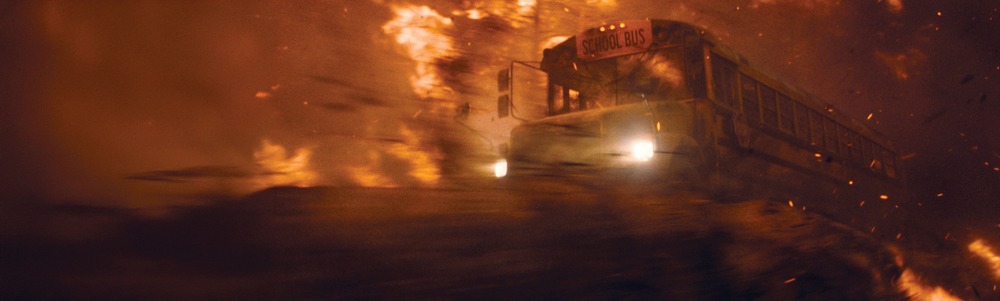
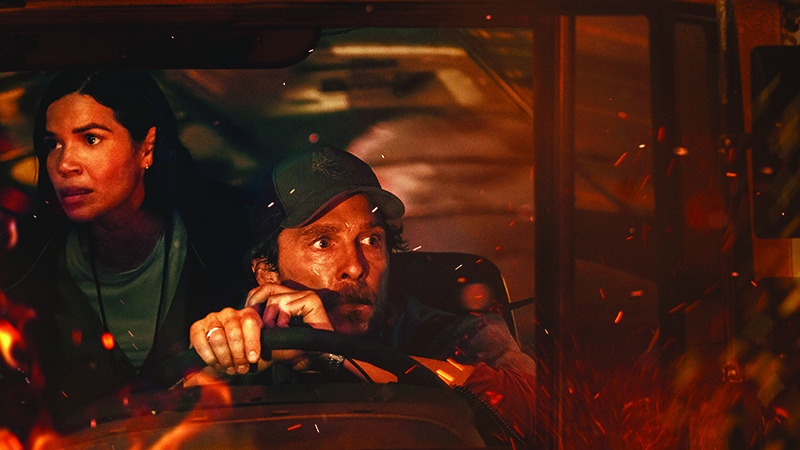
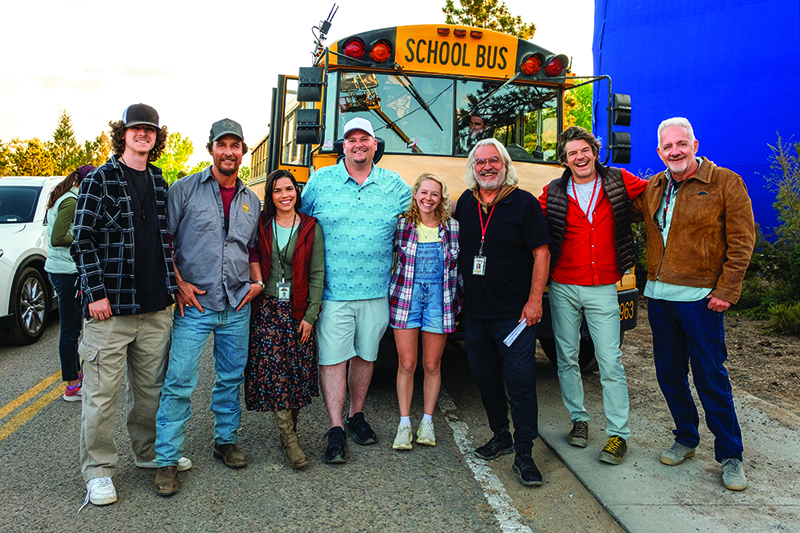
The Lost Bus is the story of school bus driver Kevin McKay, played by Matthew McConaughey, and schoolteacher Mary Ludwig, portrayed by America Ferrera, who saved twenty-two children during the 2018 Campfire in Paradise, California. The Campfire was one of the deadliest disasters in the state’s history, killing 85 people and destroying more than 150,000 acres.
Directed by Paul Greengrass who also co-wrote the script with Brad Ingelsby, is based on a portion of Lizzie Johnson’s book of 2021, Paradise: One Town’s Struggle to Survive an American Wildfire.
The key to working with Paul Greengrass is being very flexible and able to adapt to changes quickly because that’s how he works and his style is what makes his films so exciting. He’s the master of this kind of filmmaking.
Lisa Piñero: I always wanted to work with Director Paul Greengrass, it was on my bucket list. My regular crew of Randy Johnson and Eva Rismanforoush were not available, and I’m at the point in my life where if I cannot get the crew I love to work with, I’d rather not do the project. But the script resonated with me and as I said, it was an opportunity to work with Paul Greengrass. Most of the time I’m traveling to work. I hardly ever work here in Los Angeles. I lucked out and the crew I assembled was Boom Operator Mike Scott and Sound Utility Emily Jane Price, and for the last few weeks of shooting, Eva came in at boom to cover the last few weeks for Mike who unfortunately experienced an ankle injury on the show.
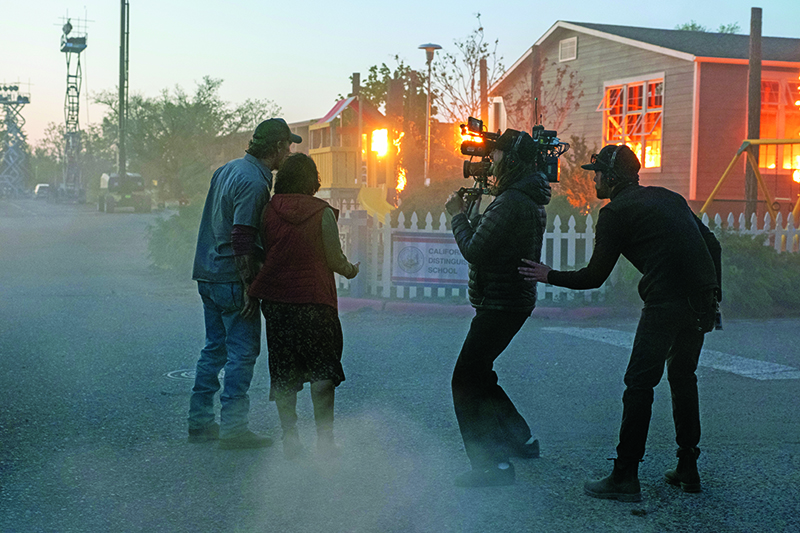
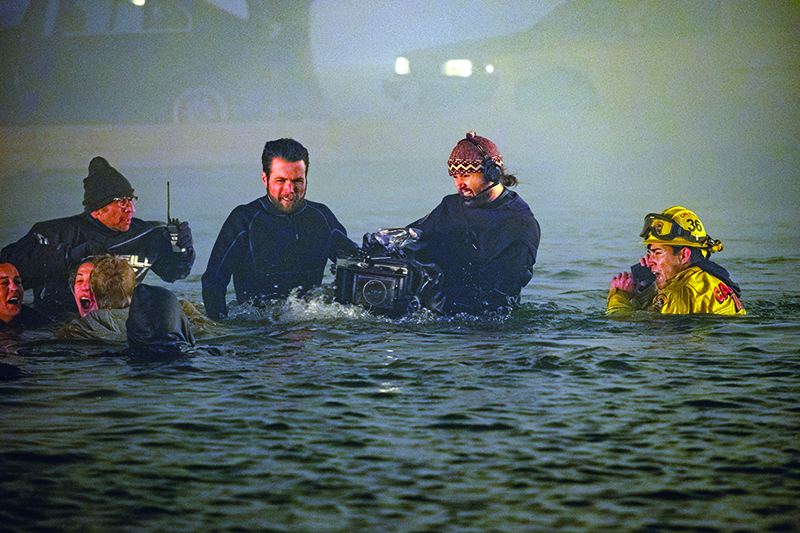
I really enjoyed Paul, he’s one of those directors who you run through walls for. He’s the kindest guy, very collaborative and, very good with the crew. He shoots in a documentary style but with multiple cameras swinging in every direction to capture all the action. It may look haphazard but Paul and his DP have spent time carefully choreographing how to capture the actions and emotions necessary for the scene.
Richard Lightstone: The school bus is also a major character.
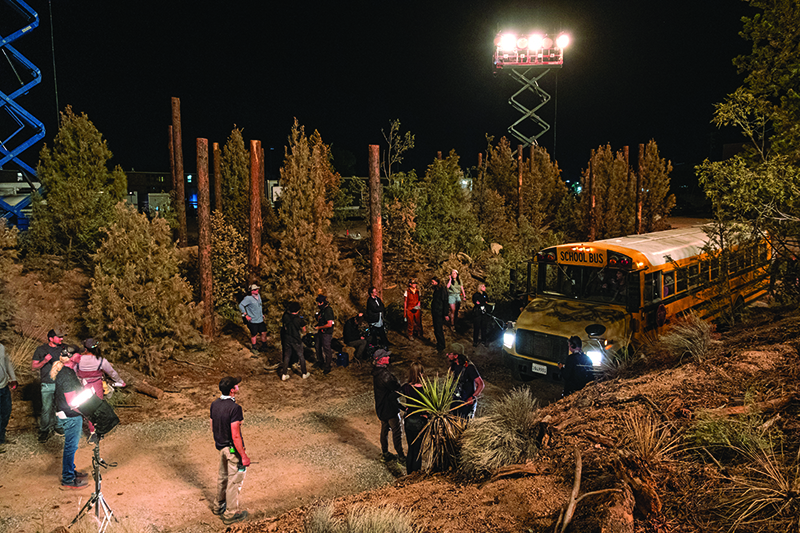
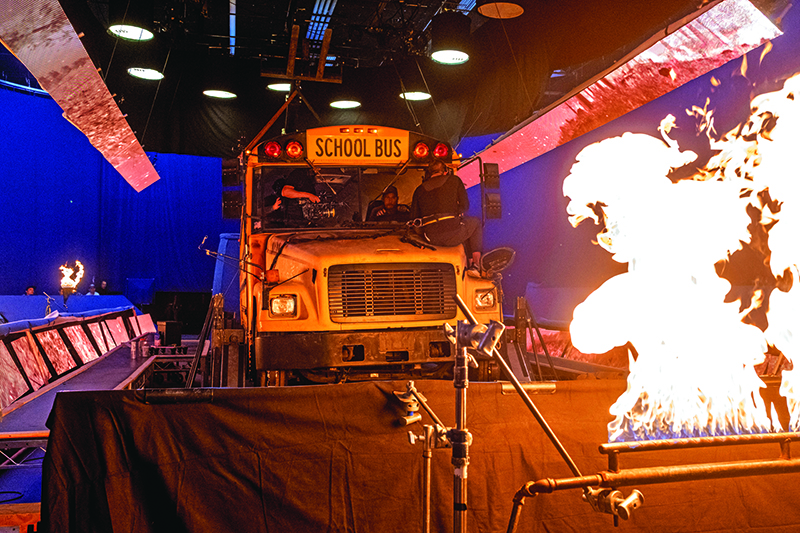
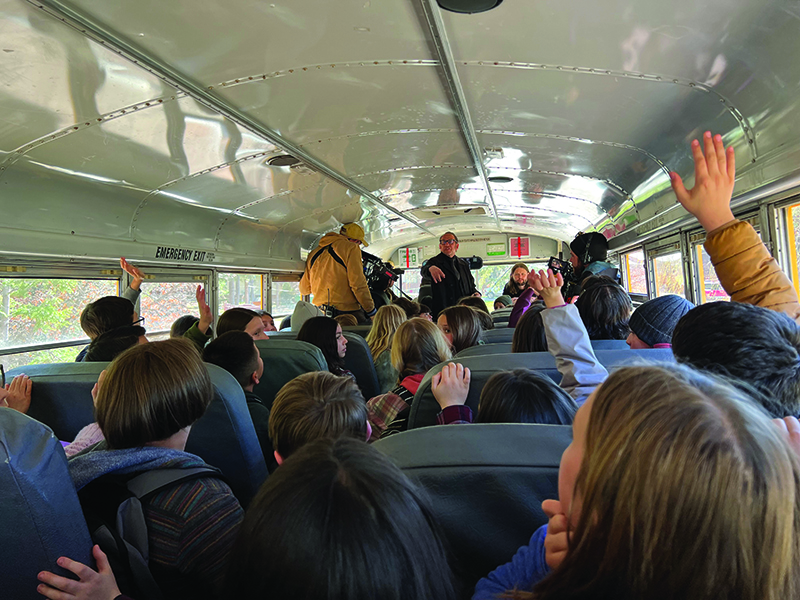
LP: Yes, the bus is a character all in itself and we shot many, many days on that vehicle, more than half of the film takes place in and around it.
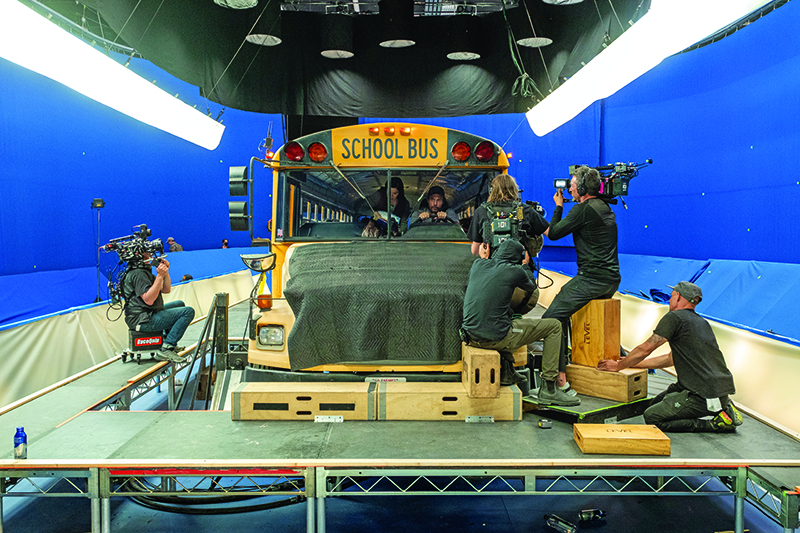
Our DP was Pål Ulvik Rokseth, who’s a lovely guy, a Norwegian cinematographer, and very easy to work with. Pål was operating most of the time, so it was him and two other operators. With three cameras in a tight space, it was very challenging for Mike Scott to get a boom mic near the action. Of course, the cast was wired, and we planted mics all over the place to pick up interior ambience from the kids. We generally knew who was going to speak but it changed from take to take. Paul Greengrass would tell us who he wanted talking, so Mike and Emily would move body mics around from child to child.
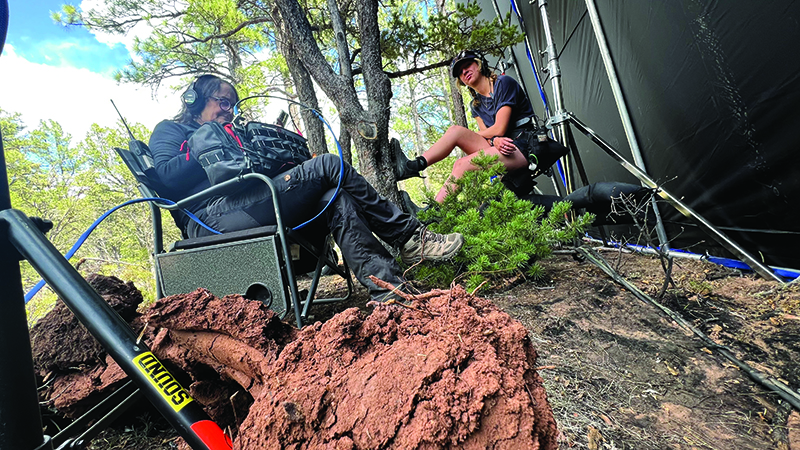
I sat in the back of the bus with the focus pullers. We were all scrunched down below the seat backs in order to stay out of shots. While on the bus, I usually worked off the Sound Devices 888 recorder with Shure wires and Mike Scott on the boom behind the cameras picking up whatever he could. We also had a speaker on the bus so Paul, using a Shure handheld wireless, could talk to the actors and crew from a follow vehicle.
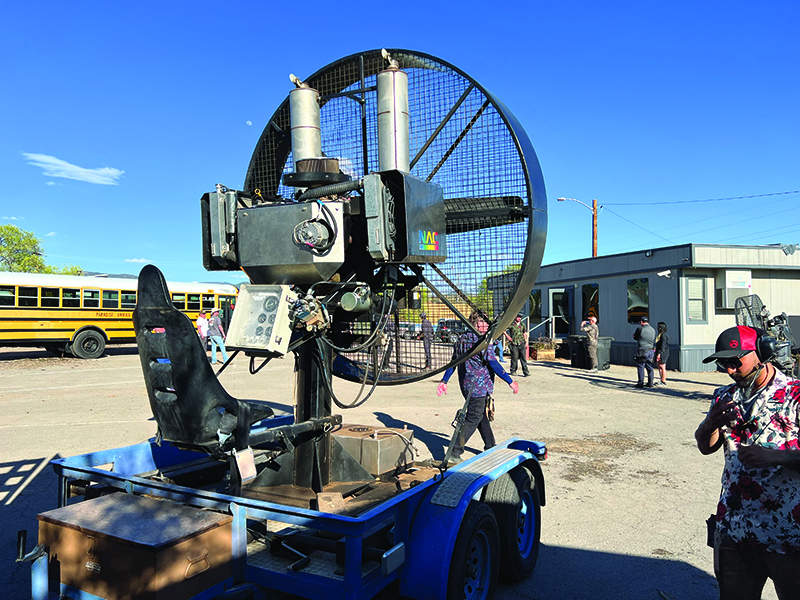
We filmed all over New Mexico; Ruidoso, Santa Fe, Española, Truchas, and Glorieta, to name a few. It was incredibly dusty, and we had big Ritter 502 fans running full time to recreate the huge one hundred mph winds that drove the fire. It was like a blizzard of dust and smoke.
When I initially spoke with Producer Greg Goodman, the plan was to shoot all this on a stage at the Garson Studios lot in Santa Fe. ILM would build a volume on one of the stages there where we would shoot all the bus scenes with the kids. We’d be two or three weeks on location in Ruidoso and then we’d be eight weeks or however long it took on the lot and stages.
As the show progressed, the scheduled morphed into less time on stage and much more time on practical locations. Matthew really wanted to drive the bus. A big part of getting his performance was to actually drive the bus and experience the practical effects. So that’s what we did.
We shot a lot of scenes on the bus while driving through some very narrow streets, in the woods and all over the place, far more than anyone expected at the beginning. For Matthew and America, this style of shooting felt more real, and the kids also responded well. We had twenty-two kids, and they were really good.
Our 1st AD, Cliff Lanning, set up the schedule, so that if we were in Santa Fe, we’d start the day shooting on stage, maybe with our number one and number two cast, or we’d get all the kids on the bus. After lunch, we’d move outside to film scenes around the lot. Our AD team was well organized and very supportive of the crew. Paul would make changes and things would move very quickly. Cliff gave us the time to make adjustments which I appreciated very much.
RL: There are parts of the film that have a documentary feel to them
LP: Paul Greengrass got his start working as a journalist for the UK ITV program World in Action. Although he uses enormous crews and loads of the latest technology on his feature films, he is still focused on creating a realistic “you are here” aesthetic in his films. He gives his cast a realistic environment to react in. The practical special EFX help create a lot of that realism during the shoot, then the VFX team led by Charlie Noble are on the scene to take what is shot to the next level for the audience. For all the movie magic in this film, I think the audience will find itself feeling immersed in the moment and on the edge of their seats as this story unfolds.
Paul had many of the people who experienced the Paradise fire play roles or guest shots in the film. Many of the firefighters featured in the film were the actual firefighters who fought the fire in Paradise. They also worked closely with Paul and the crew to help us understand what they and the town’s residents experienced during the fire. We had set visits from Kevin McKay and Mary Ludwig during the shoot. Paul brought them in so they could experience the production process and meet with the actors. I think they may have wished their story could be told using Paradise as the location, but moviemaking doesn’t always allow that.
RL: What about the sets, were there also standing sets on stage?
LP: Yes, there were many all over the Garson lot, and more sets built in Santa Fe and surrounding areas. The production secured a large church camp facility in the Glorieta area. We spent more than three weeks there. We went north and had access to shoot on a Native American reservation for some of the firetruck road work. We had sets in Santa Fe for a school, and the Glorieta camp had buildings that we used as school sets. Greg Goodman’s been around the block a few times and he and Paul settled on some great locations and put them to good efficient use.
RL: What was your wireless count for the show?
LP: In preproduction Paul said, “I will never ask you to mic more than twelve people at one time on this show.” I carried twelve on the cart and eight on the bus. I maxed out the 688 based bag with four ADX5D dual receivers. My main cart is Cantar X3 based with three racks of Shure Axient Digital AD4Q receivers and AD 600 Spectrum Manager. All the frequencies were matched so we could drop the bag and go to the cart seamlessly.
While filming in the bus, we would swap transmitters putting plants in different places and then hoping that the kids were going to do what they were supposed to. Paul had a great relationship with the kids, they all performed really, really well. We would do a take and then stop the bus or, if we’re on the bus in the stage, Paul would come on and say, okay, this time I want you to do this and you to do that. So, Mike and Emily would be swapping transmitters to get what we needed.
On the bus work, we used walkies with Comteks rather than a talk-back IFB system. It was so much more efficient as we had much better range. You can reach the utility and boom no matter where they are.
RL: What was the most challenging scene for you?
LP: It was the scene where the bus finally reaches the Evacuation Center. Paul wanted the bus to drive down a long block, then down a driveway and pull into in a very large parking lot, where all the parents, CAL FIRE, and first responders were all waiting.
There were cameras inside the bus, on the road, and in the command area. It was a long sequence with action throughout over a long distance. The bus would finally come to a stop and then they would all get out and the kids would come off the bus to be reunited with their parents.
There were several times when we had a four-person crew, and on that day, we had two extra people, and we needed them. We were able to find a safe spot for the cart. Paul was in a van with video assist, and the DIT. I had to be near Paul’s van, but we were on foot, I was using my main cart. Eva was with us then and she deployed our antenna distribution system. She ran out additional antennas to pick the bus coming down the street and around the corner. We had four antennas out in a very widespread. We ended up getting it all on the Cantar, and it was great. We were all thrilled. I am really proud of what our sound team (production and post) delivered. It was a tough project, but in the end, we got what Paul wanted, we had some fun and the film sounds great!